
St. Paul Cathedral
Vigan’s cathedral anchors the city’s two historic plazas, with a detached bell tower and altarpieces that tell the story of the communities that furnished the church.
Published · Last updated
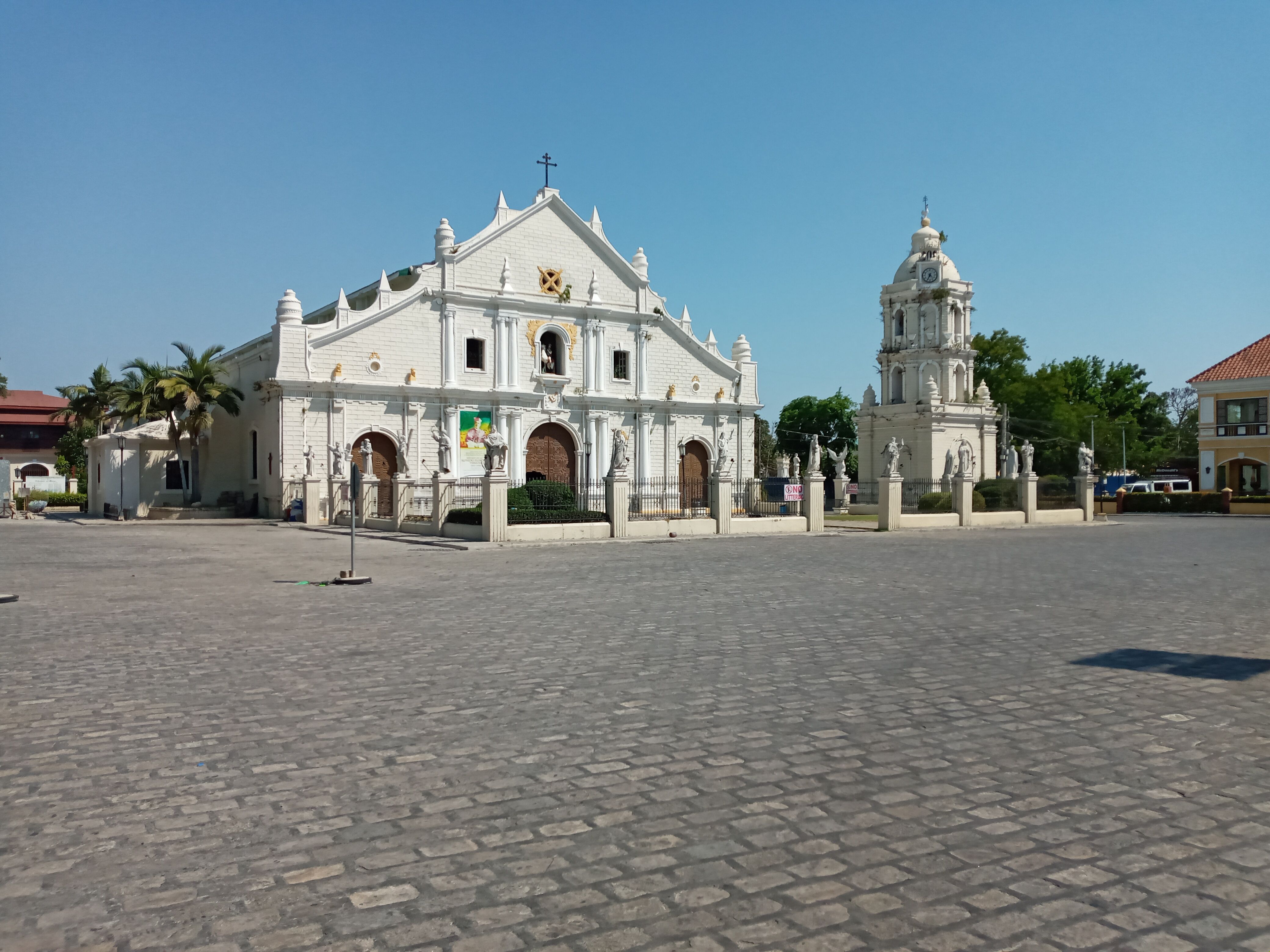
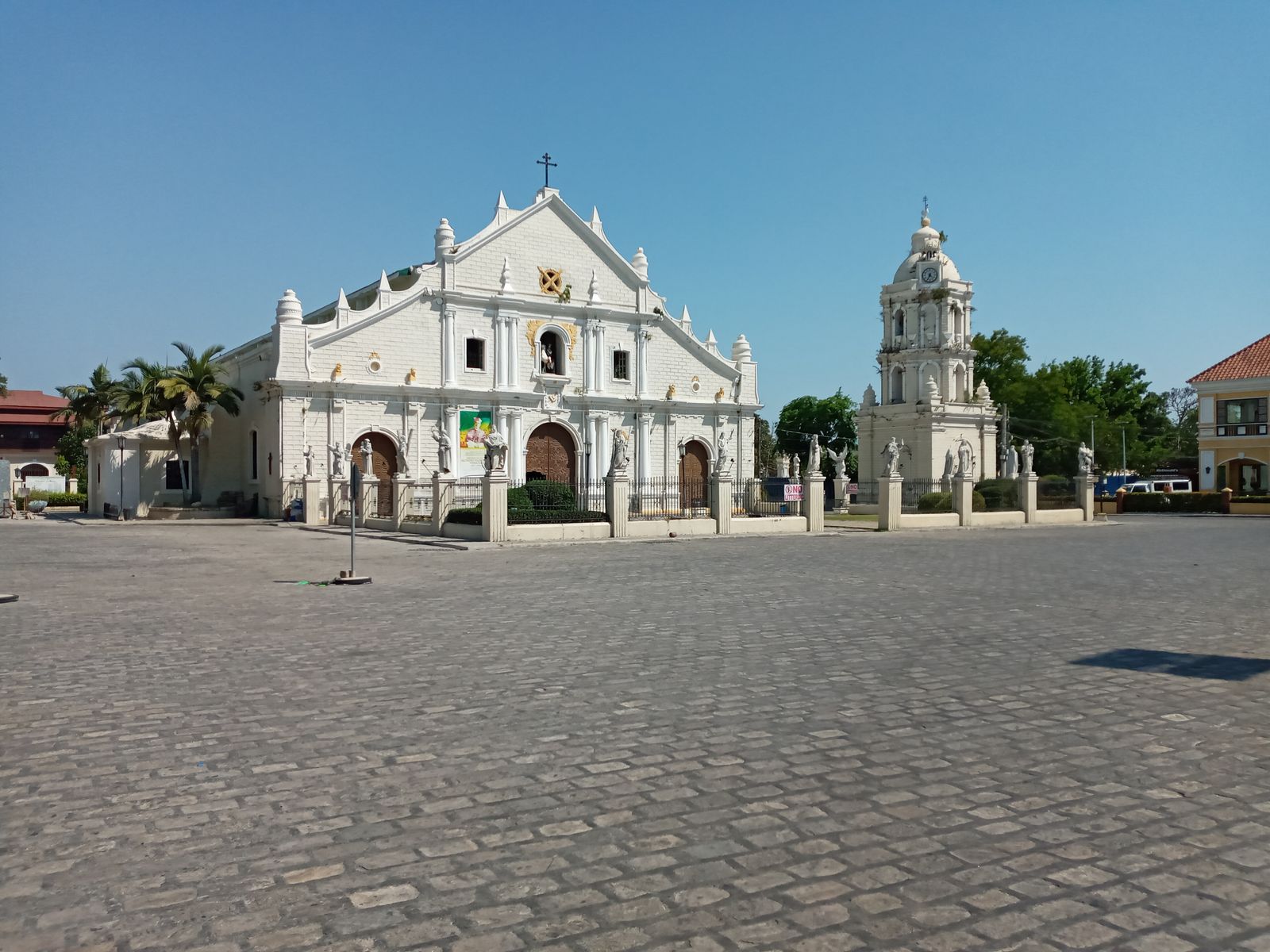
From Plaza Salcedo you see the cathedral’s main entrance. Walk around to Plaza Burgos and the bell tower comes into view as a building of its own. Together with the Archbishop’s Palace and City Hall, the cathedral helps explain how Vigan’s Spanish colonial street grid placed church and civic life around the central squares.
Practical information
- Address
- Burgos Street (between Plaza Salcedo and Plaza Burgos), Vigan City
- Present cathedral
- Construction began in 1790 under Bishop Juan Ruiz de San Agustín.
- Visitor access
- Confirm which entrances and interior areas are open. Follow posted conservation barriers.
- Mass schedule
- Check parish notices for current Mass times and the entrance in use.
- Dress Code
- Dress modestly inside and keep visits quiet around services.
From parish church to diocesan seat
Juan de Salcedo ordered a wood and thatch chapel built on this site in 1574. A later church, built in 1641, became a cathedral in 1758 when the Diocese of Nueva Segovia moved its seat from Lal-lo, Cagayan, to Vigan. Bishop Juan Ruiz de San Agustín began work on the present cathedral in 1790, and construction was complete by 1800. The story of why the diocese moved continues next door at the Archbishop’s Palace.
Read the stonework from the two plazas
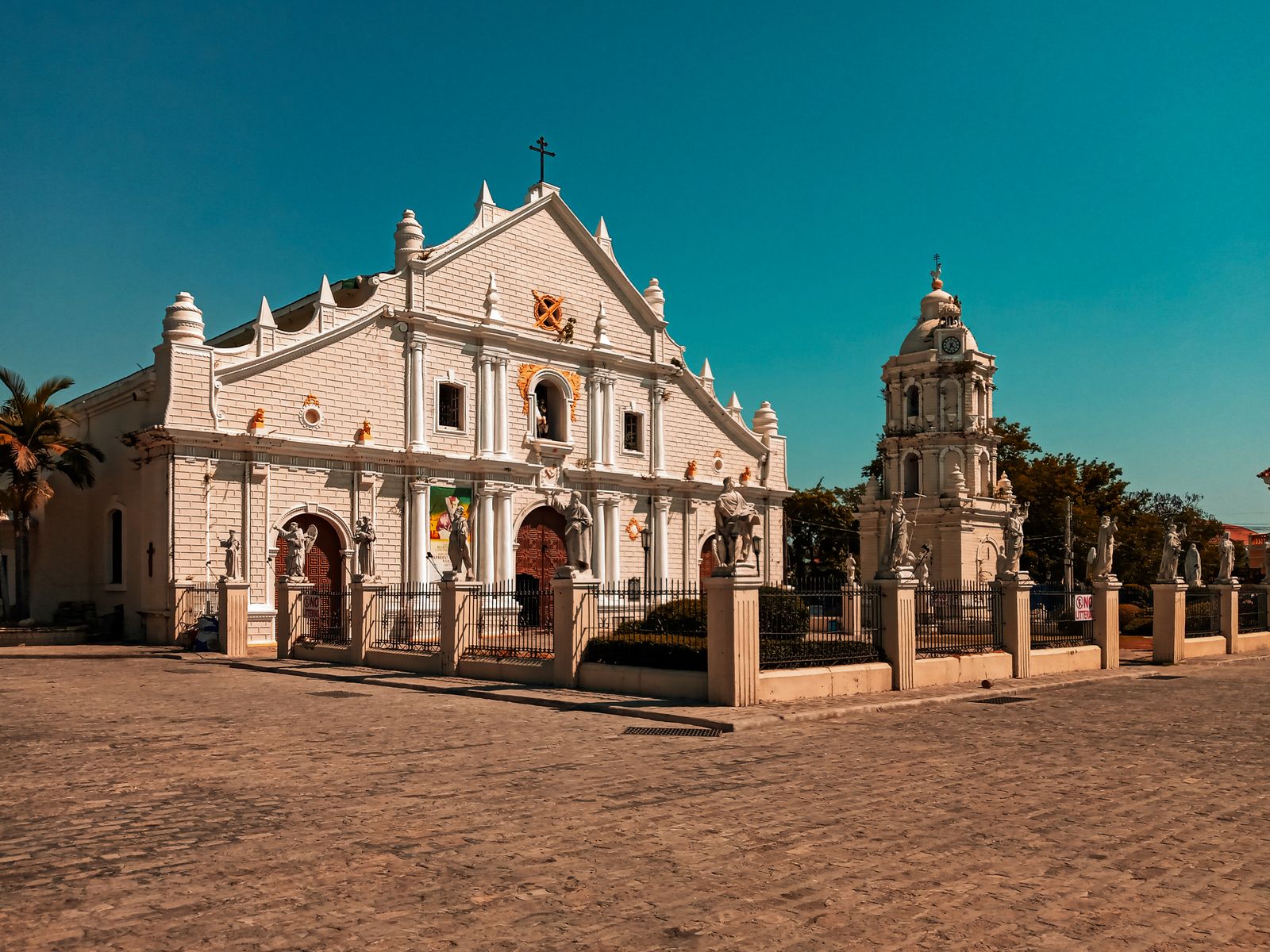
From Plaza Salcedo, look above the main doorway for the scene of St. Paul’s conversion, then look toward the outer doors for the small Chinese guardian lions perched on projecting ledges. The lions sit among classical columns and moldings, a detail that shows how Asian and European forms came together on one façade.
From Plaza Burgos, the cathedral’s low profile and heavy masonry are easier to read. The buttresses projecting from the side walls brace them against outward movement. The detached belfry is another feature associated with Earthquake Baroque, a way of building adapted to a region where heavy masonry had to contend with earthquakes.
The separated bell tower
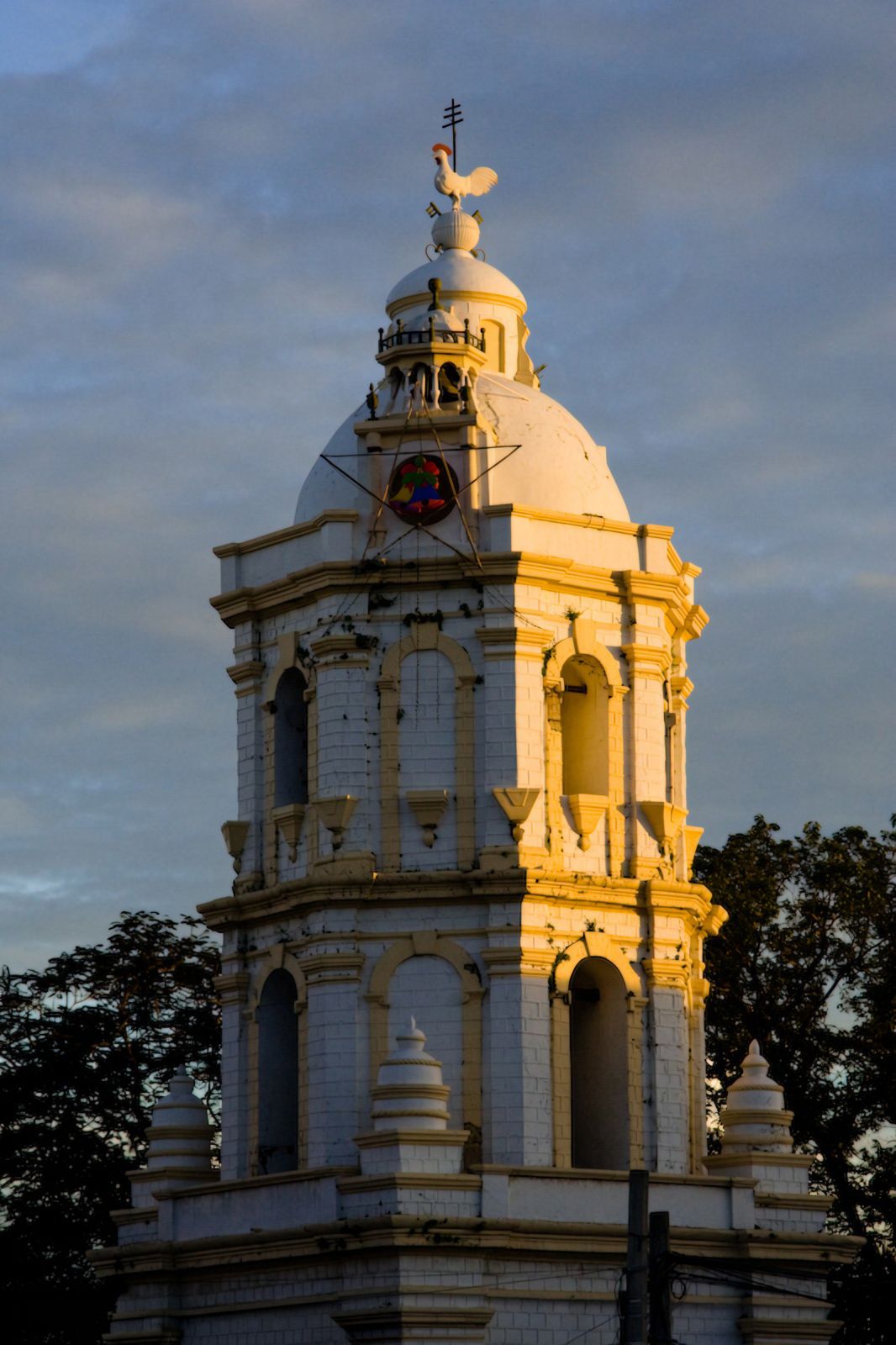
One of the cathedral’s most defining architectural features isn’t attached to the church at all. The octagonal, three-story bell tower—topped with a bronze weathercock symbolizing St. Peter—stands 25 meters high.
The tower rises from a square base on a corner of Plaza Burgos. Leaving a gap between the tower and the church reduced the risk that falling masonry from the belfry would strike the church. The contrast is easy to see at Simbaan a Bassit, where the cemetery chapel’s bells hang in openings in the façade itself.
What the altarpieces tell you about Vigan
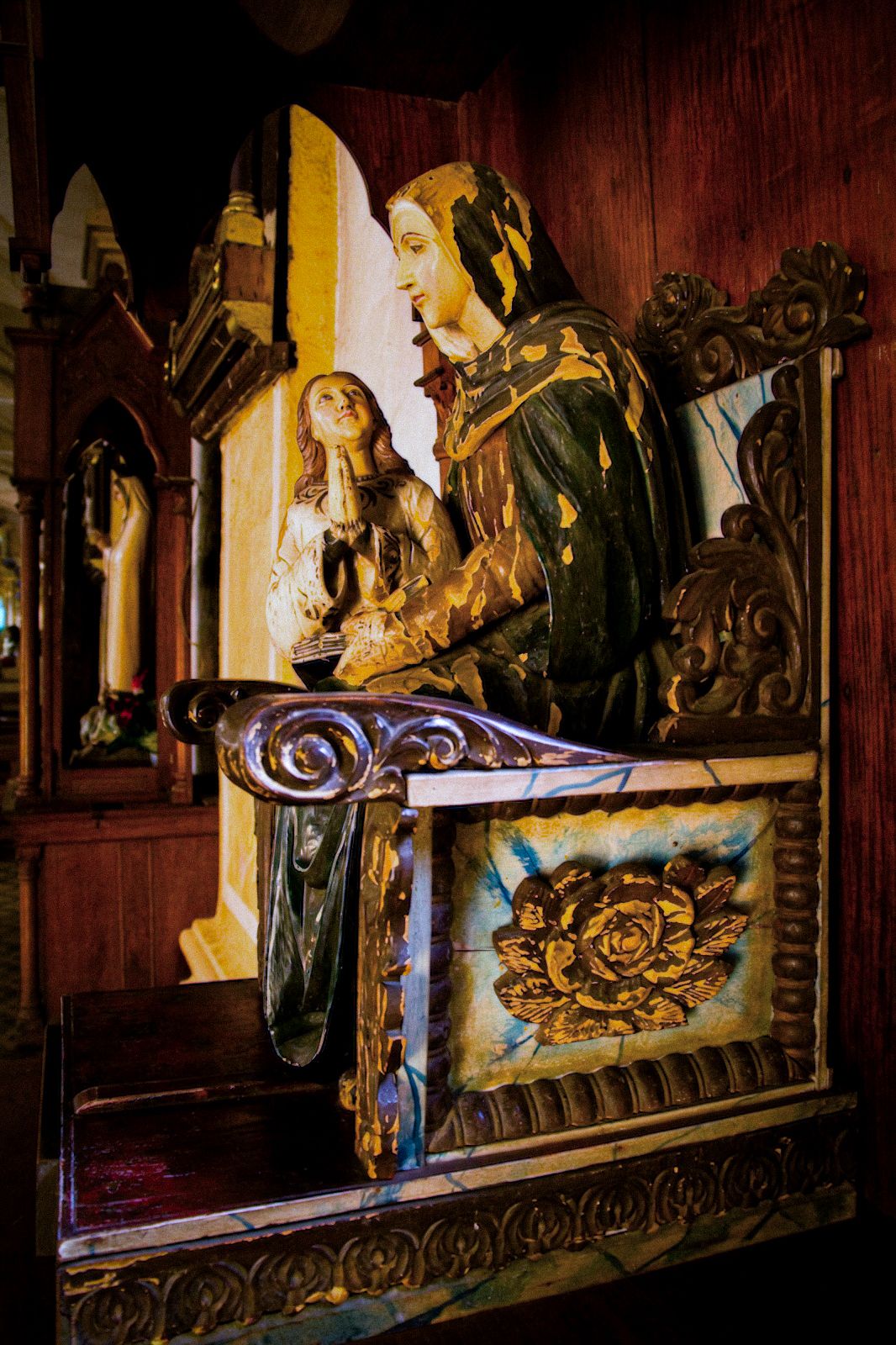
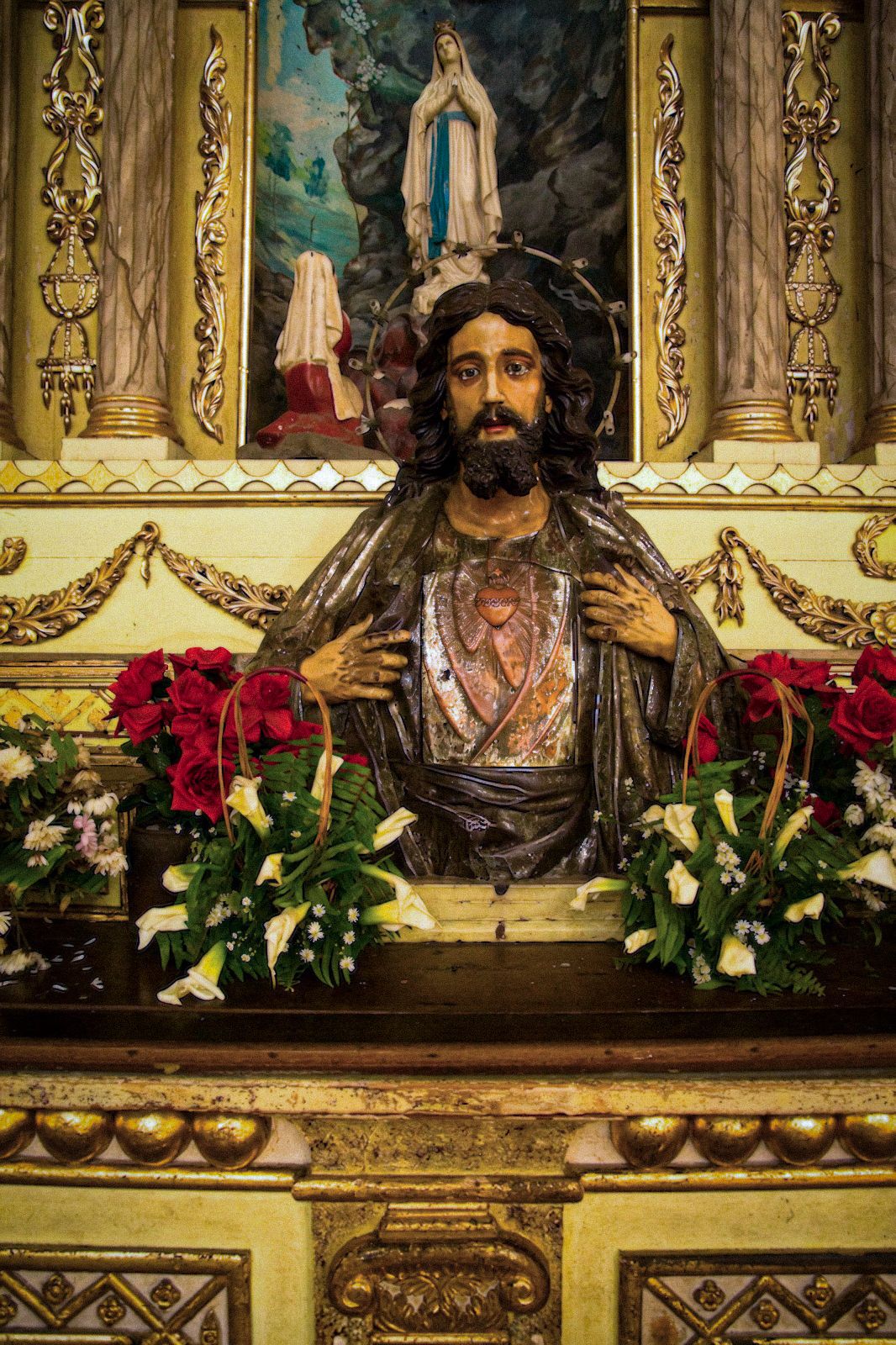
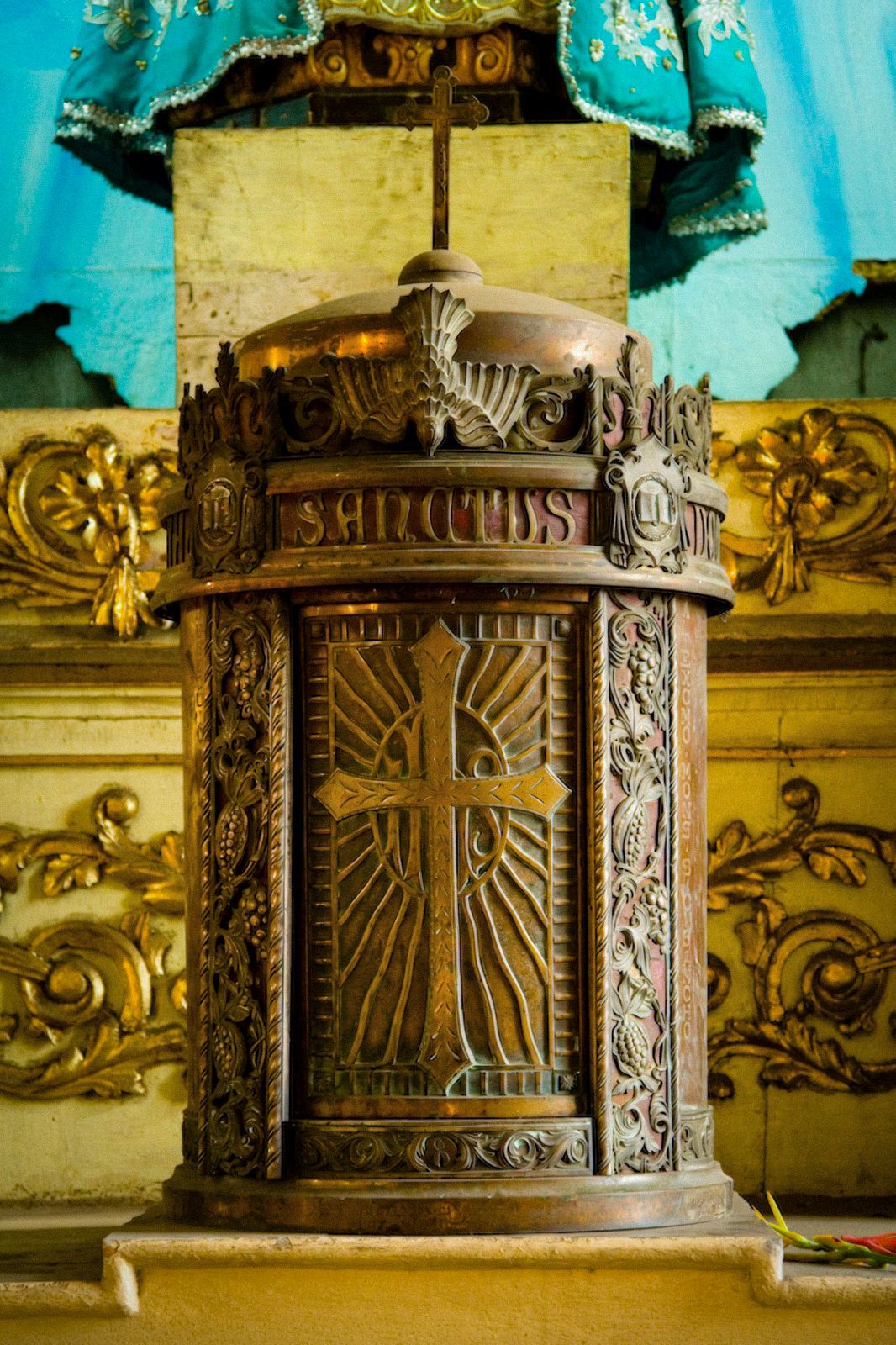
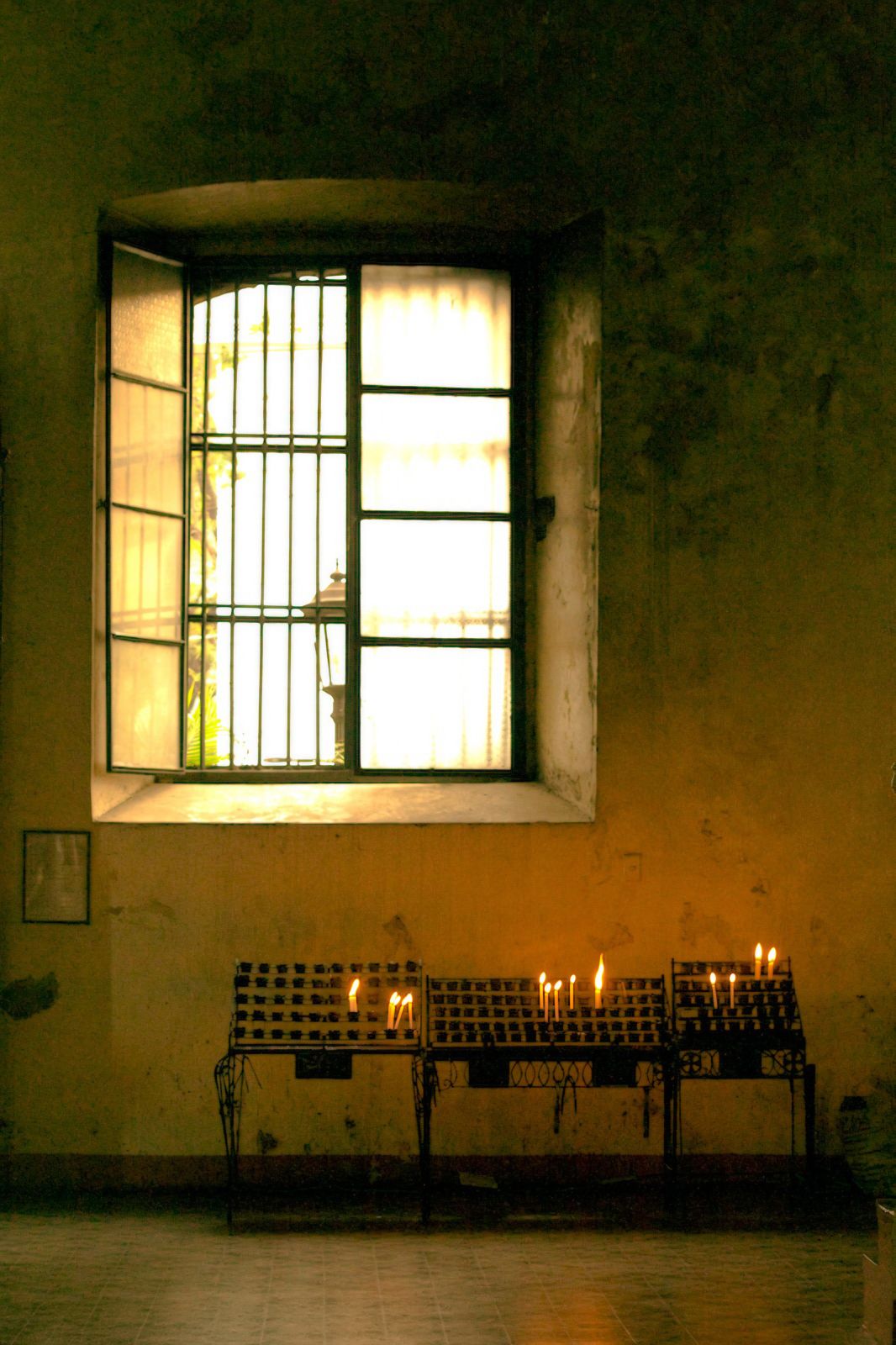
When interior access permits, look down the central nave and notice the two aisles and their side altars. A choir loft, carved pulpits, and silverwork are part of the interior’s historic furnishings. The side altars also preserve evidence of who helped furnish the cathedral.
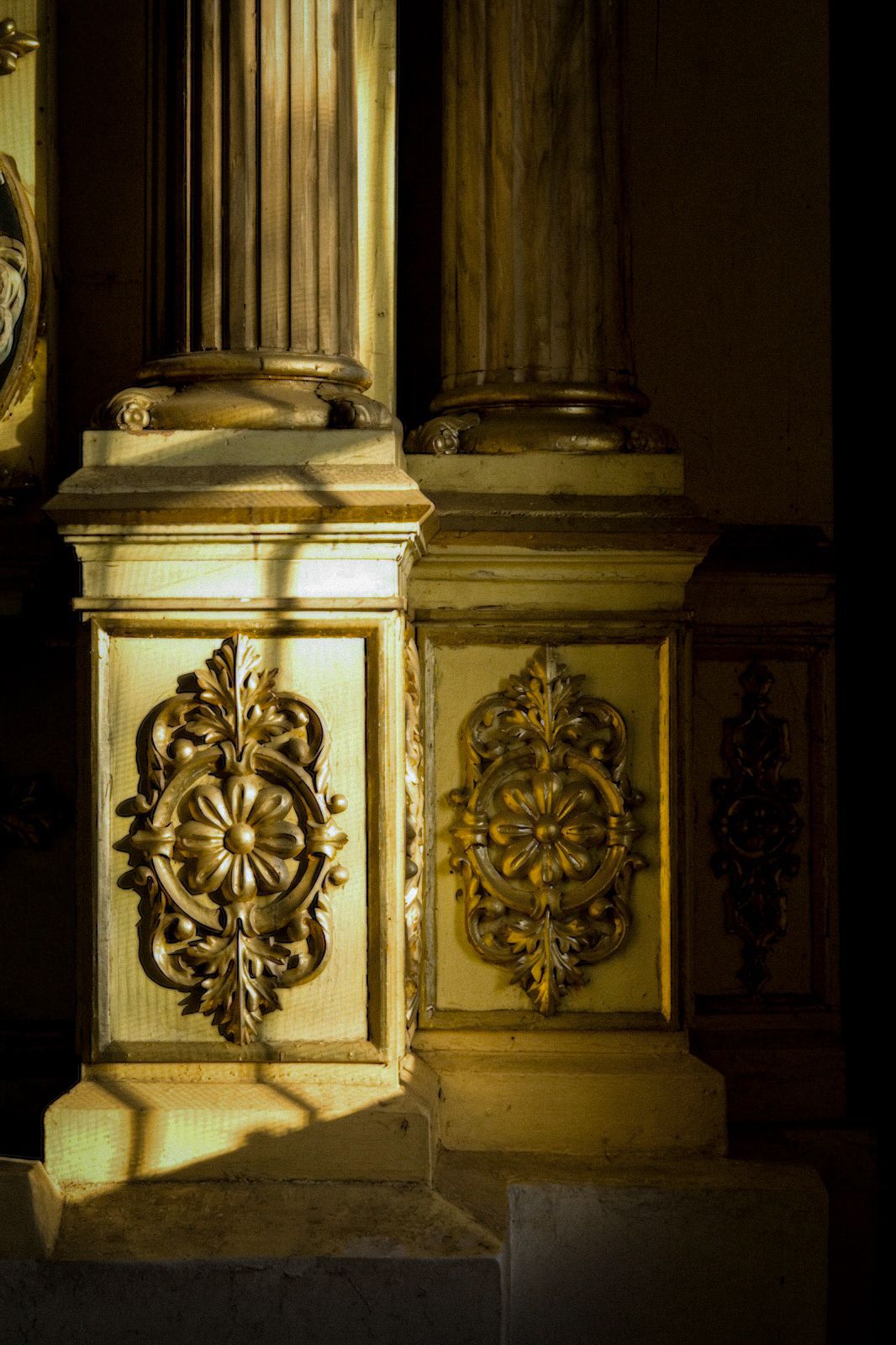
The carved retablo, or altarpiece, for the Nazarene was donated in 1802 by Juan Mariano and Alexandro de Leon, two members of Vigan’s Chinese mestizo community. Look for the shell-like Rococo ornament known as rocalla. Another side altar depicts Our Lady of the Rosary giving the rosary to Saint Dominic and Saint Catherine of Siena, with small panels showing the mysteries of the rosary. These details connect the church’s furnishings to the people and devotions that shaped Vigan’s religious life.
A witness to power and politics
The transfer of the diocesan seat also mattered to Vigan’s standing under Spanish rule. The royal authorization for the transfer and the grant of city status date to the same period, decades before construction began on the cathedral you see today.
In modern history, the church was the site of one of Ilocos Sur’s most infamous political events. On October 18, 1970, Congressman Floro Crisologo— the patriarch of Vigan’s most powerful political dynasty— was assassinated inside the cathedral, shot directly in the pews during a 4:00 PM mass. (His life and the era of private armies are documented at the nearby Crisologo Museum.)
For those interested in the church’s surviving movable heritage, the adjacent Museo San Pablo preserves a rich collection of the cathedral’s historical religious artifacts, including centuries-old furniture, heavily carved pews, a traditional cathedra, confessional boxes, chandeliers, and original statues.
Getting there
From the northern end of Calle Crisologo, cross toward Plaza Burgos for a view of the tower, then turn the corner toward Plaza Salcedo to see the main entrance.
After sustaining damage to both the cathedral and bell tower in the July 27, 2022 earthquake, the church closed for structural assessments before resuming Masses in 2026. If you’re visiting for Mass or sightseeing, check parish notices to see which entrances and areas are open, and stay behind posted barriers.
A closer look
Select a photo to view its caption and credit.
Nearby attractions
Continue from the cathedral to the central plazas, the merchant houses, or Padre Burgos Museum.
SEE
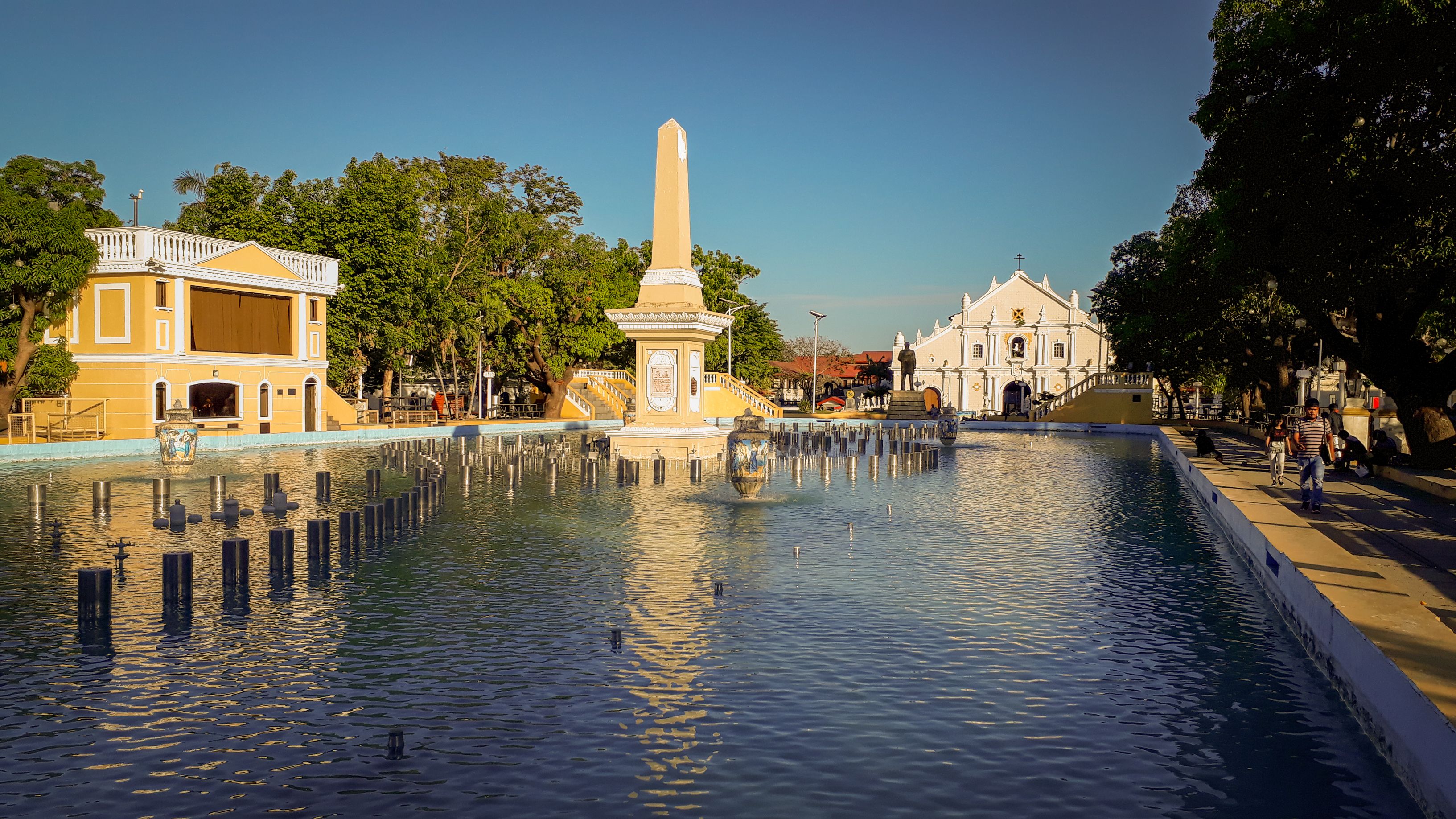
Plaza Salcedo
~50 m away
SEE
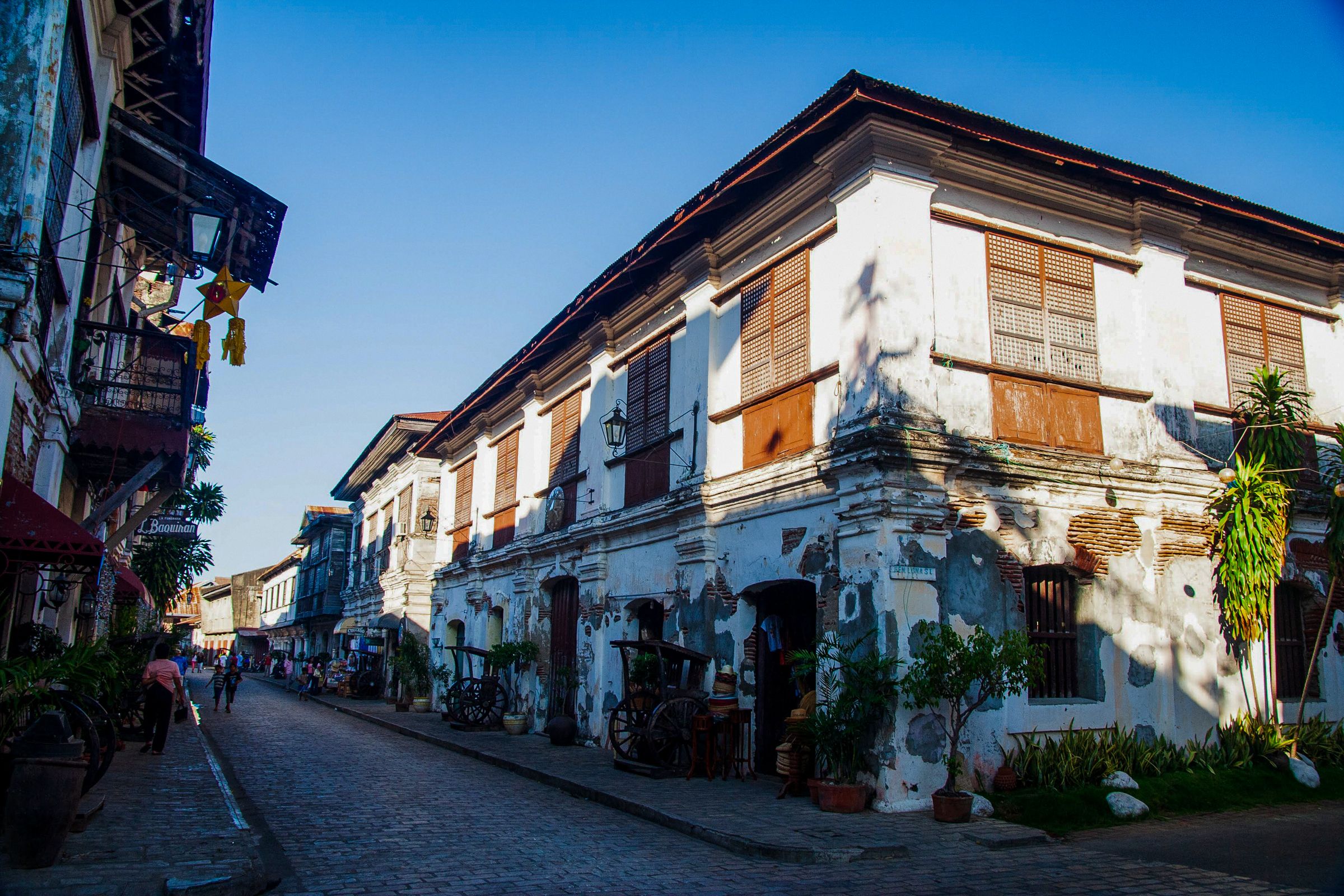
Calle Crisologo
~350 m away

HERITAGE
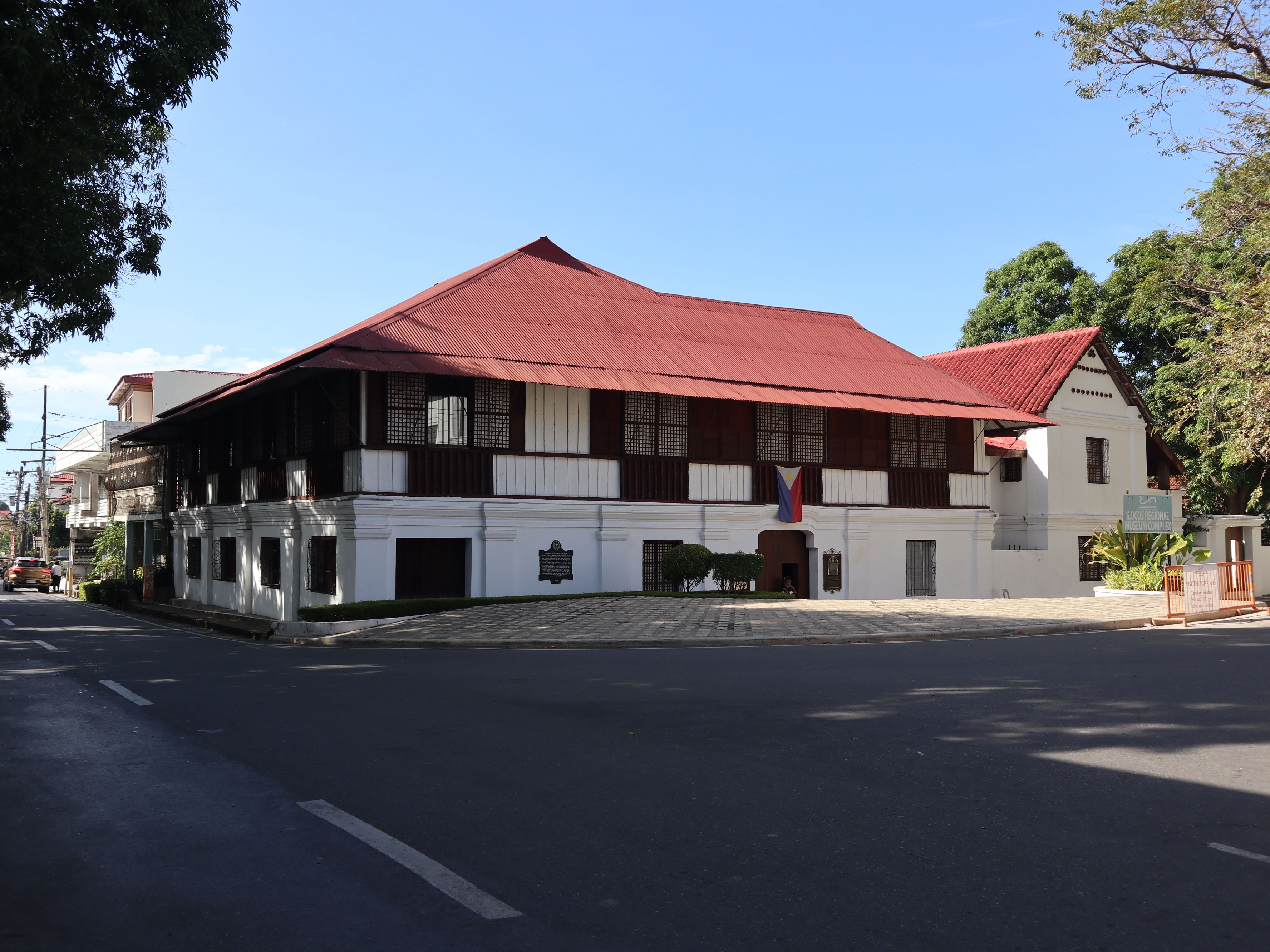
Burgos Museum
~200 m away
Related stories
SEE
Calle Crisologo
SEE