
Palacio de Arzobispado de Nueva Segovia
Get to know Vigan's Archbishop's Palace, an eighteenth-century residence beside Plaza Salcedo with a long church history and a collection of religious heritage.
Published · Last updated
Practical information
- Location
- Beside Plaza Salcedo.
- Visiting
- Contact the Archdiocese of Nueva Segovia in advance to arrange a museum visit and confirm access. Walk-in entry may not be available.
- Accessibility
- Ask about steps, accessible routes and facilities before visiting.
The long roofline beside the cathedral
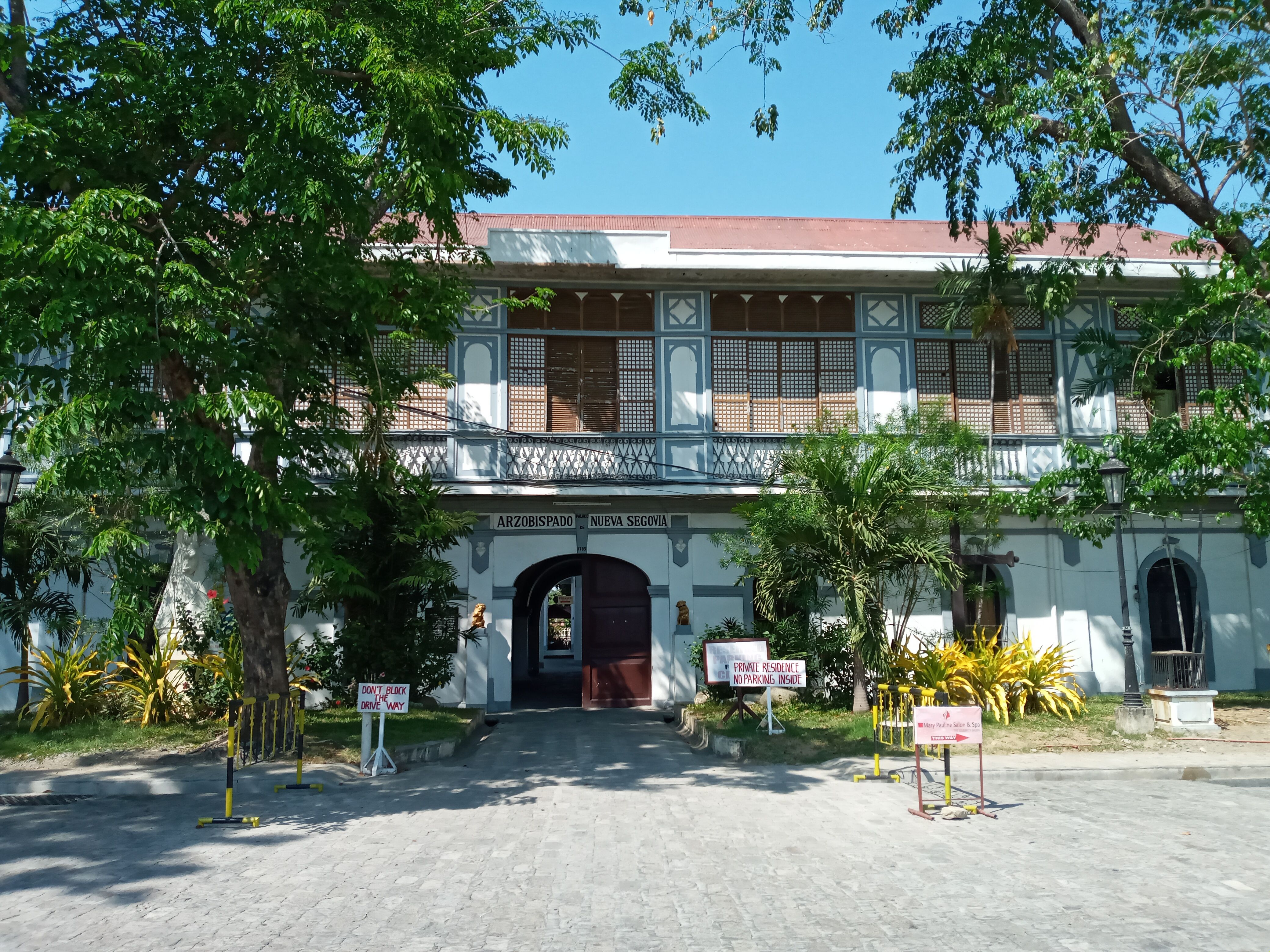
The Palacio de Arzobispado de Nueva Segovia is worth a pause when you’re walking around Plaza Salcedo. Beside St. Paul Cathedral, its long, low form and high-pitched roof give it a character of its own among the buildings around the square.
The name tells you what the building is for. Palacio means palace, and arzobispado refers to an archbishop’s office or jurisdiction. Nueva Segovia is the name of the Catholic church district centered in Vigan, now an archdiocese. The palace has been the archbishop’s residence and a place for church administration; nearby St. Paul Cathedral is the district’s principal church.
Built between 1783 and 1790, it is the country’s surviving eighteenth-century archbishop’s palace. Today it also preserves religious heritage.
How Nueva Segovia came to Vigan
The Diocese of Nueva Segovia began in Lal-lo, province of Cagayan, in 1595. Its original seat was vulnerable to flooding from the Cagayan River. By the mid-1700s, Lal-lo’s population had dwindled and trade had slowed, making it a less practical base for the diocese.
Vigan, then the capital of Ilocos, was more centrally placed within the diocese, between Cagayan and Pangasinan. Roads and coastal trade helped sustain a larger population, and Bishop Juan de la Fuente Yepes pointed to the number of residents who could attend church services as another reason to move. Some bishops had already lived in Vigan decades before the transfer became official.
King Ferdinand VI authorized the transfer on September 7, 1758. The diocese kept the name Nueva Segovia, Vigan’s parish church became its cathedral, and construction of the present palace followed later in the century.
The building was repaired in 1824–1826 and housed the ecclesiastical court until 1890. Political upheaval reached it too: revolutionary forces occupied the palace in 1896 and imprisoned Bishop José Hevia Campomanes. American forces used it as a garrison in 1899.
Those changing uses are a reminder of how closely church and political history have been connected in Vigan.
A residence with room for church business
The palace follows the bahay na bato tradition, with church offices on the ground floor and spacious living quarters above. Putting the offices at street level gave people coming on church business a place to go without passing through the residence. The merchant houses of Calle Crisologo used a similar arrangement, with shops or storage below and family rooms upstairs.
From Plaza Salcedo, look for the arched entrance below and the long rows of wooden windows above. The windows carry the eye along the façade, while the steep roof gives the low building much of its height. Steep roofs also appear on Vigan’s traditional houses, where the pitch helped shed rain. The World Heritage nomination dossier singles out the palace’s roof and the way the building combines offices and a residence.
Follow the roofline toward the former Colegio de Niñas. The school repeats the palace’s long, low proportions, so the two buildings together frame one side of the square.
Museo Nueva Segovia
Museo Nueva Segovia opened at the Archbishop’s Palace on June 5, 1994. Earlier that year, then Archbishop Orlando Quevedo asked clergy across the archdiocese to gather objects for the museum. The museum grew out of a wider effort to preserve church heritage, from religious objects and records to historic buildings. The palace housed both the museum’s exhibition of religious objects and the archdiocesan archives.
The museum may be closed to walk-in visitors. Before heading over, contact the Archdiocese of Nueva Segovia to arrange an appointment and confirm which rooms you can visit. If you can’t arrange a visit, you can still see the palace from Plaza Salcedo and continue next door to St. Paul Cathedral.
Related stories
SEE
Calle Crisologo
SEE