
Plaza Burgos
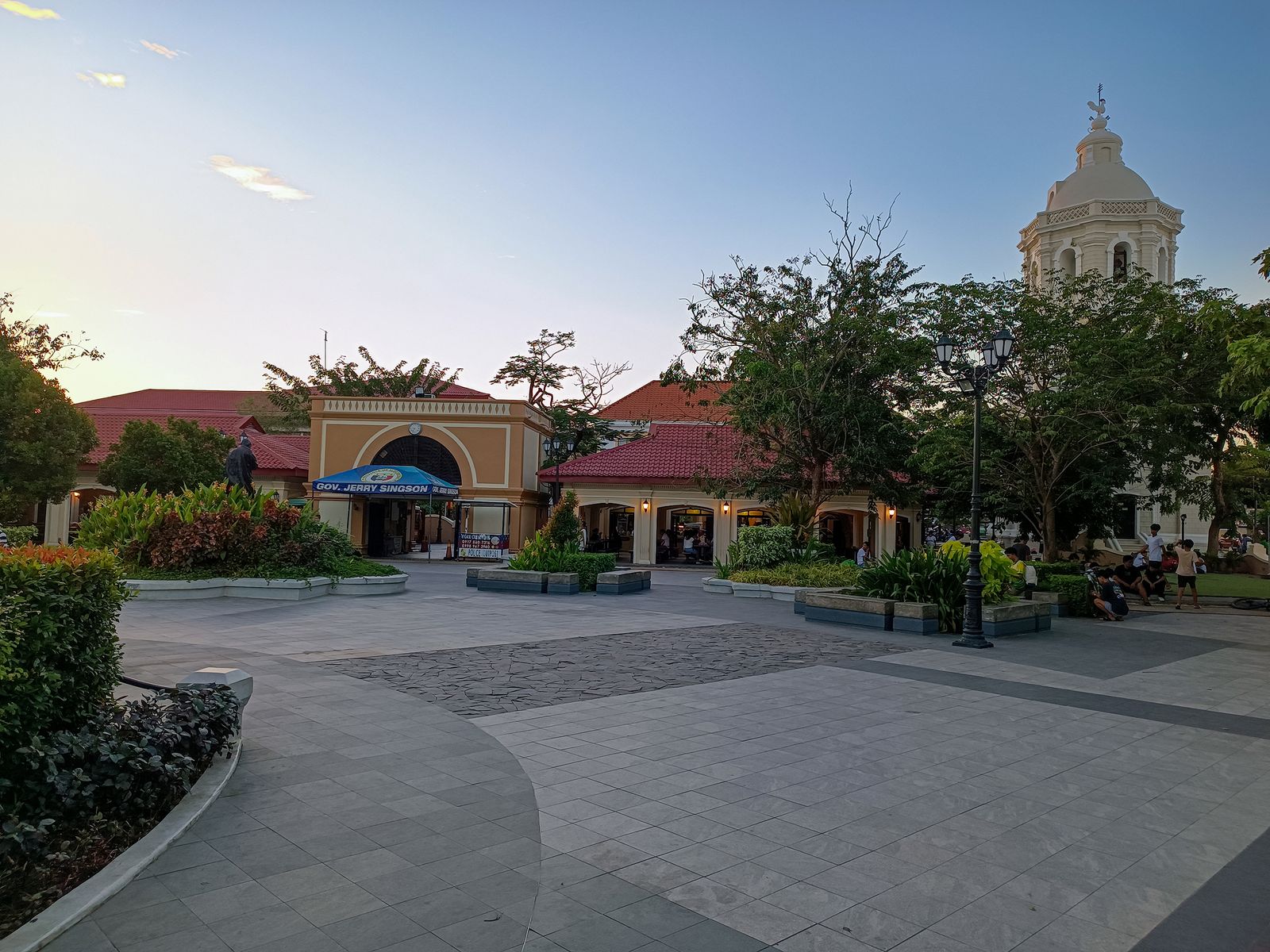
The shorter arm of Vigan’s historic L-shaped civic square honors Padre José Burgos, with a covered food hall along its western edge.
Published · Last updated
If Plaza Salcedo is Vigan’s formal civic showcase, Plaza Burgos right next door is its everyday neighborhood living room. Tucked between the massive white flanks of St. Paul Cathedral and the northern gateway of Calle Crisologo, this intimate, tree-lined public square is where Bigueños gather for late-afternoon merienda, where calesa drivers pause between heritage-district loops, and where visitors get their first hot-off-the-fryer taste of Vigan empanada.
Understanding Plaza Burgos requires looking at both halves of its daily life: its role as an anchor of Vigan’s sixteenth-century Spanish-colonial town plan and its living identity as a tribute to one of the Philippines’ most influential nineteenth-century reformists.
Practical information
- Address
- Plaza Burgos (corner of Burgos Street and Jacinto Street), Vigan City, Ilocos Sur
- Admission
- Free and open to the public 24/7.
- Food hall
- The empanadahan is in a roofed building with open sides along the western edge of the plaza. Hours vary by stall.
- Best time to visit
- Late afternoon for merienda at the food hall and a stroll through the two plazas.
- Facilities
- Covered food stalls, shaded trellis seating, public benches, and a community stage.
- Hours
- The public square is open 24 hours. Food stalls keep their own hours.
- Estimated visit time
- 30 to 60 minutes
- Freshness
- Last verified November 2026
Urban design and the separated bell tower
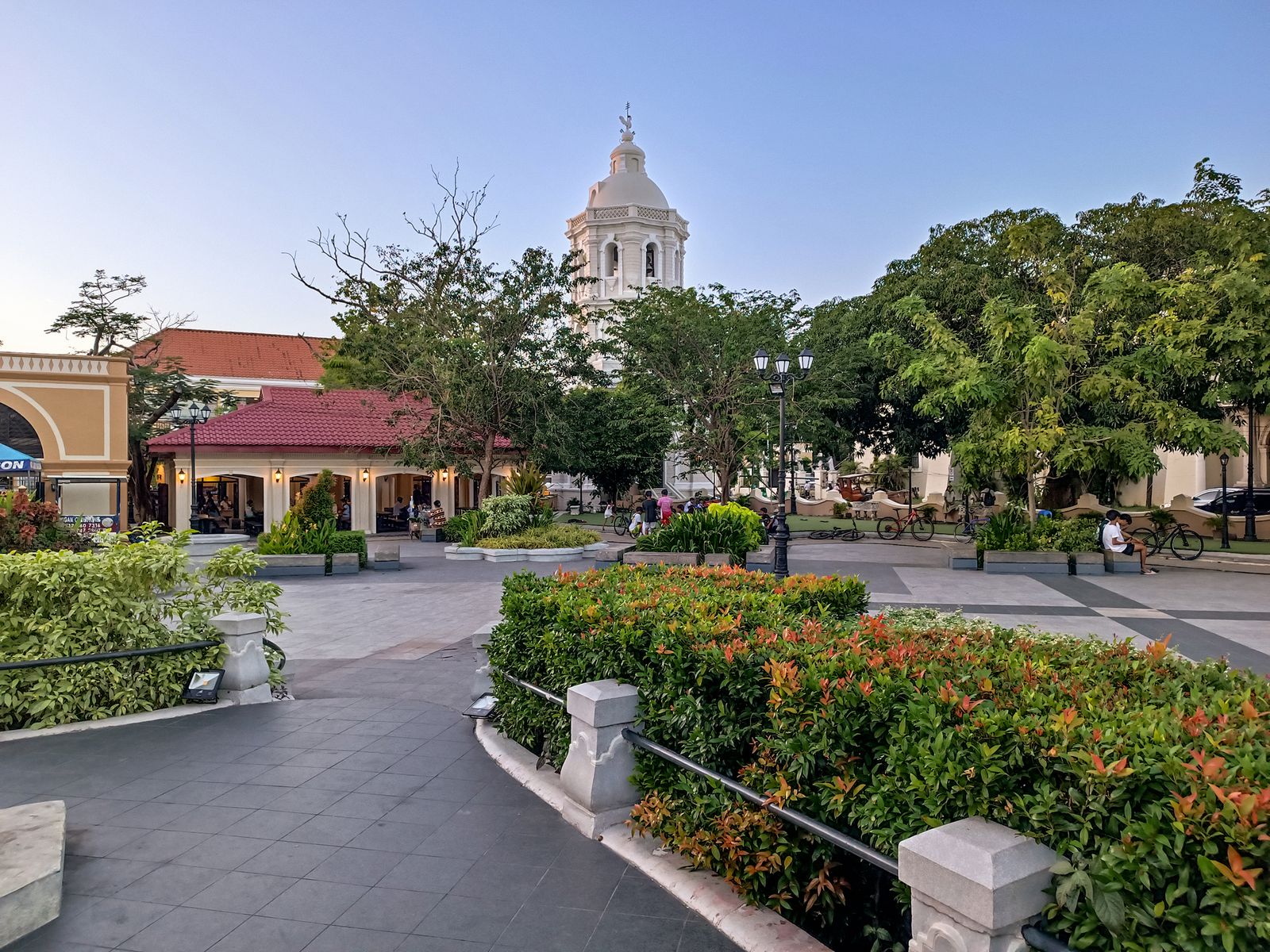
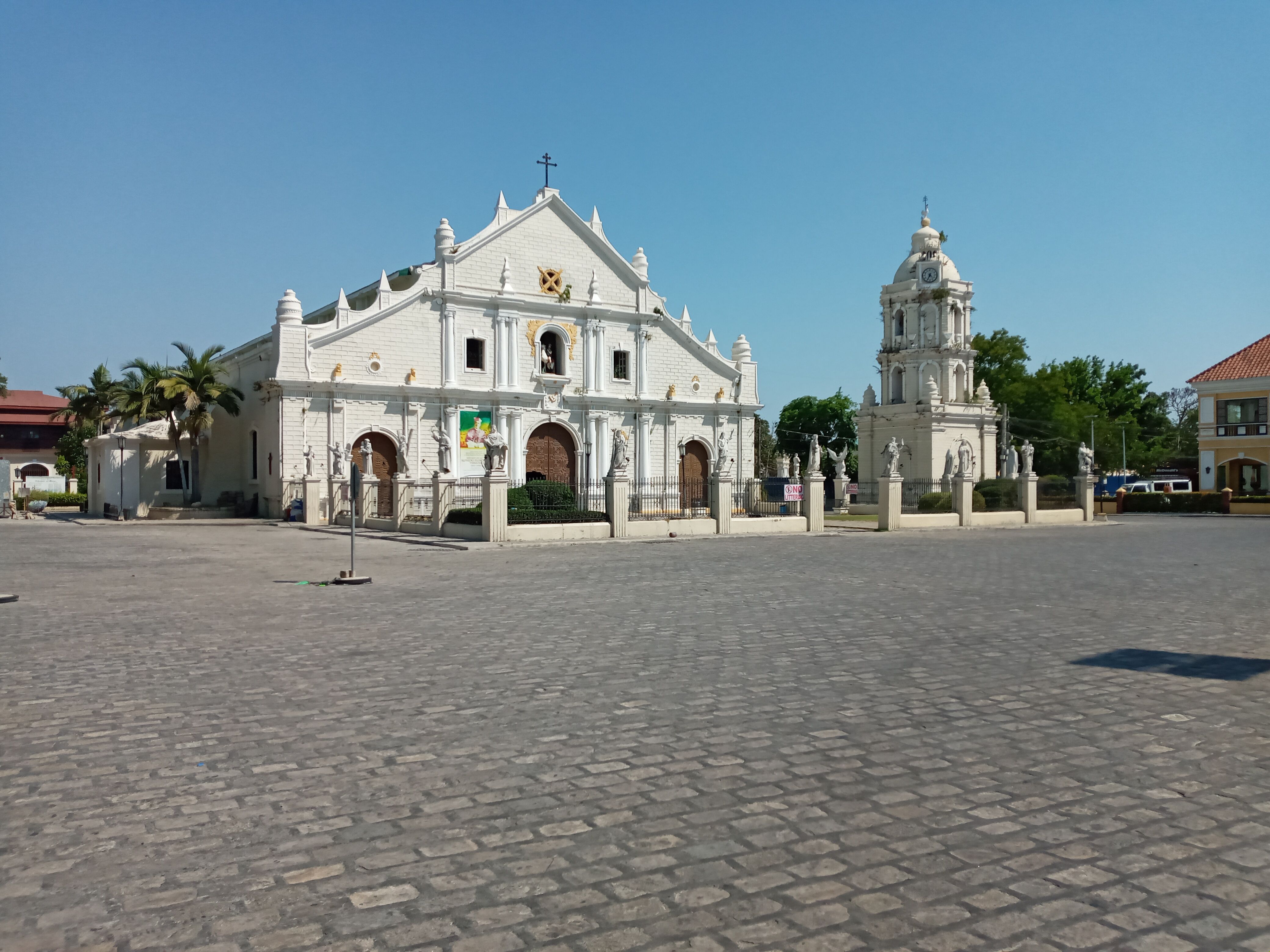
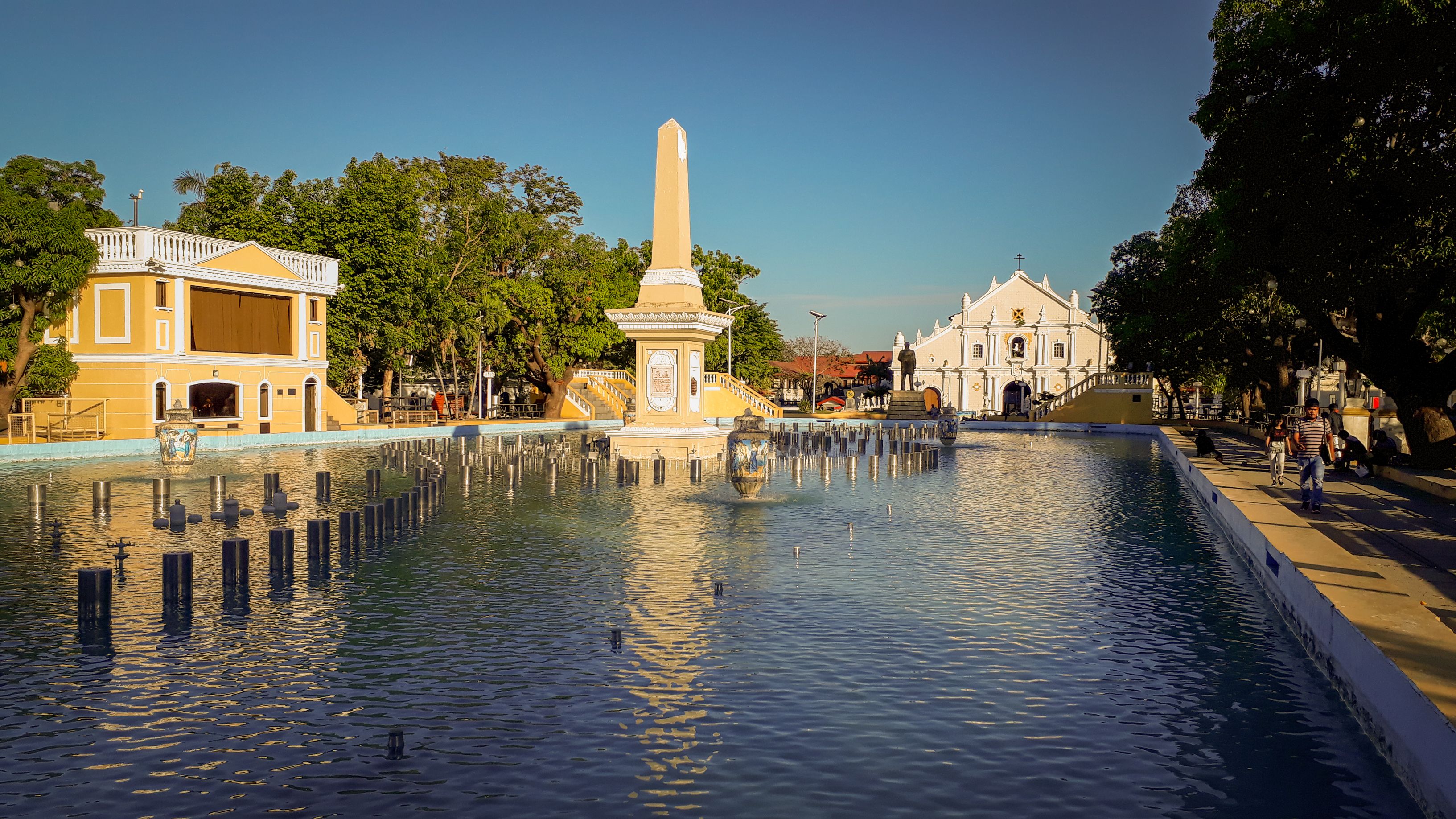
In Vigan’s historic core, Plaza Burgos forms the shorter arm of an L-shaped open public space, intersecting directly with the longer Plaza Salcedo. Together, the two adjoining squares anchor Vigan’s traditional Hispanic checkerboard street plan, adhering closely to the Renaissance grid layout mandated by the Spanish Leyes de las Indias for colonial towns. Bordered by St. Paul Cathedral, the Archbishop’s Palace, Vigan City Hall, and the Ilocos Sur Provincial Capitol, this civic core was designed to concentrate religious and administrative authority at the heart of the settlement.
Standing prominently inside the western edge of Plaza Burgos, roughly 15 meters away from St. Paul Cathedral, is the cathedral’s detached, 25-meter-high bell tower. Constructed on a sturdy square base as a three-story octagonal structure topped with a bronze weathercock symbolizing St. Peter, the belfry was deliberately separated from the main church body. In an earthquake-prone region, colonial builders isolated heavy bell towers so that if severe tremors brought the masonry down, it would not collapse onto the cathedral nave and crush the congregation inside.
Honoring Padre José Burgos
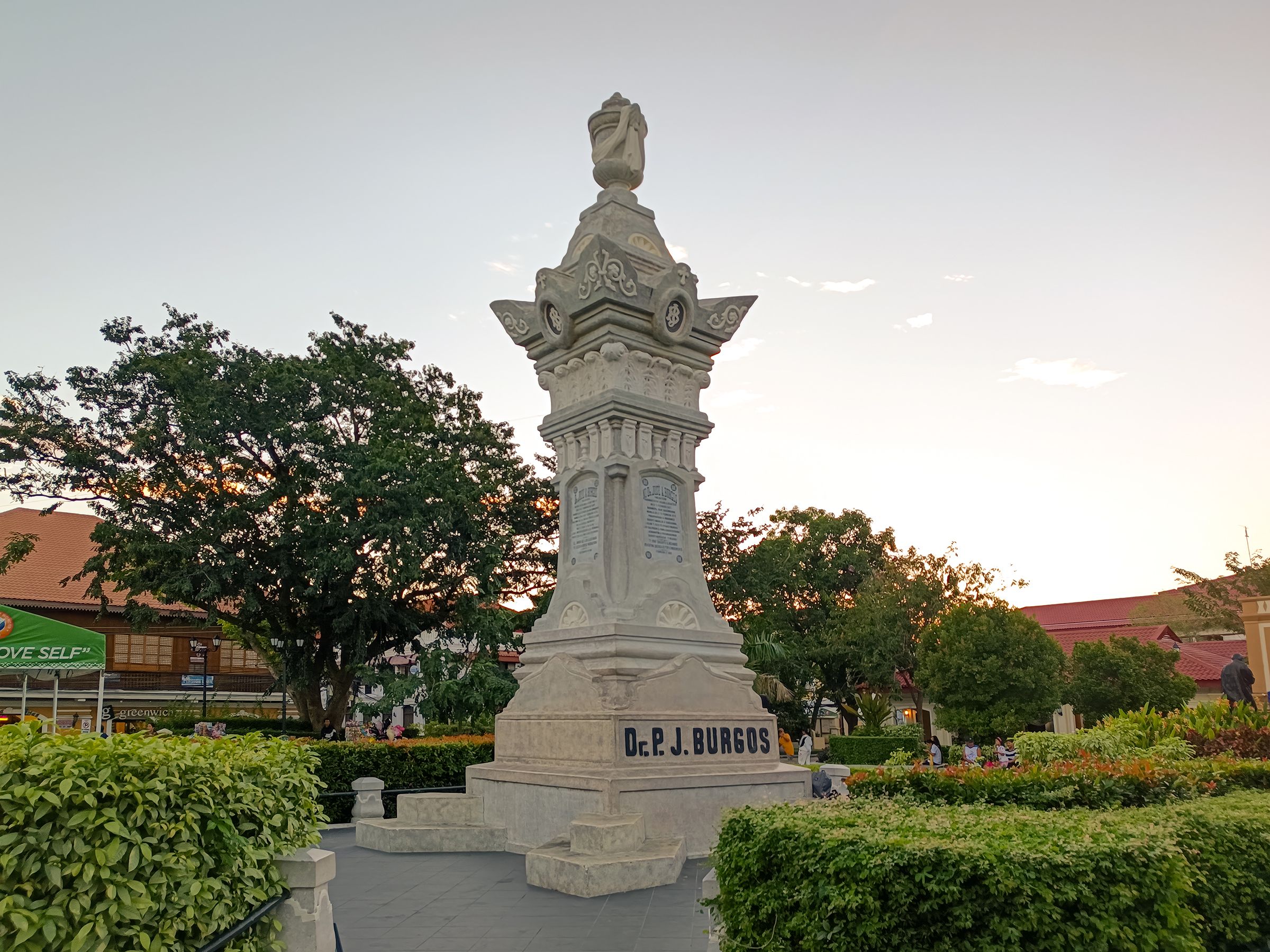
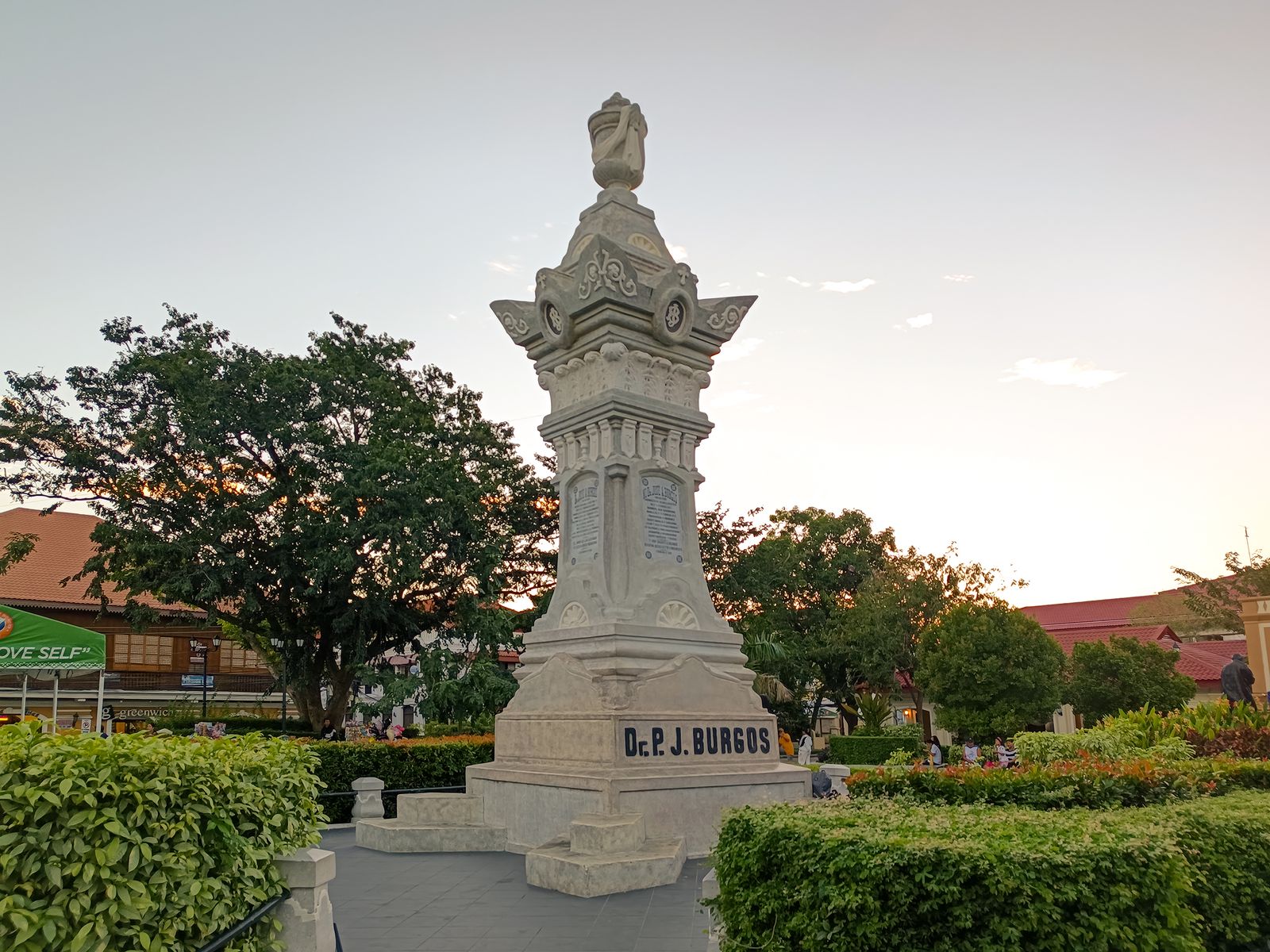
While neighboring Plaza Salcedo is named after Vigan’s Spanish conquistador founder, Plaza Burgos commemorates one of the city’s most celebrated native sons: Padre José Apolonio Burgos (1837–1872). Born in Vigan in 1837, Burgos became a prominent Catholic priest and scholar in Manila who campaigned tirelessly for ecclesiastical reforms and equal rights for the Filipino secular clergy.
In February 1872, Spanish colonial authorities executed Padre Burgos by garrote at Bagumbayan (now Luneta) in Manila alongside fellow priests Mariano Gomez and Jacinto Zamora— collectively remembered as Gomburza. Their martyrdom sparked widespread anti-Spanish colonial resistance and directly inspired national hero José Rizal to dedicate his second novel, El Filibusterismo, to their memory. A monument to Padre Burgos stands near the center of the plaza, and visitors can walk a few blocks south to tour his 1788 childhood home, now preserved as the Padre Burgos Museum under the National Museum of the Philippines.
The covered food hall and everyday plaza life
Plaza Burgos has long been known for its empanadahan. The vendors who used to sell from open-air stalls now serve customers in a roofed building with open sides along the western perimeter of the square. Vendors still assemble and fry Vigan empanadas to order but most have evolved to carinderia stalls additionally serving everyday Filipino dishes and Vigan specialties, so you can stop for merienda or sit down for a meal.
If you are trying a Vigan empanada for the first time, expect a distinct regional profile: unlike the larger, sweeter Batac version from Ilocos Norte, the Vigan iteration features a thin, crisp, light brown shell made from rice flour with a hint of orange color from atsuete (annatto). It is traditionally stuffed with shredded green papaya or cabbage, a whole egg, and crumbled garlicky Vigan longganisa. Eat it hot and spoon dark, tangy sukang Iloko (fermented sugarcane vinegar) directly into the cracked crust.
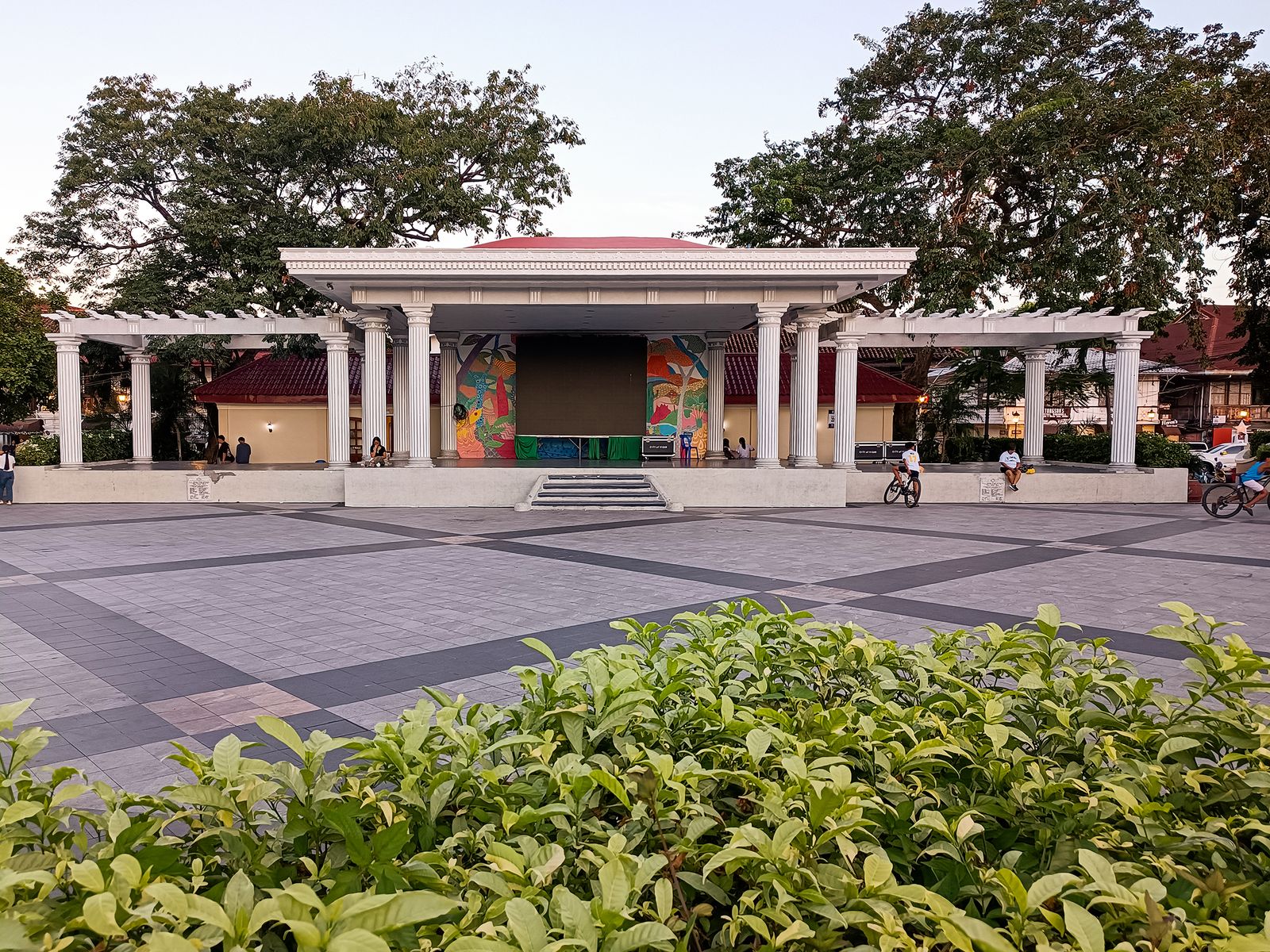
Throughout the year, the plaza’s open pavement and stage also host community concerts, trade fairs, and street-dance exhibitions during major local celebrations, including the Longganisa Festival every January and the Viva Vigan Binatbatan Festival of the Arts during the first week of May.
Getting there
Plaza Burgos sits directly at the center of Vigan’s historic poblacion or town center, making it effortless to reach on foot from anywhere in the heritage district:
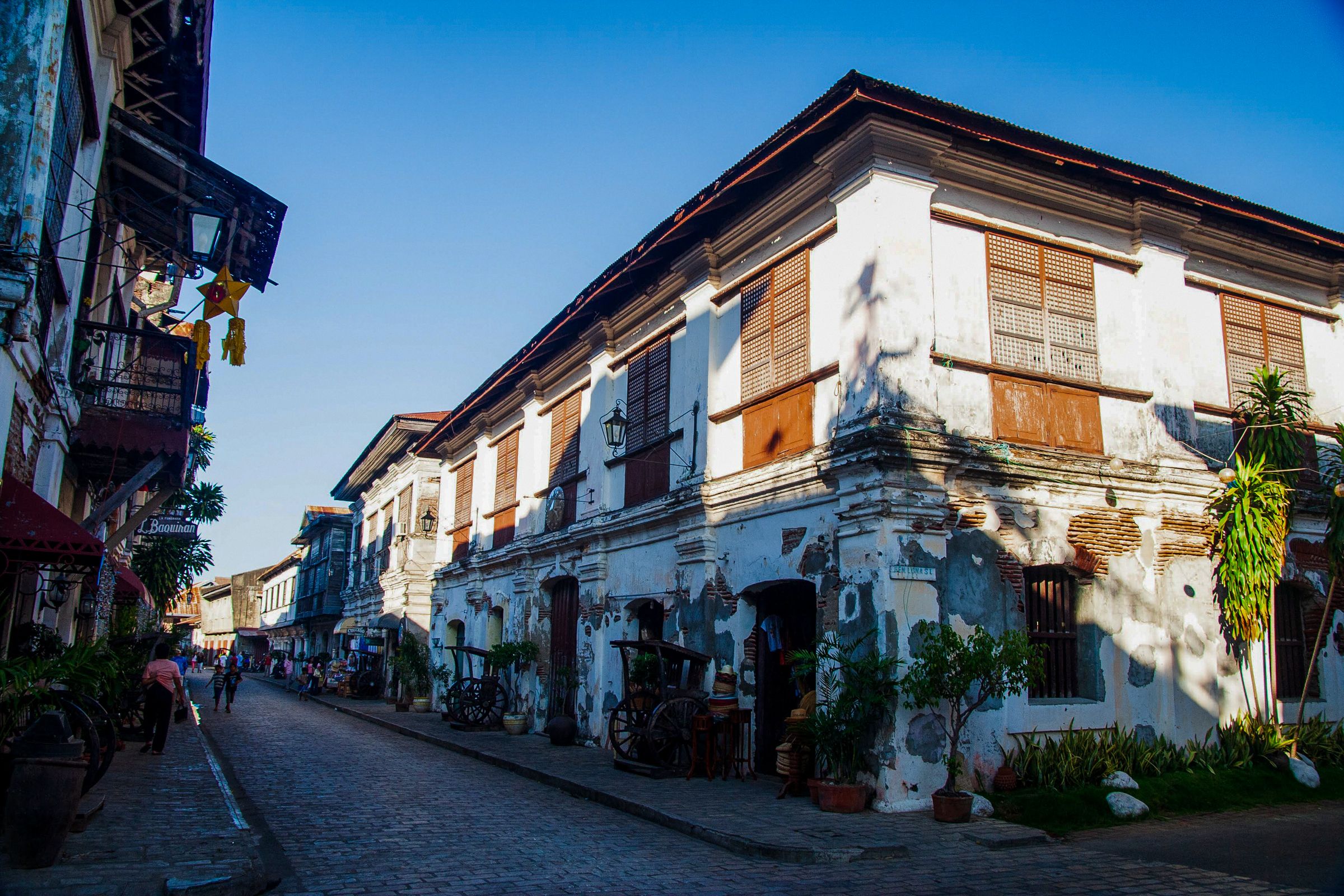
- From Calle Crisologo: Walk north to the top of the cobblestone pedestrian strip (near the Leona Florentino monument) and turn west onto Florentino Street; Plaza Burgos opens up less than a block away.
- From Plaza Salcedo: Simply walk past the front façade of St. Paul Cathedral around the corner into the shorter arm of the L-shaped square.
- By calesa or tricycle: Every local driver knows Plaza Burgos; tricycles can drop you right along Burgos Street or Jacinto Street at the edge of the square.
A closer look
Select a photo to view its caption and credit.
Nearby attractions
SEE
St. Paul Cathedral
~50 m away
SEE
Plaza Salcedo
~100 m away
SEE
Calle Crisologo
~120 m away
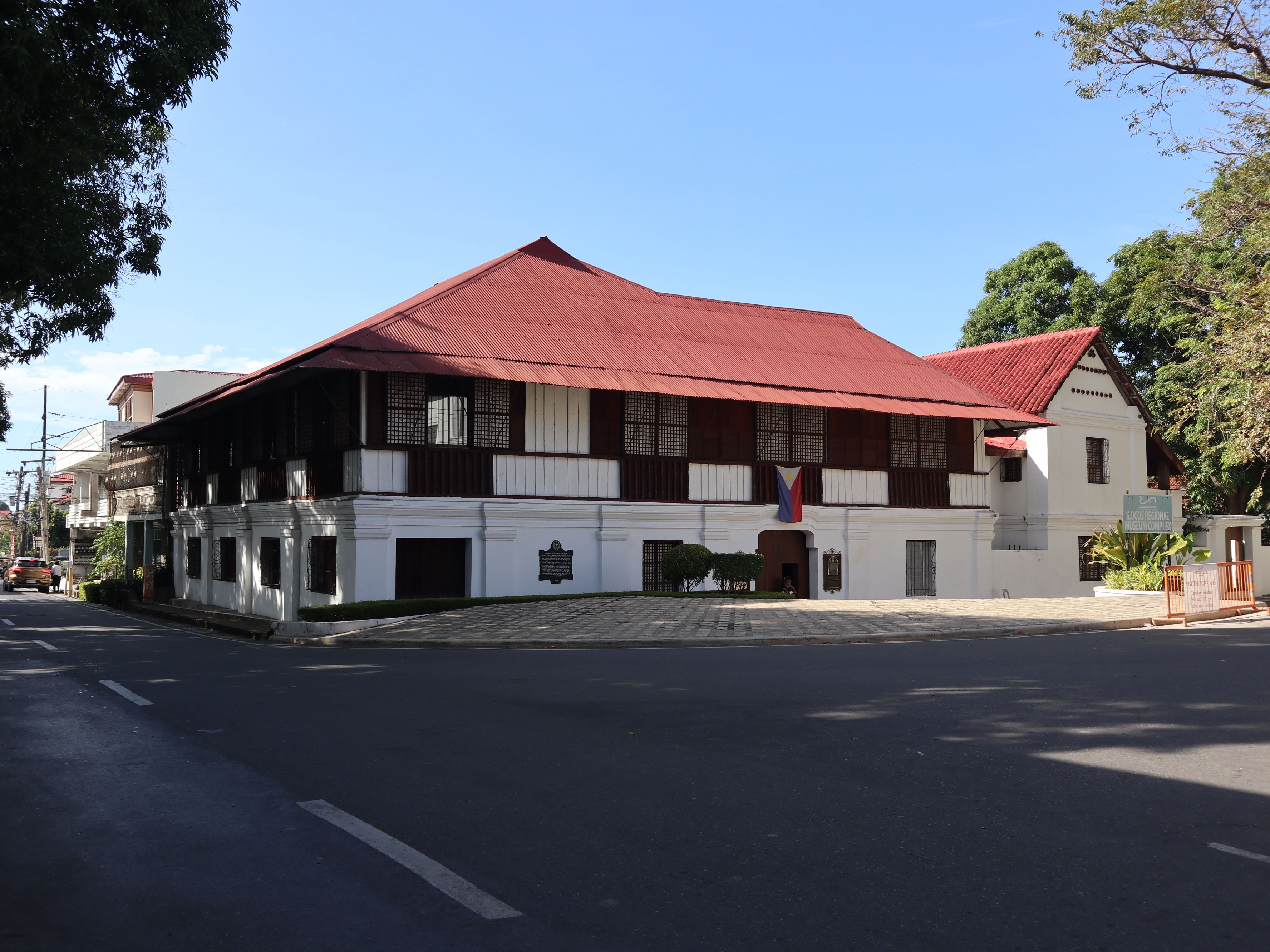

HERITAGE
Padre Burgos Museum
~250 m away
Related stories
SEE
Calle Crisologo
SEE