
Simbaan a Bassit
Vigan’s small Catholic cemetery chapel is known for its Baroque bell wall and the devotion to Apo Lakay celebrated on May 3.
Published · Last updated
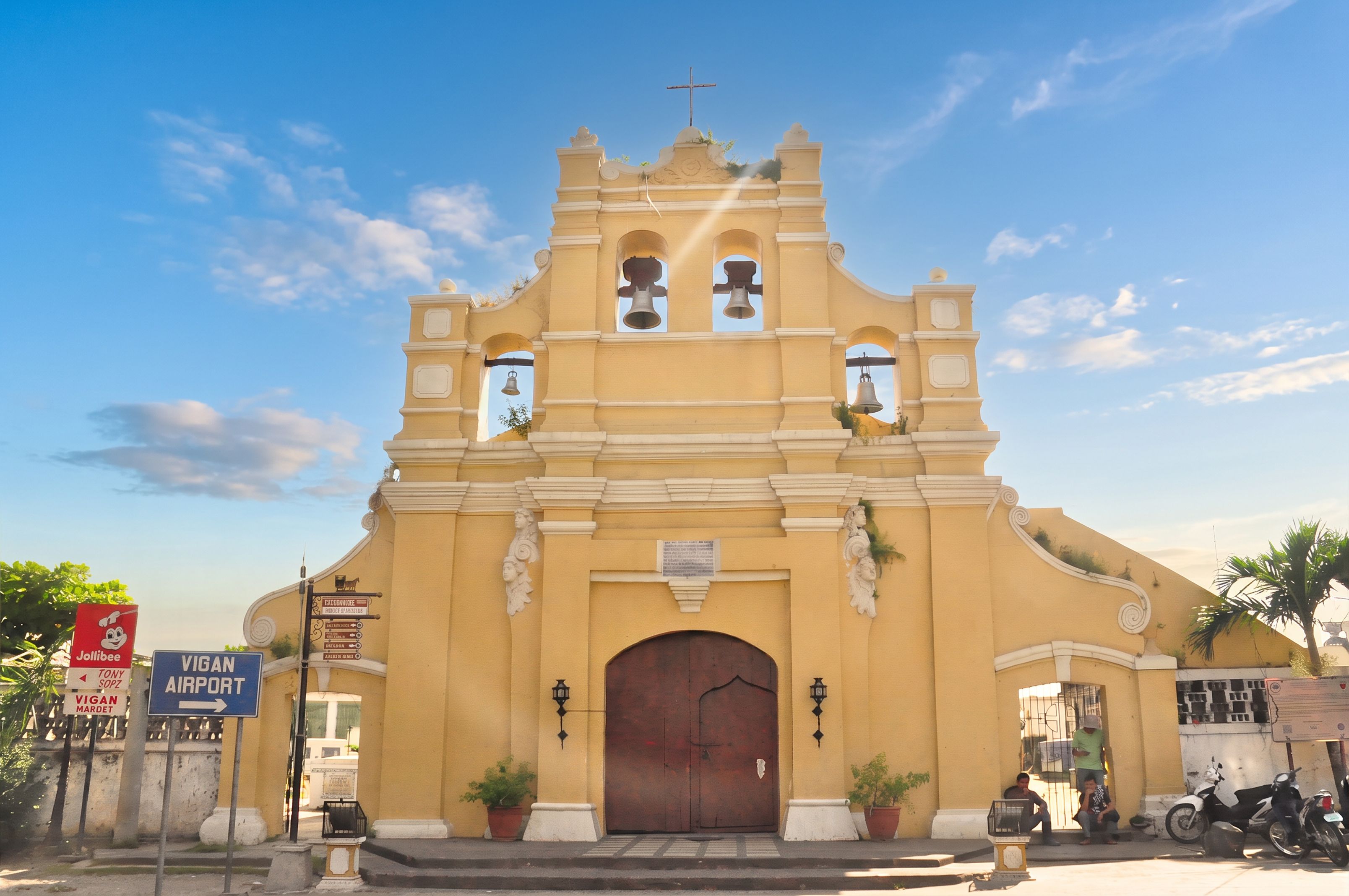
At the southern end of Quezon Avenue, the bells set into the front wall mark the chapel beside Vigan’s Catholic cemetery. Its name, Simbaan a Bassit, means “small church” in Ilocano. Built in 1852, the chapel has long served as a place for prayer, funeral rites, and religious gatherings. Mass is still celebrated here.
Practical information
- Location
- Beside Vigan’s Catholic cemetery at the southern end of Quezon Avenue.
- Built
- 1852.
- Architecture
- Baroque façade topped by an espadaña, a wall with openings for bells.
- Annual celebration
- Tres de Mayo, May 3, honors Apo Lakay.
- Mass
- Mass is still celebrated in the chapel. Confirm the schedule locally.
- Public access
- View the façade from outside. Confirm opening and interior access before visiting.
Why the chapel stands at the end of Quezon Avenue
Vigan’s old cemetery lay on the north side of the cathedral. Sanitation concerns led to its relocation south of the poblacion, or town center, where the cemetery chapel was completed in 1852. If you visit both churches, the walk from the cathedral to the chapel traces that shift from a burial ground beside the main church to one at the southern edge of the old town.
The bells in the Baroque façade
The chapel’s compact Baroque façade has curves, decorative scrolls, and angel motifs that recall mission churches in Mexico and Southern California. Follow those details upward to the openings that hold the bells. This upper wall, called an espadaña, makes the façade itself the belfry. At St. Paul Cathedral, the bells hang in a separate tower.
From directly in front of the chapel, look for the four bells beneath the cross. Each hangs where you can see it through the wall. This arrangement was used in Latin American church architecture, and Vigan’s World Heritage nomination identifies the chapel as one of the few surviving Philippine examples of a Baroque façade crowned by an espadaña.
The devotion to Apo Lakay
The chapel is dedicated to Santo Cristo Milagroso de Vigan. Devotees affectionately call the revered image Apo Lakay, or “Old Man.” According to local tradition, during an epidemic in 1882, residents asked the parish priest of Sinait to bring that town’s image of the crucified Christ to Vigan. They prayed a nine-day novena and credited their deliverance to the devotion. Church registers document a period of high mortality in November and December that year, and the first thanksgiving in honor of the image was held on May 3, 1883.
The date gives the celebration its name, Tres de Mayo, or “Third of May.” It also coincides with the traditional Feast of the Finding of the Holy Cross. Earlier processions included images of Saint Helena, Saint Macarius, and the crucified Christ, recalling the Christian account of Helena’s discovery of the cross. The May 3 observance continues to bring people together at the chapel in devotion and thanksgiving.
Visiting for Mass or to see the chapel
If you’re coming for Mass or Tres de Mayo, check the arrangements locally before you go. For a visit focused on the architecture, take a moment outside to look at the façade and its bell openings. Give worshippers and mourners space, and ask before photographing services or other religious activities.
Related stories
SEE
Calle Crisologo
SEE