
Calle Crisologo
The defining artery of Vigan’s UNESCO World Heritage site, where four centuries of Spanish-colonial urban planning meet authentic arquitectura mestiza.
Published · Last updated
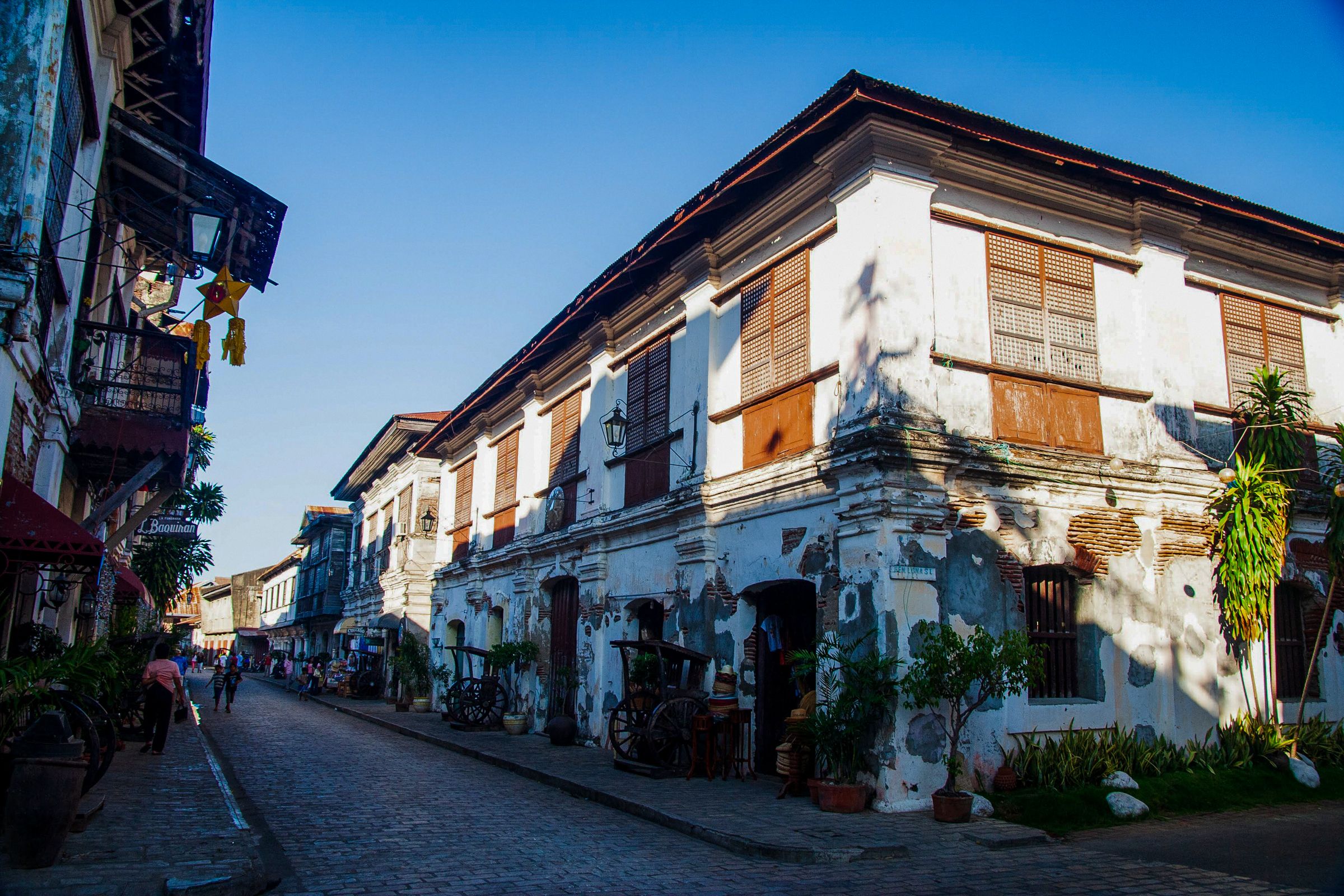
Calle Crisologo is situated in the historic core of Vigan City, standing as the last surviving site in the Philippines that depicts Spanish urban planning seamlessly integrated with authentic 19th and early 20th-century Asian-colonial architecture. The ancestral homes lining this famous cobblestone stretch are remarkable survivors, having outlasted four centuries of Spanish colonial rule, 45 years of American occupation, and a three-year Japanese invasion during World War II.
While it is easy to get swept up in the colonial nostalgia of a quick photograph, the street reveals its true depth when you take the time to look closely at its physical construction and understand the merchant families who built it.
Practical information
- Address
- Calle Crisologo, Mestizo District, Vigan City, Ilocos Sur
- Admission
- 100% Free and open to the public 24/7.
- Best time to visit
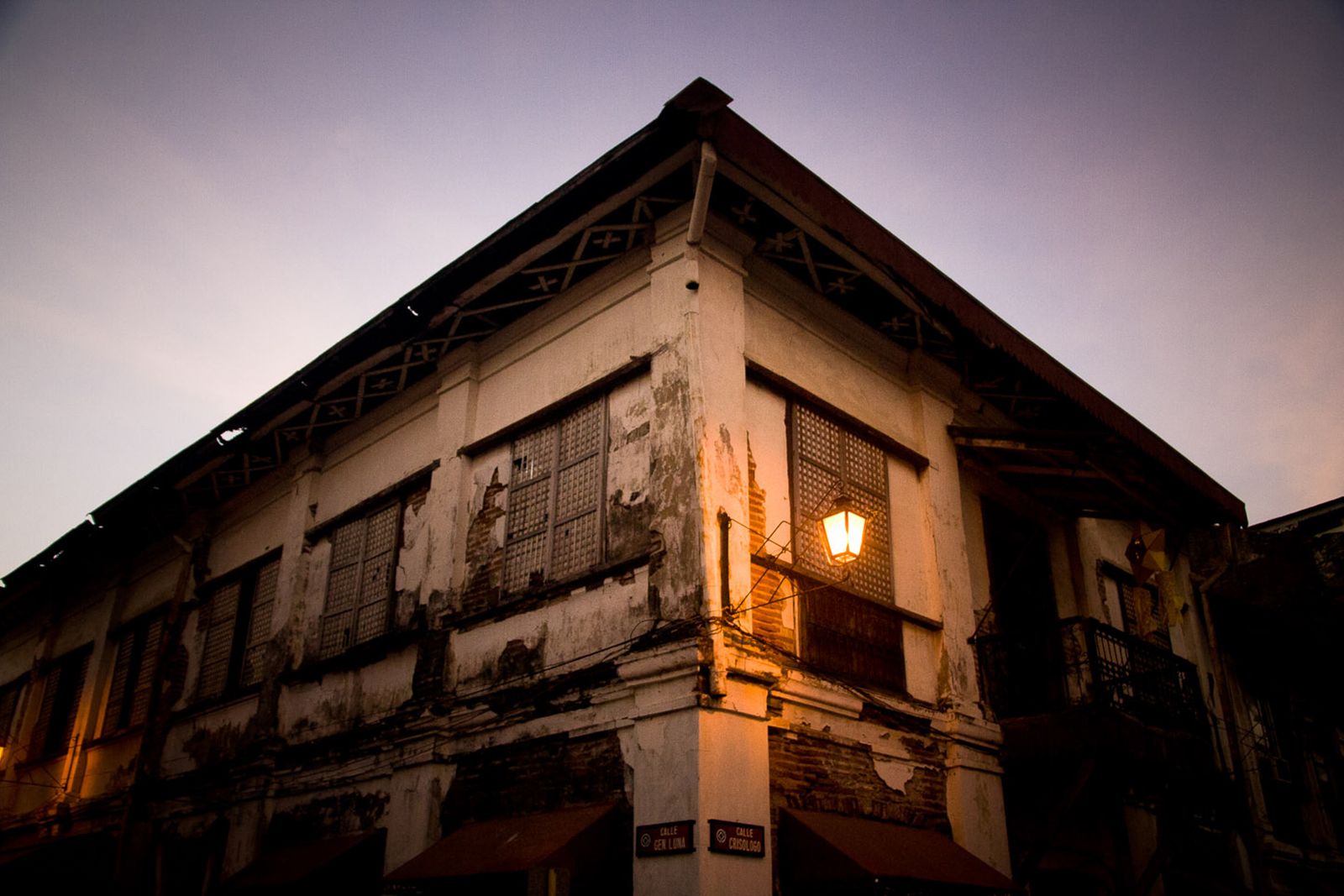
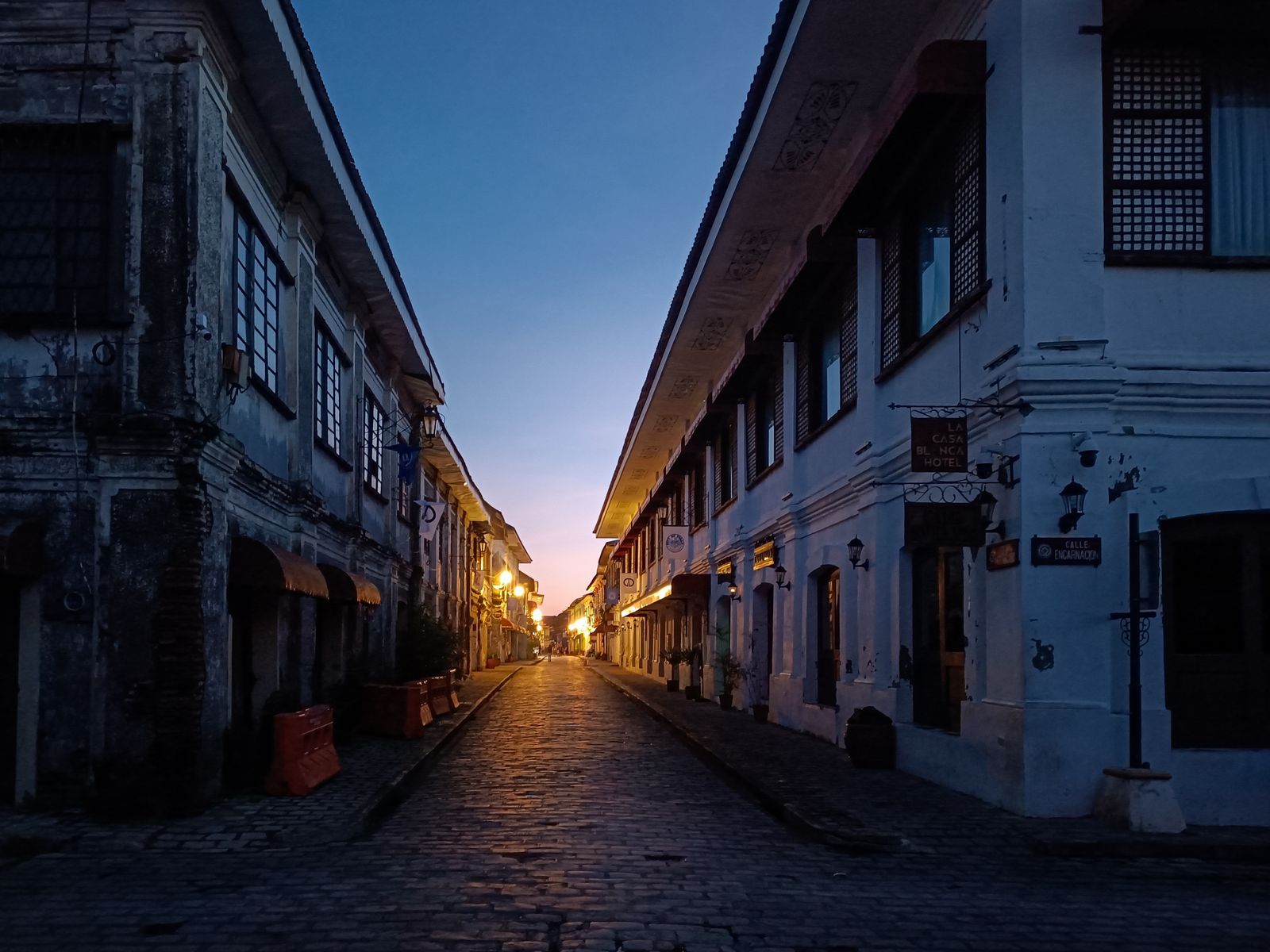
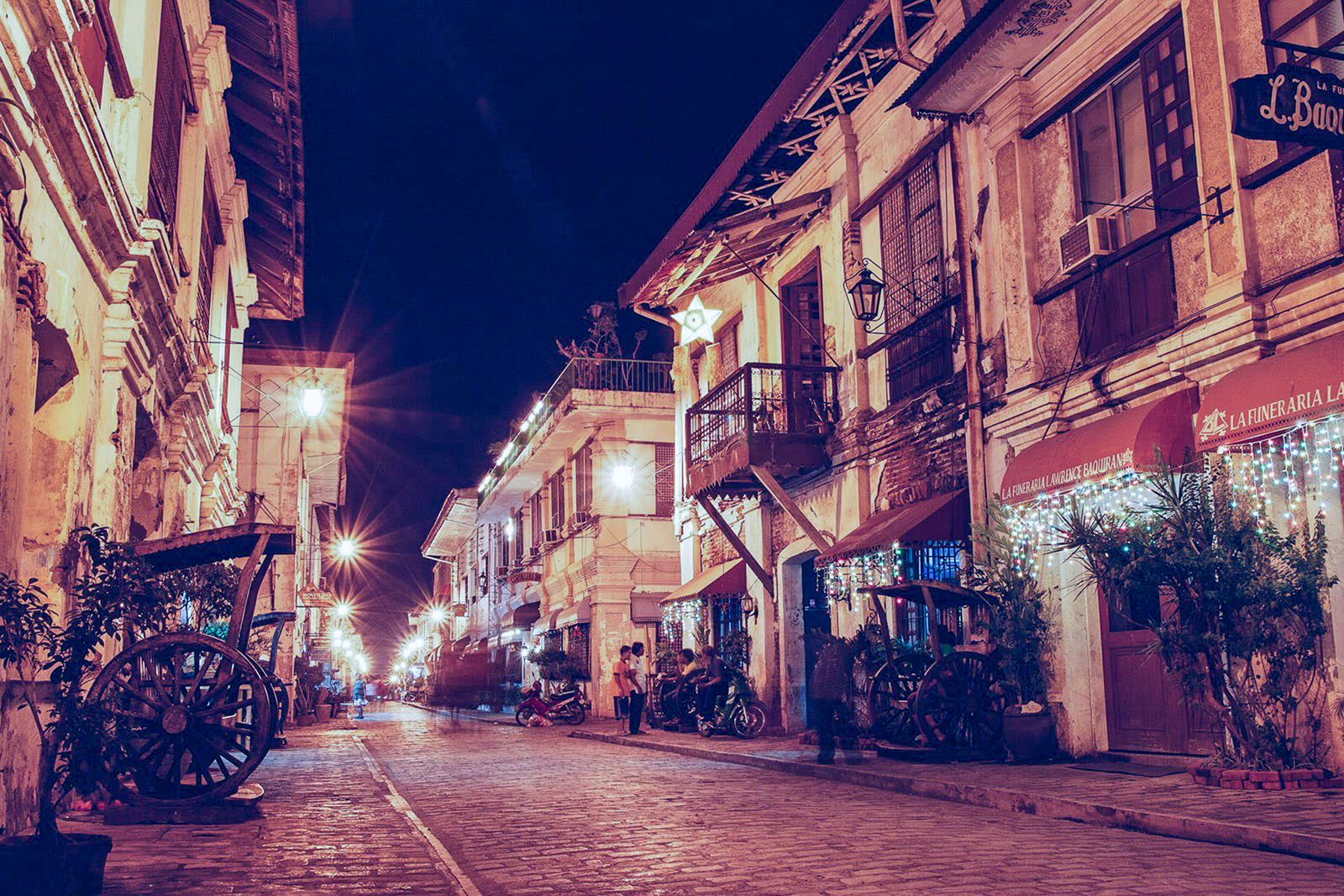
- Early morning (6:00 AM – 7:30 AM) to experience the street empty of crowds, or dusk when the warm yellow street lamps illuminate the old facades.
- Facilities
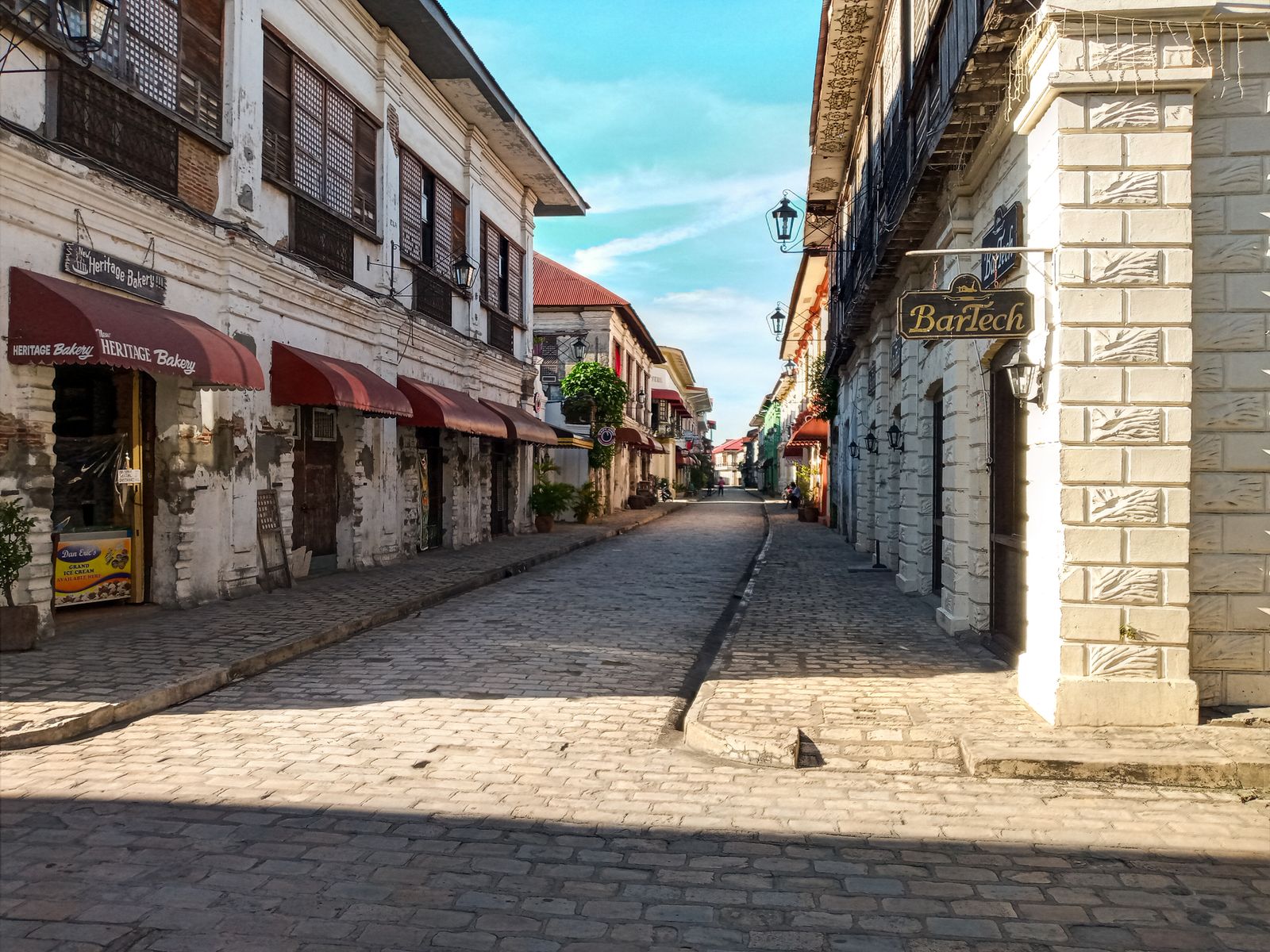
- The street is closed to motorized traffic. Dozens of restaurants, cafés, and souvenir shops operate out of the ground floors of the ancestral homes.
- Maintenance
- To preserve the antiquity and cleanliness of the cobblestones, the local government washes down the street twice a week.
- Hours
- Open 24 hours (Commercial shops typically operate 8:00 AM to 9:00 PM)
- Estimated visit time
- 1 to 2 hours
Trade and the arquitectura mestiza
The ancestral houses along Calle Crisologo grew out of the domestic and overseas trade that made the Mestizo District prosperous. Affluent families of mixed Chinese and Ilocano heritage settled in the district and built the houses you see today. Alongside Chinese merchants based in Pariancillo, they helped make Vigan the political, religious, and commercial center of northern Luzon.
What Vigan traded, from indigo to earthenware
Before Spanish colonization and during its earliest decades, merchants exchanged Asian goods for gold, beeswax, and forest products brought down from the Cordillera mountains. By the eighteenth century, processed crops and manufactured goods had become a defining part of Vigan’s commerce.
One of the most lucrative exports of the eighteenth and early nineteenth centuries was indigo, known locally as tayum and in Spanish as añil. The plant was cultivated across the old province of Ilocos and gave its name to Tayum in neighboring Abra. Producers fermented it in brick and lime vats called baldi, turning a local crop into concentrated cakes of blue dye for textile makers.
Indigo supplied textile markets across the Pacific and in Europe and Asia. Dye reached Mexico via the Manila–Acapulco galleons, while Vigan’s wider trade networks reached Europe, China, Borneo, and Malaysia. The end of the galleon trade in the early nineteenth century changed those connections. By the late 1800s, synthetic dyes were displacing natural plant dyes, which helps explain why indigo’s role in building the merchant families’ fortunes is easy to miss today.
The same merchants dealt in textiles, agricultural products, and materials used in everyday work.
- Woven cloth (abel / inabel): Cotton textiles made on wooden handlooms, traded with Manila and other domestic markets as well as overseas.
- Sugarcane wine (basi): Brewed across the region and exported abroad. The Spanish monopoly that restricted local production and sale helped spark the 1807 Basi Revolt, a story explored in the Old Carcel Museum guide.
- Tobacco: Grown in the Ilocos lowlands and circulated through Vigan’s merchant networks long before Virginia tobacco became a new regional cash crop in the 1950s.
- Earthenware jars (burnay): Fired in local kilns and traded in their own right, these heavy stoneware vessels also stored and transported grain, salt, bagoong, water, vinegar and basi. Vigan’s pottery tradition connects that commercial history with a craft visitors can still encounter.
- Maguey: Agave fiber used for rope, cordage and coarse woven goods serving maritime and agricultural work.
- Lime (apog): Processed from limestone and shells, traded as a commodity and used locally in masonry mortar, plaster and indigo-dye processing.
How commerce shaped the merchant houses
Trade helped pay for the houses and shaped how families used them. The bahay na bato grew out of the raised living quarters of the Filipino bahay kubo. In Vigan’s merchant houses, the space underneath became an enclosed ground floor known as the silong. This adaptation is part of what gives Vigan its arquitectura mestiza, which combines indigenous Philippine building traditions, Asian proportions and ways of organizing the home, and Spanish colonial elements.
At street level, the heavy brick or stone walls kept shops, offices, storerooms, and space for carriages cool and secure. Putting the business on the ground floor meant goods could be brought in from the street and customers could be served without going upstairs. The family lived above the activity in airy rooms, often framed in timber, though some Vigan houses used brick or stone on both floors. This way of living above the shop has parallels in other Southeast Asian trading towns, including Penang and Melaka. Vigan’s World Heritage nomination dossier describes that connection.
You can read the arrangement from the street. An upper story that projects outward, called a volada, gives the rooms more space and shades the sidewalk below. Translucent capiz shells let daylight through the sliding window panels when they are closed. Slide the panels aside and the broad openings let air through the living quarters. Above them, the steep roofs were laid with curved clay tiles called teja de curva. Many shops still occupy the ground floors today, making the old relationship between the street and the house easy to see.
What’s in the name: Escolta, Washington, and Crisologo
Calle Crisologo has changed its identity multiple times to reflect the ruling powers of the era. During the Spanish colonial period, it was known as Calle de Escolta de Vigan. The word escolta refers to an escort or guard, mirroring Manila’s own Escolta Street where armed escorts historically accompanied the Spanish governor-general. Under American rule, the avenue was renamed Washington Street, before finally taking its current name.
The street is named after Marcelino “Mena” Pecson Crisologo (1844–1927), a Vigan native whose life bridged law, revolution, and literature. Trained in civil and canon law at the University of Santo Tomas, Mena Crisologo joined the struggle for Philippine independence, surviving capture and torture during the 1895 Candon uprising. He later served as a delegate to the 1898 Malolos Congress and became the first civil governor of Ilocos Sur in 1901.
Beyond politics, Mena Crisologo was a pioneer of Ilocano drama, writing satirical plays and zarzuelas like Codigo Municipal and translating Don Quixote into Ilocano.
Leona Florentino: the trailblazer at the gateway
Right at the northern gateway to Calle Crisologo stands a monument to one of Vigan’s most brilliant minds: Leona Florentino (1849–1884). Marked by a bronze statue outside the Florentino ancestral home, she is recognized internationally as the “Mother of Philippine Women’s Literature”.
Because women were barred from universities during the 19th century, Florentino was tutored at home and began writing poetry at the age of ten, composing fluently in both Ilocano and Spanish. Her lyrical verses and biting satires broke away from the strictly religious writing of the era, exploring love, daily life, and the double standards women faced. This bold stance eventually led to estrangement from her family, and she died of tuberculosis at just 35.
Her work gained international acclaim posthumously at the 1887 Madrid exposition and the 1889 Exposition Universelle in Paris, earning her a spot in the Bibliothèque Internationale des Œuvres de Femmes.
Modern experience and preservation
Today, thanks to stringent local government initiatives like the Vigan Heritage Conservation Program, Calle Crisologo operates as a thriving heritage tourism hub.
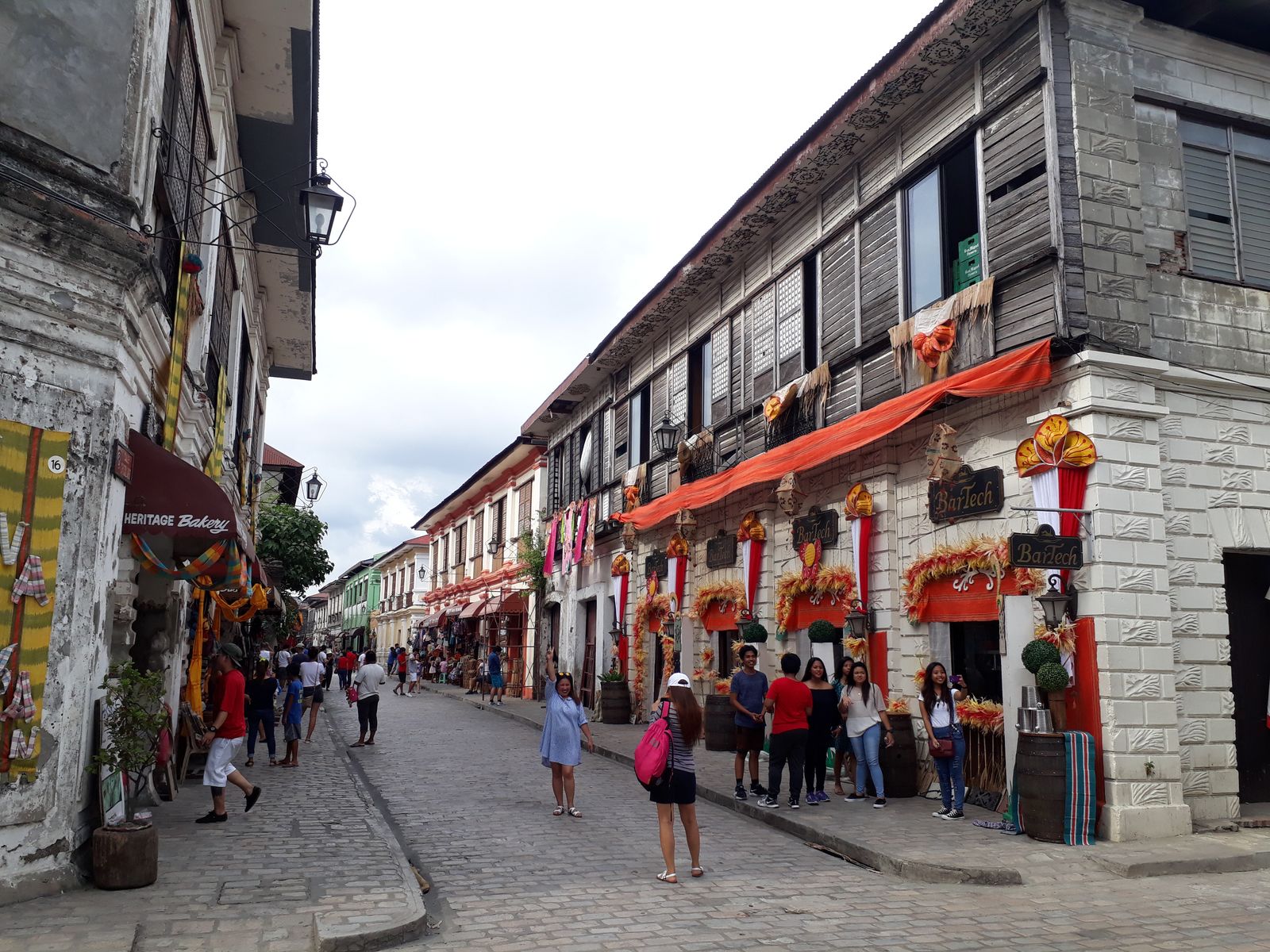
- Calesa Rides: Motorized tricycles are banned on the street. Instead, riding a traditional horse-drawn calesa along the cobblestones remains the primary way to tour the district.
- Living Heritage: To elevate the colonial nostalgia, the city deploys security personnel and police officers who patrol the street dressed in Spanish-era guardia civil uniforms.
- Dining and Shopping: The ground floors that once stored indigo now house native restaurants where you can try signature Ilocano dishes like Vigan empanada, bagnet, and longganisa, alongside numerous local souvenir shops.
Getting there
Calle Crisologo forms the primary spine of Vigan’s tourist district. It is highly accessible on foot from anywhere in the poblacion. If you are staying at a modern hotel slightly outside the heritage core, a tricycle can drop you at the northern entrance near Plaza Burgos or the southern entrance along Liberation Boulevard.
Within the town center, regular tricycle fare is ₱30 for one passenger by day (6 AM–6 PM). See City Information’s tricycle fare guide.
A closer look
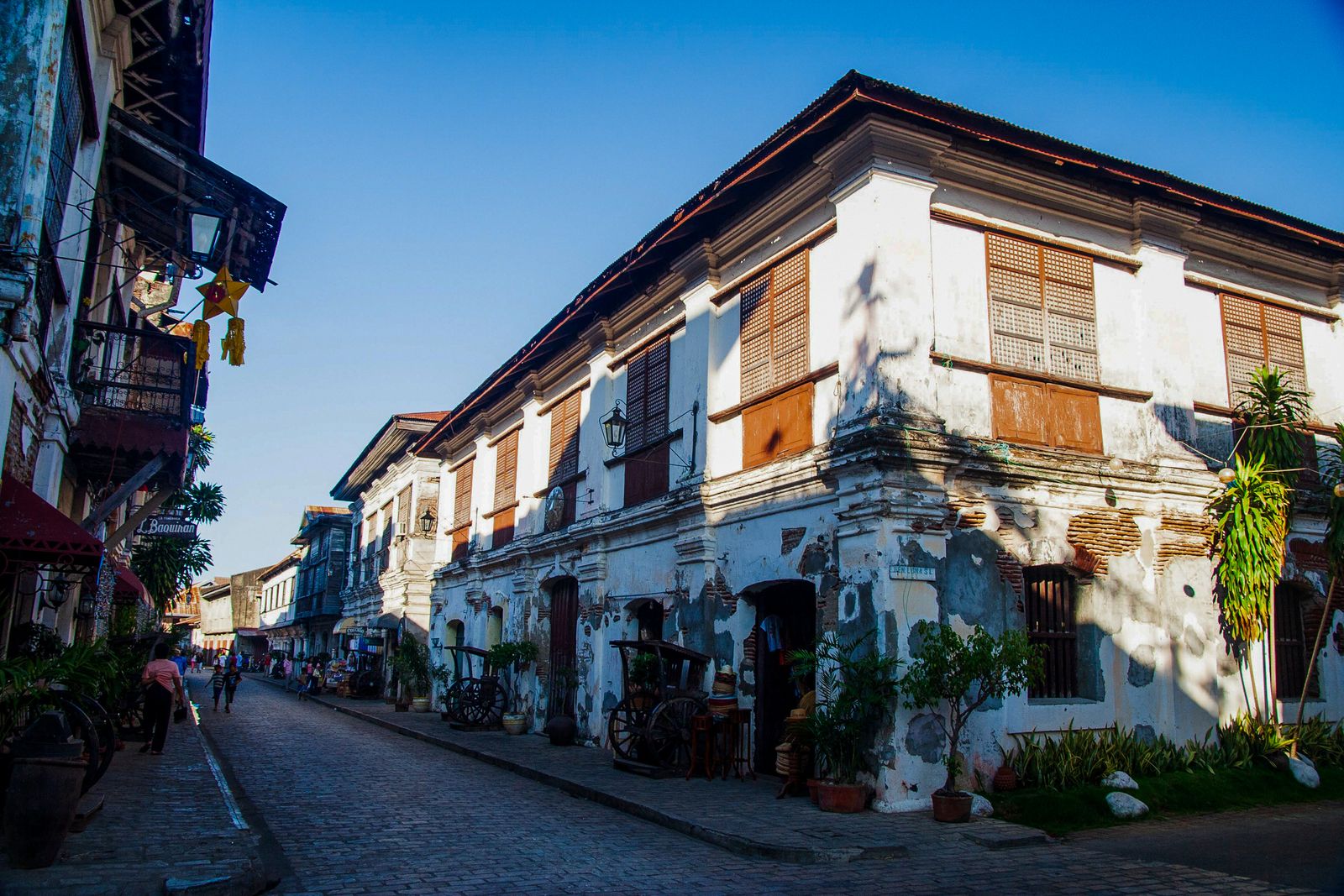
Select a photo to view its caption and credit.
Nearby attractions
Vigan rewards those willing to wander further than the main postcard street. Keep exploring the immediate historic grid:
SEE
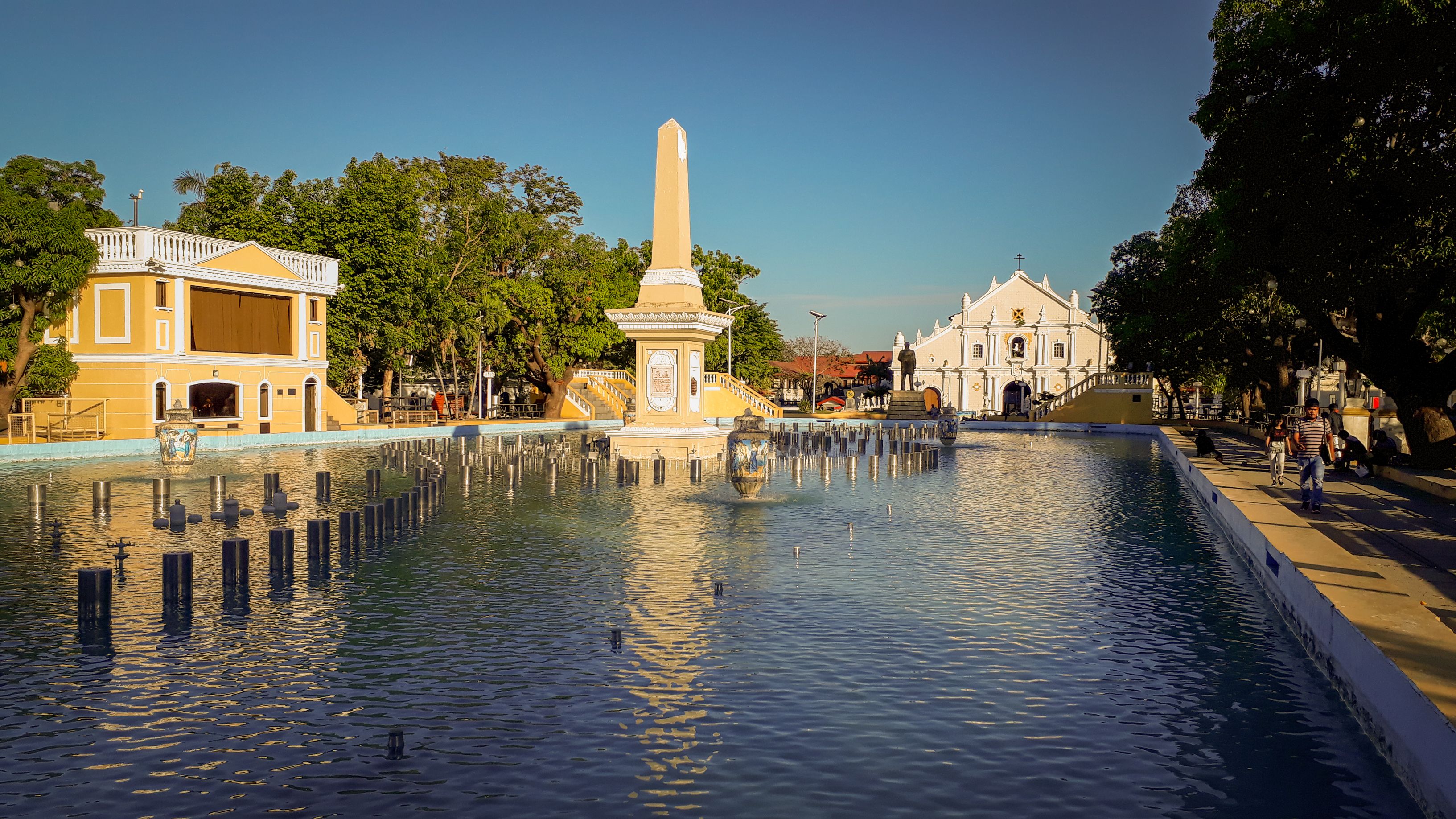
Plaza Salcedo & the Dancing Fountain
~300 m away
SEE
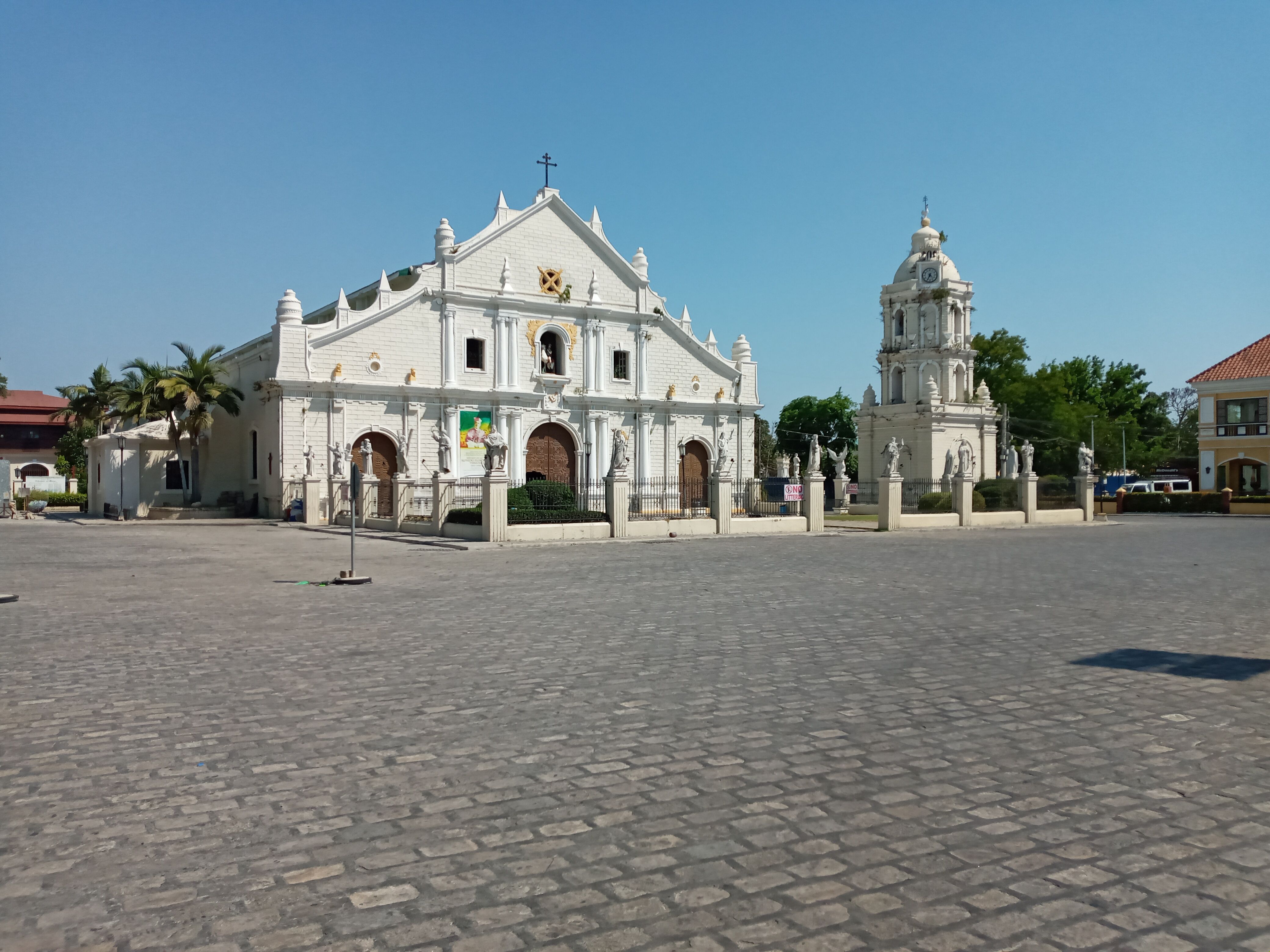
St. Paul Cathedral
~350 m away

HERITAGE
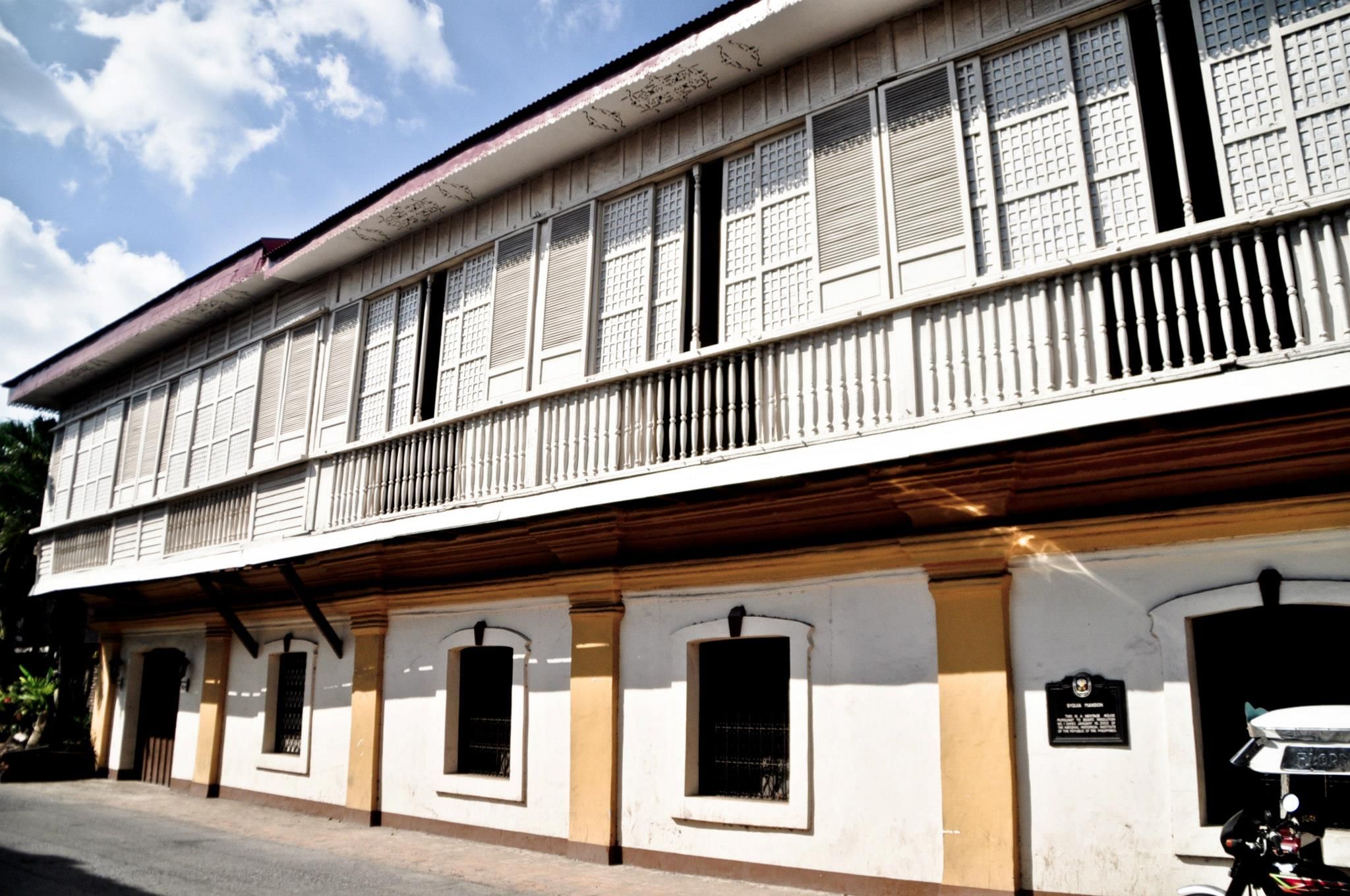
Syquia Mansion
~250 m away
Related stories
SEE
St. Paul Cathedral
SEE