
National Museum of the Philippines – Ilocos Regional Complex
Two historic buildings on Burgos Street tell different parts of the Ilocos story through paintings, presidential memorabilia, domestic furnishings, and handwoven cloth.
Published · Last updated
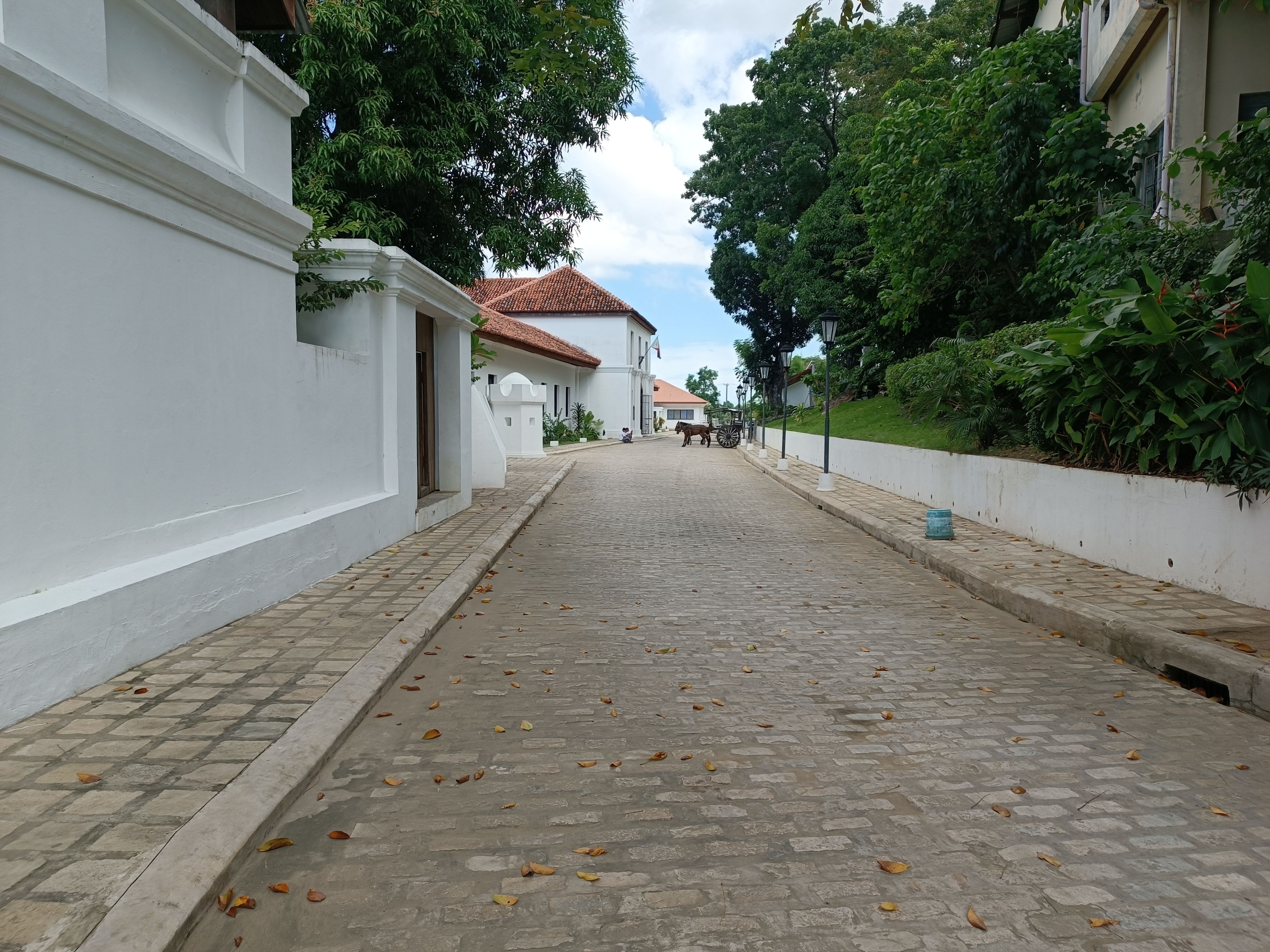
On Burgos Street in Vigan, the National Museum occupies a former provincial jail and an ancestral house. The jail holds the Basi Revolt paintings and the collection of President Elpidio Quirino, who was born in the warden's apartment. The house associated with Father José Burgos brings the visit back to the scale of everyday life, with period furnishings and a gallery devoted to Ilocano weaving.
Practical information
- Address
- Burgos Street, Vigan City, Ilocos Sur
- Vigan museum buildings
- Old Carcel Museum and Padre Burgos Museum
- Exhibitions and groups
- Check gallery availability and arrange group visits with the Ilocos office in advance.
- Magsingal
- Separate site about 13 km north of Vigan. Confirm reopening before traveling.
- Phone
- 0917 351 2074
- ilocos@nationalmuseum.gov.ph
Begin with the two museums in Vigan
The regional museum complex launched on January 30, 2015, when the restored Old Carcel Museum joined the existing sites. In Vigan, you can easily pair it with the neighboring Padre Burgos Museum on the same walk. The third site, Magsingal Museum, sits in a separate town farther north.
Art and history in the old jail
Old Carcel takes its name from cárcel, the Spanish word for jail. A town jail stood on this site by 1657, becoming the Ilocos Sur provincial jail in 1818; surviving 1895 plans document the much larger winged structure seen today. Part of the building served as a provincial library starting in 1948, while the jail itself operated until 2014, when restoration began to convert it into a museum.
President Elpidio Quirino was born in the warden’s apartment on November 16, 1890, while his father held the post. The second-floor gallery displays family portraits alongside a carved camphorwood chest gifted to Quirino by Chiang Kai-shek, while the north wing hosts changing exhibitions.
In the south wing, fourteen oil paintings chronicle the 1807 Basi Revolt, an uprising against the colonial monopoly on sugarcane wine. Painted in 1821 and attributed to Vigan artist Esteban Pichay Villanueva, the series was declared a National Cultural Treasure in 2009. An adjacent gallery explores the trade and social ties that grew around basi. The former jail itself helps protect these works: its thick brick walls stabilize indoor conditions, while adapted hardwood shutters block excess sunlight and pollutants.
A family house and the craft of weaving
Dating to 1788, the Burgos ancestral home is linked to the childhood of Father José Burgos, one of the three martyred priests remembered as Gomburza. Period furnishings inside offer a glimpse into domestic life in historic Vigan. The Abel Iloko exhibition traces the craft of traditional inabel handweaving, from yarn preparation to finished textiles, through wooden tools, frame looms, dyed cotton thread, and woven pieces. The collection highlights how patterns and techniques shift across everyday garments, blankets, towels, heirlooms, and ritual cloths.
Magsingal is a separate stop
Located about 13 kilometers north of Vigan, the Magsingal Museum is housed in a former convent next to the Church of San Guillermo de Aquitania. The National Museum currently lists the site as temporarily closed; we will update this page once it reopens.
A closer look
Select a photo to view its caption and credit.
Related stories
SEE
Calle Crisologo
SEE