
Pottery at Pagburnayan
Discover the enduring art of burnay jar-making, where local clay is kneaded, spun, and kiln-fired in a centuries-old process as captivating as the finished vessel.
Published · Last updated
Experience information
- Experience
- Pottery and craft
- Where
- Pagburnayan, Vigan
- Visitor note
- Contact the workshop before traveling. Demonstrations, hands-on sessions, prices and opening times depend on the operator.
Centuries of clay and fire
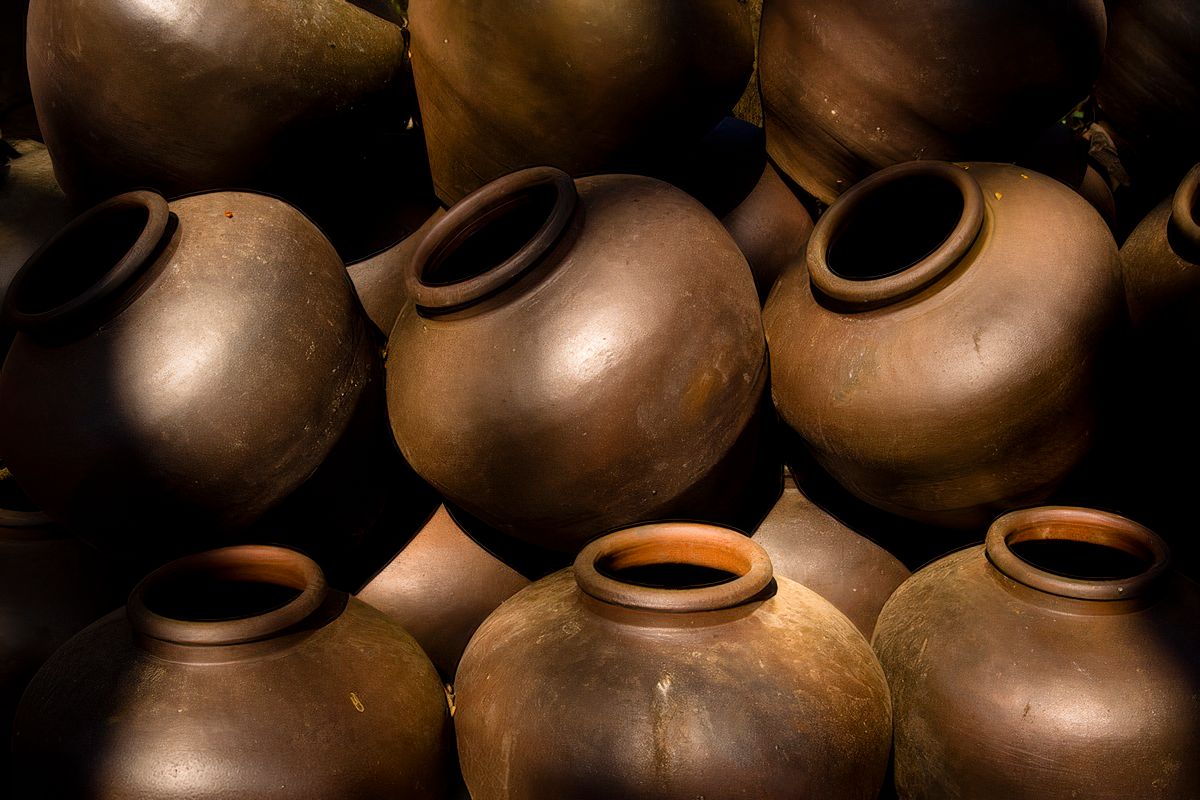
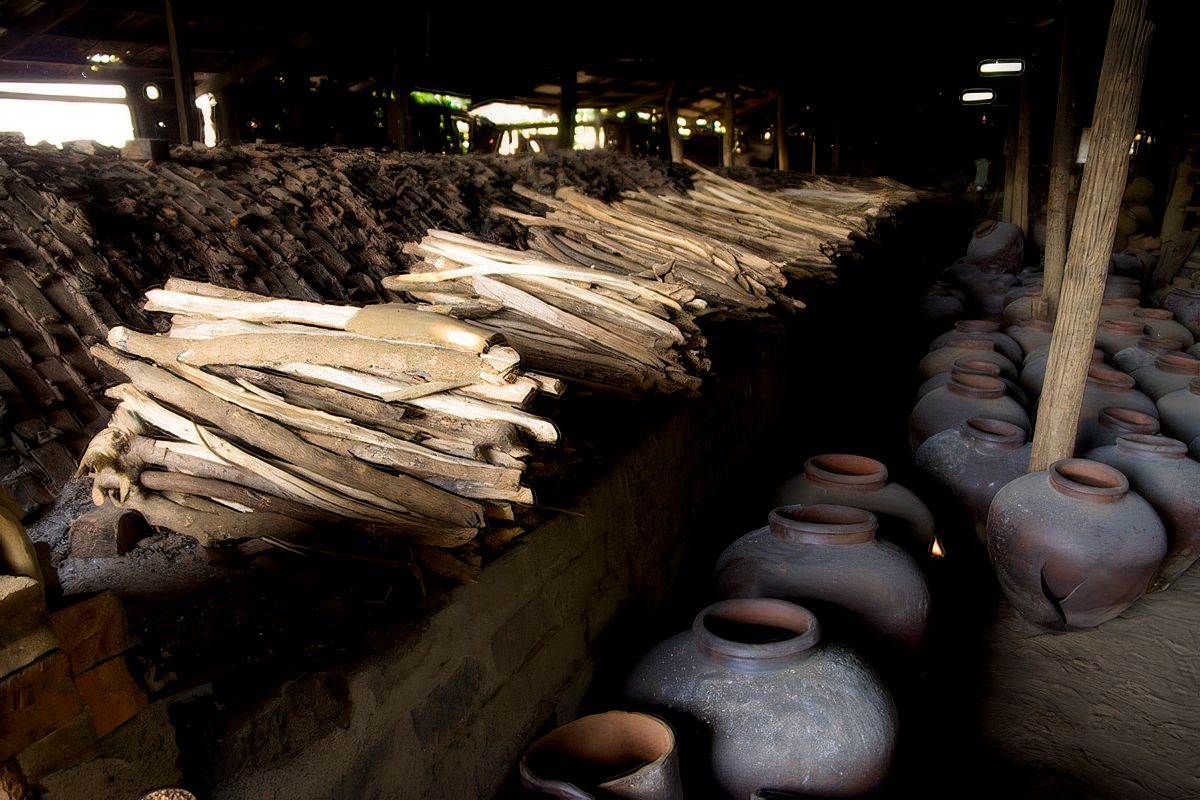
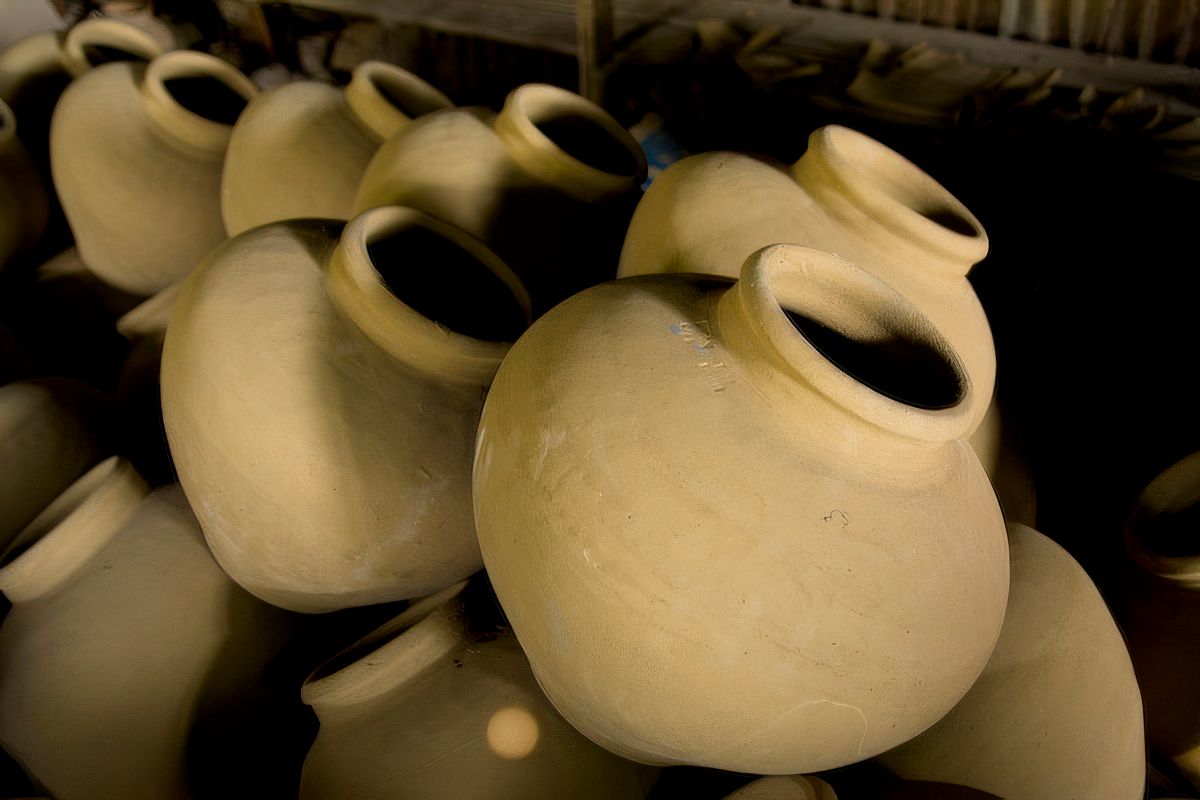
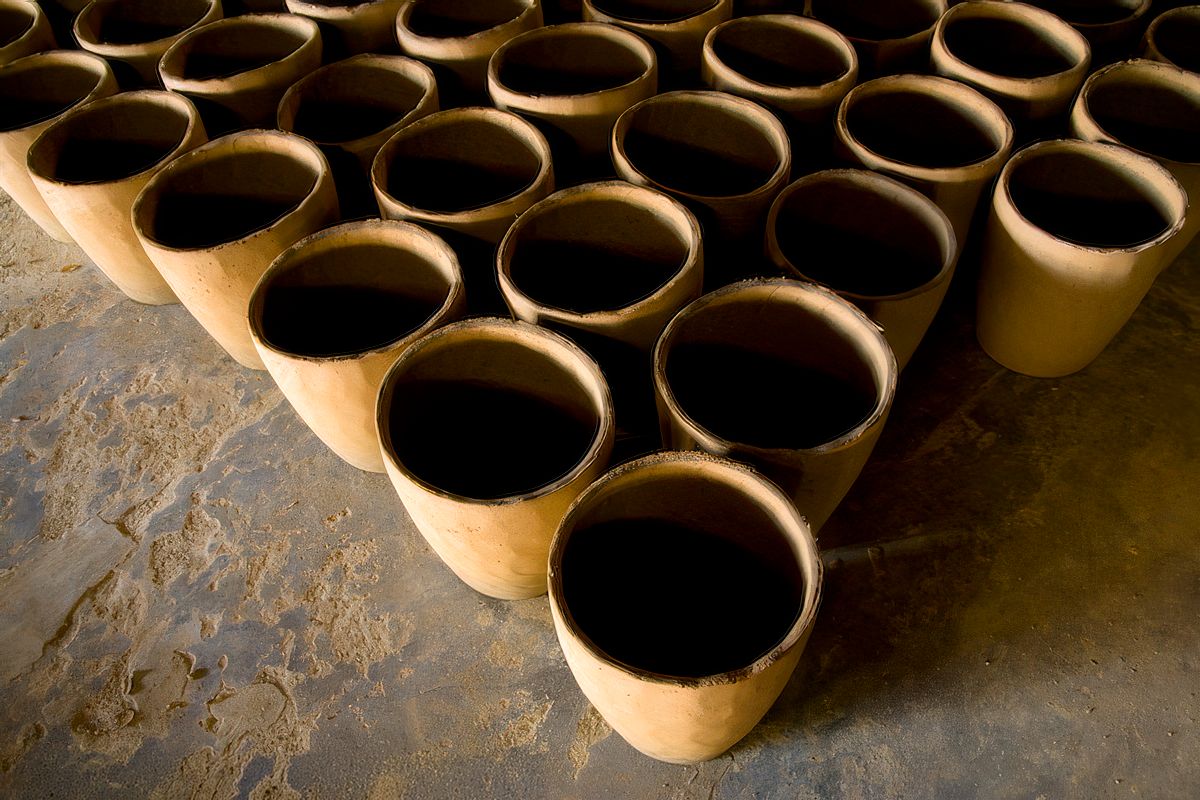
Vigan’s jar-making tradition is part of the city’s long history of trade and cultural exchange. Chinese artisans brought stoneware-making techniques to the region, where local clay and the work of Ilocano potters shaped the distinctive burnay. Tempered with fine sand and fired in massive, wood-fed “dragon” kilns, these sturdy, unglazed jars became indispensable for fermenting bagoong (fish paste), aging sukang Iloko (sugarcane vinegar) and basi (sugarcane wine), and storing water or grains.
That living lineage earned national recognition in 1990, when Vigan master potter Fidel Antiporda Go was named a National Folk Artist for his contribution to preserving the burnay tradition. Go dedicated his life to safeguarding traditional wheel-throwing and kiln-firing methods, turning a working neighborhood industry into a celebrated pillar of Philippine living heritage.
Watch the craft take shape
On the southwestern edge of Vigan’s historic center lies Pagburnayan (Barangay VII), the traditional heartland of the city’s remaining jar factories.
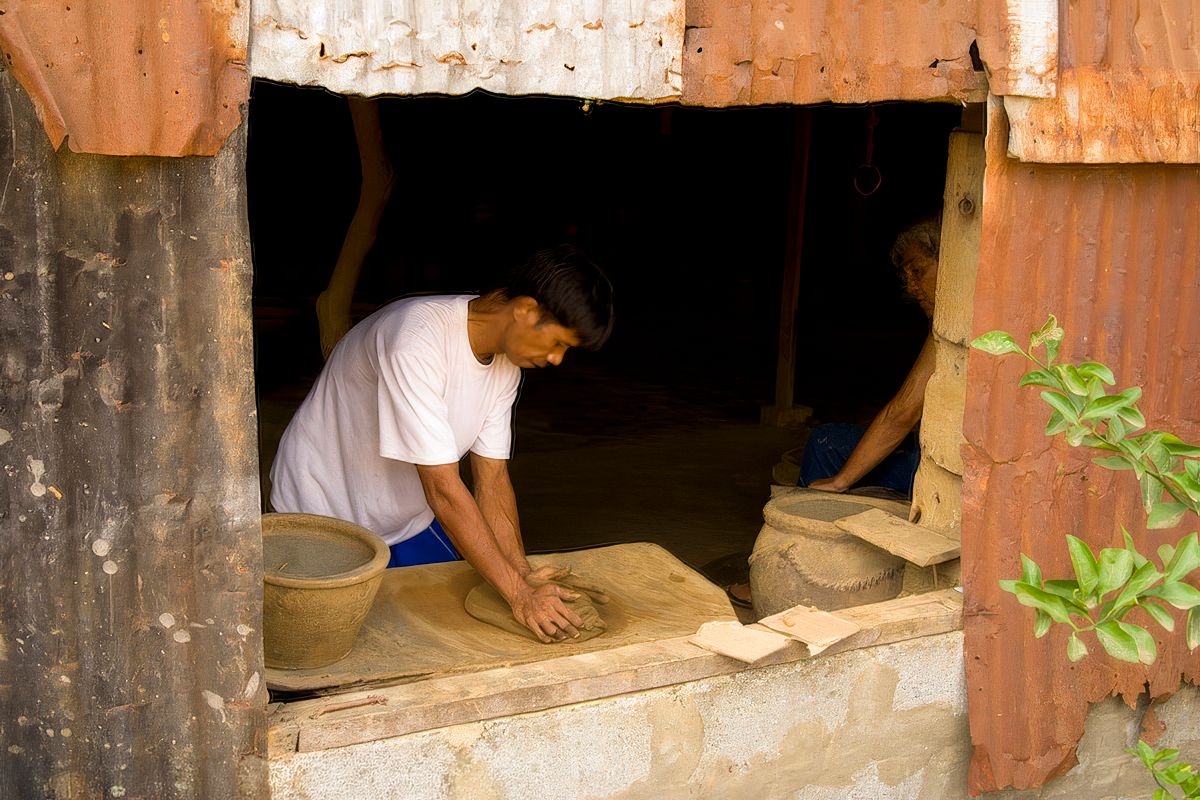
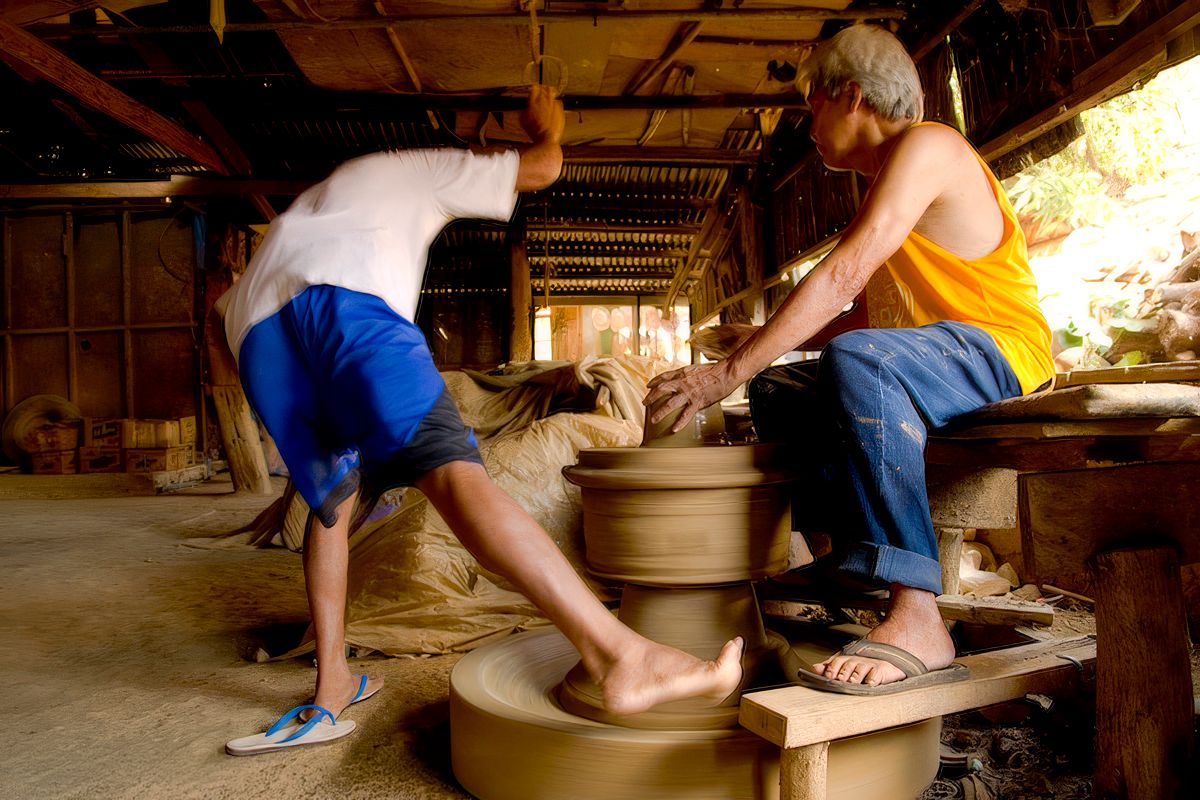
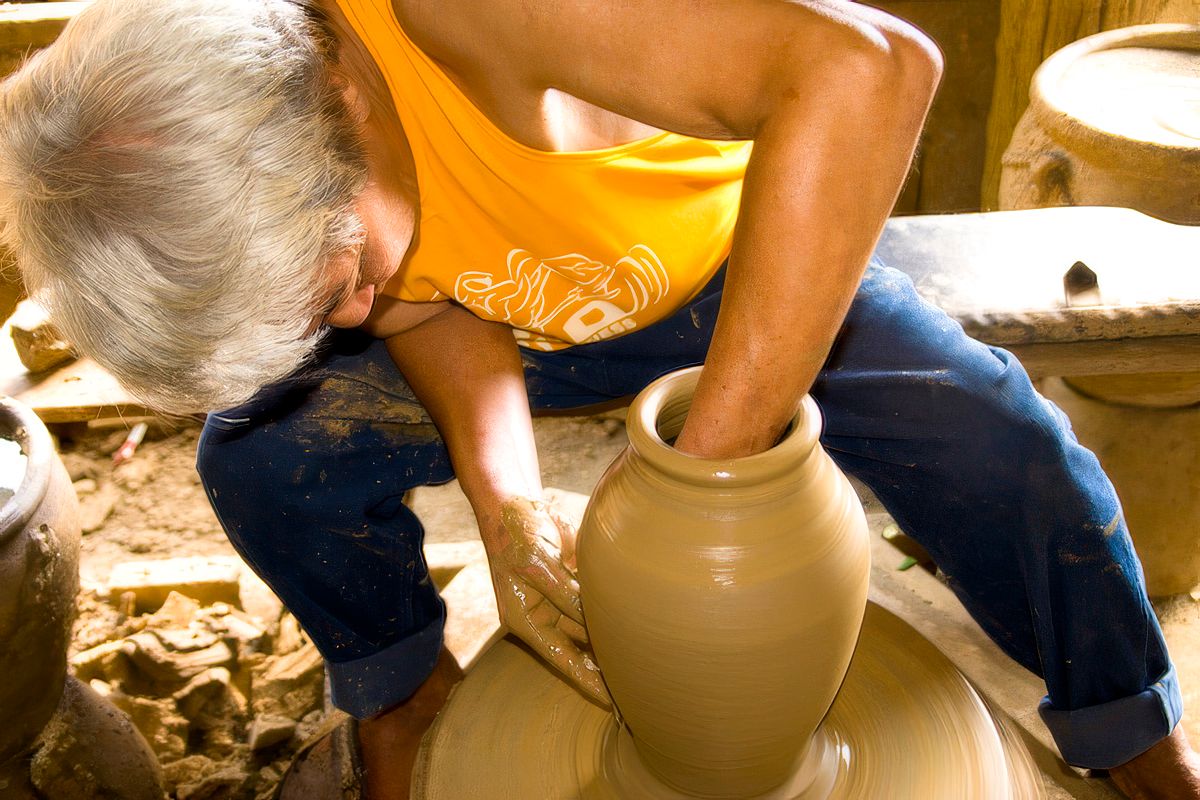
Stepping inside a working pagburnayan (pottery workshop) takes you beyond the rows of finished jars lined up along the street and straight into the craft in motion. Inside dim, cool, earth-floored sheds, master potters work foot-powered wooden wheels and simple hand tools to center, pull, and shape heavy, iron-rich local clay into tall, symmetrical vessels before baking them in massive brick kilns.
Before reaching for your camera, pause to take in the rhythm of the work. Because these are active production sites rather than staged museums, always ask the potters or staff before taking photos, and check which areas—like fragile drying racks or hot kiln spaces—are safe to enter.
Try your hand at the wheel
Watching wet clay rise effortlessly on a spinning wheel makes it hard to resist trying it yourself. Keep a few practical realities in mind before sitting down:
- Ask about availability and fees: Not every workshop automatically offers visitor sessions. Check with the staff if a quick turn at the wheel is open, what any fee covers, and whether larger groups need to book ahead.
- Expect an experience, not a fired keepsake: Local kilns are built for large-scale jar production rather than firing single tourist pieces on a tight schedule. Freshly thrown clay is fragile and won’t be baked during a short visit. To bring home a durable souvenir, browse the shop’s pre-fired miniature jars and ask staff how to pack them safely for travel.
- Dress for the workshop: Floors are often dusty or slick with clay slip. Wear closed-toe shoes with good grip and clothes you don’t mind getting a little muddy.
Pace your visit
Located just outside the main pedestrian heritage zone, Pagburnayan is an easy ride by calesa or tricycle, or a pleasant, unhurried walk from Calle Crisologo. Give your visit some breathing room—active throwing hours and kiln firings follow the artisans’ daily routines rather than a strict tourist schedule.
Once you’ve washed the clay off your hands, head over to our Eat guide to find a well-earned local meal nearby.
A closer look
Select a photo to view its caption and credit.
Related stories

DO
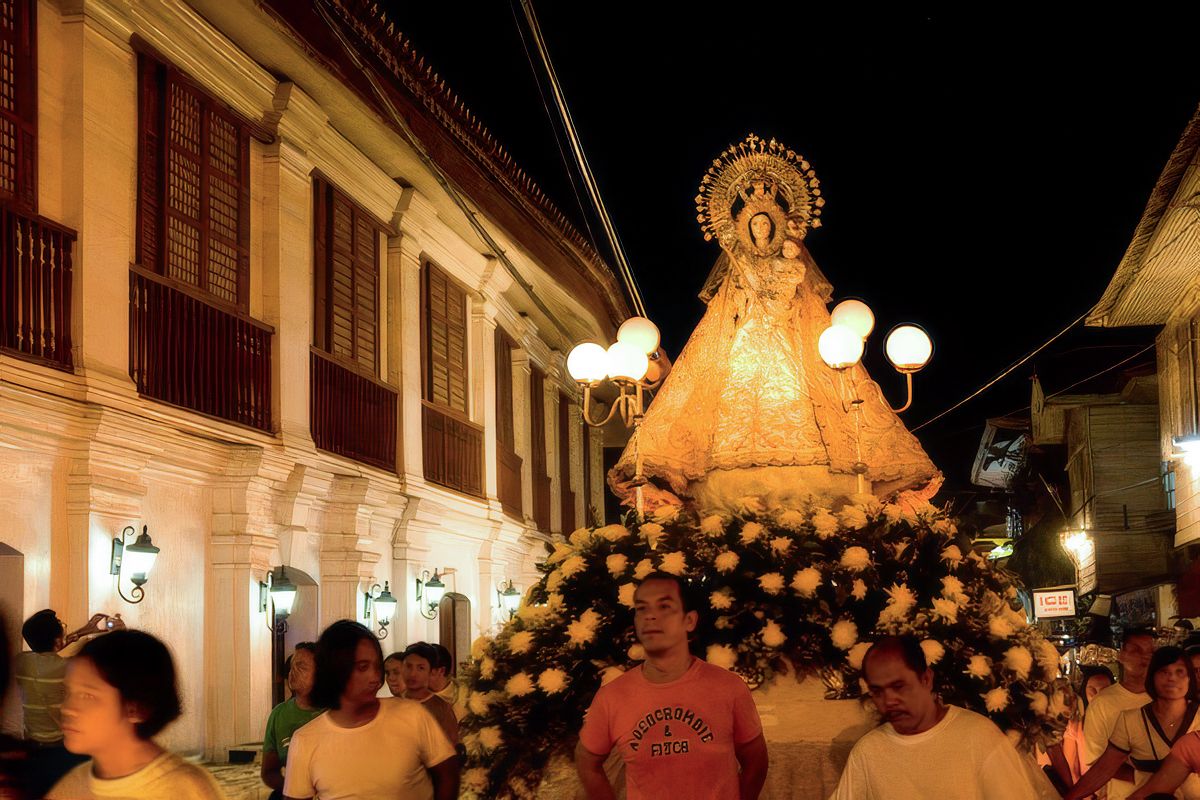
A calesa ride through Vigan
DO