
Colegio de Niñas (now Mart One Vigan)
The long building beside the Archbishop's Palace once housed a girls' school that gained royal recognition to train women teachers.
Published · Last updated
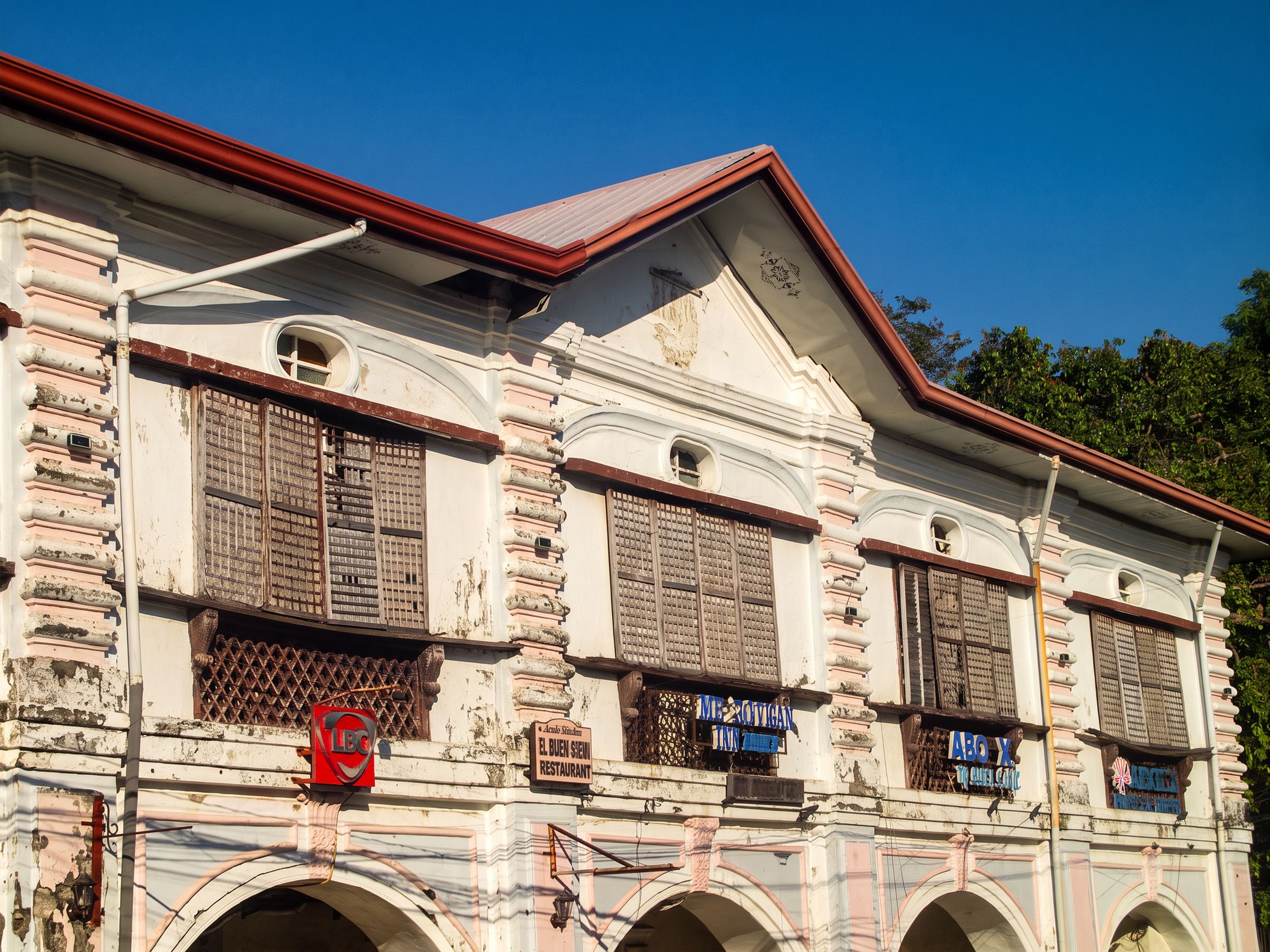
From Plaza Salcedo, follow the roofline from the Archbishop's Palace to the rows of wooden windows above Mart One. That second building housed Vigan's former Colegio de Niñas. Its history takes you from a Dominican girls' school in the 1890s to the beginnings of Paulinian education in Ilocos.
Practical information
- Address
- Nueva Segovia Street, Barangay 1 (Poblacion), Vigan City, Ilocos Sur
- Original use
- A girls' school run by Dominican sisters.
- Teacher training
- Recognized by Royal Order as an Escuela Normal de Maestras on November 11, 1896.
- Public access
- The façade is visible from Plaza Salcedo. Mart One occupies the building.
From a girls’ school to teacher training
The Escuela de Niñas opened in 1892. Dominican sisters ran the school in its early years. The Bishop of Nueva Segovia petitioned the Spanish authorities to give it the same status as the women’s teacher training school in Nueva Cáceres, now Naga City. A Royal Order granted that request on November 11, 1896.
The new designation, Escuela Normal de Maestras, meant a school for training women as teachers. It gave the girls’ school a role in preparing women to teach in classrooms of their own.
The arrival of the Sisters of St. Paul
In 1905, Bishop Dennis Dougherty invited the Sisters of St. Paul of Chartres to Vigan. They arrived on June 5 and began their educational work in the city. The former Escuela de Niñas transformed to St. Paul’s College, which according to the congregation’s education ministry dates the establishment to 1905.
Look along the frontage
Stand back on Plaza Salcedo to see the school and palace together. The school’s long, low frontage picks up the line of the palace beside it. Look for the repeated wooden window frames above and the arches at street level, where shop signs now mark the building’s retail use. Note how the two buildings together frame this side of the square. The connection is historical as well as visual. Church administration and education sat close to each other here, alongside the cathedral and the civic buildings around the open square.
Related stories
SEE
Calle Crisologo
SEE