
Villa Angela
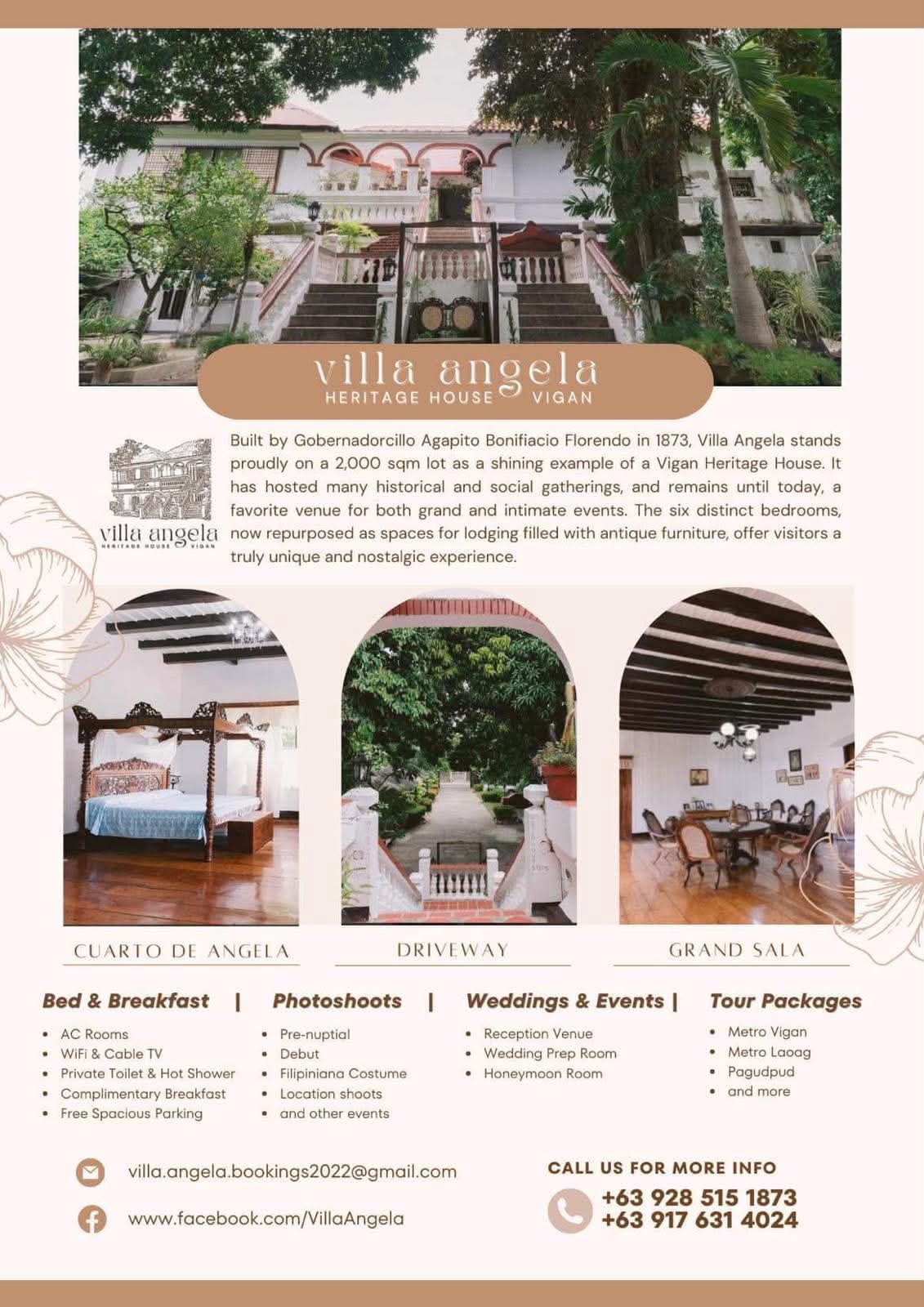
Villa Angela is an 1873 bahay na bato in Vigan where the family welcomes visitors for house tours and overnight stays.
Published · Last updated
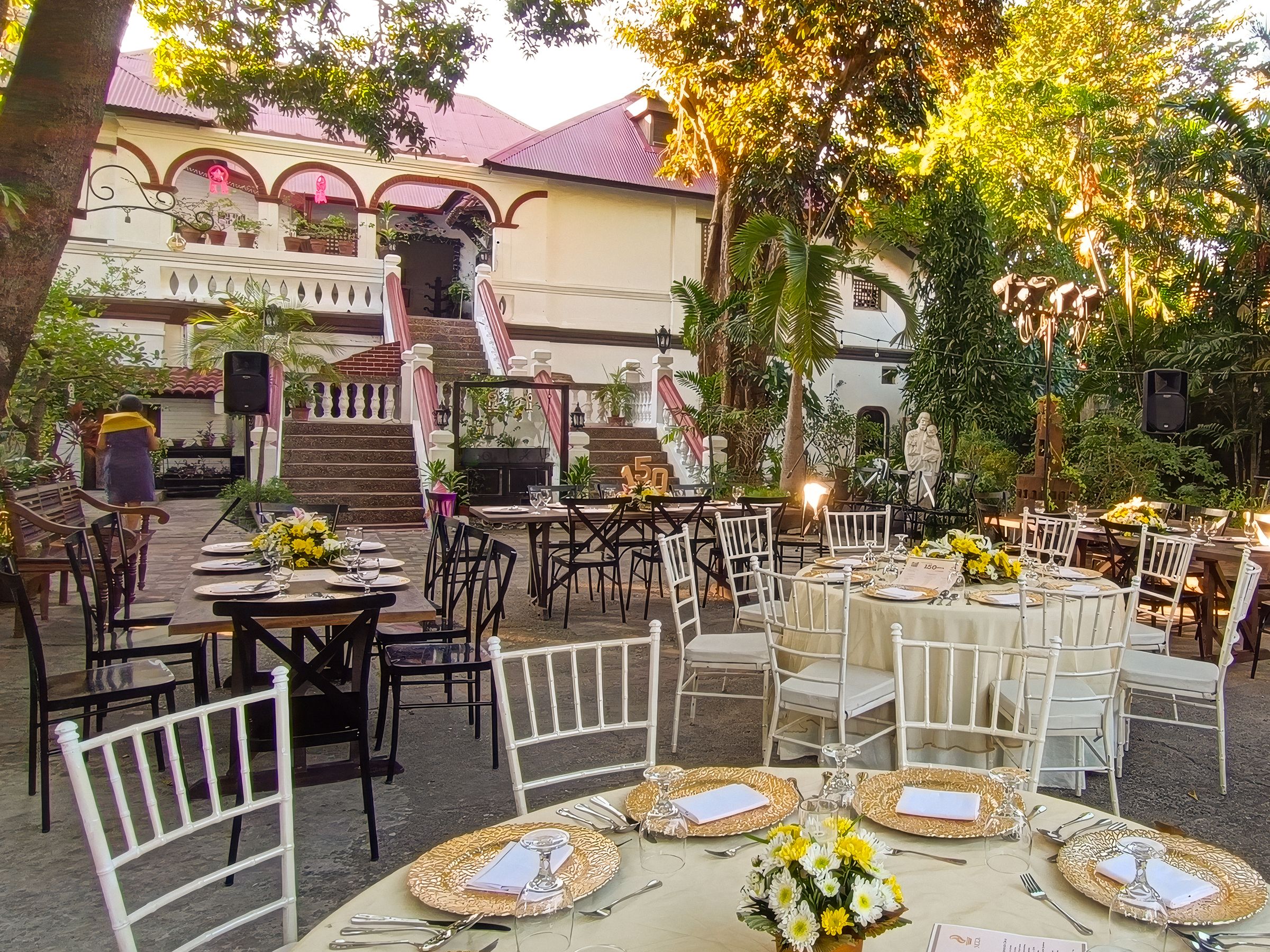
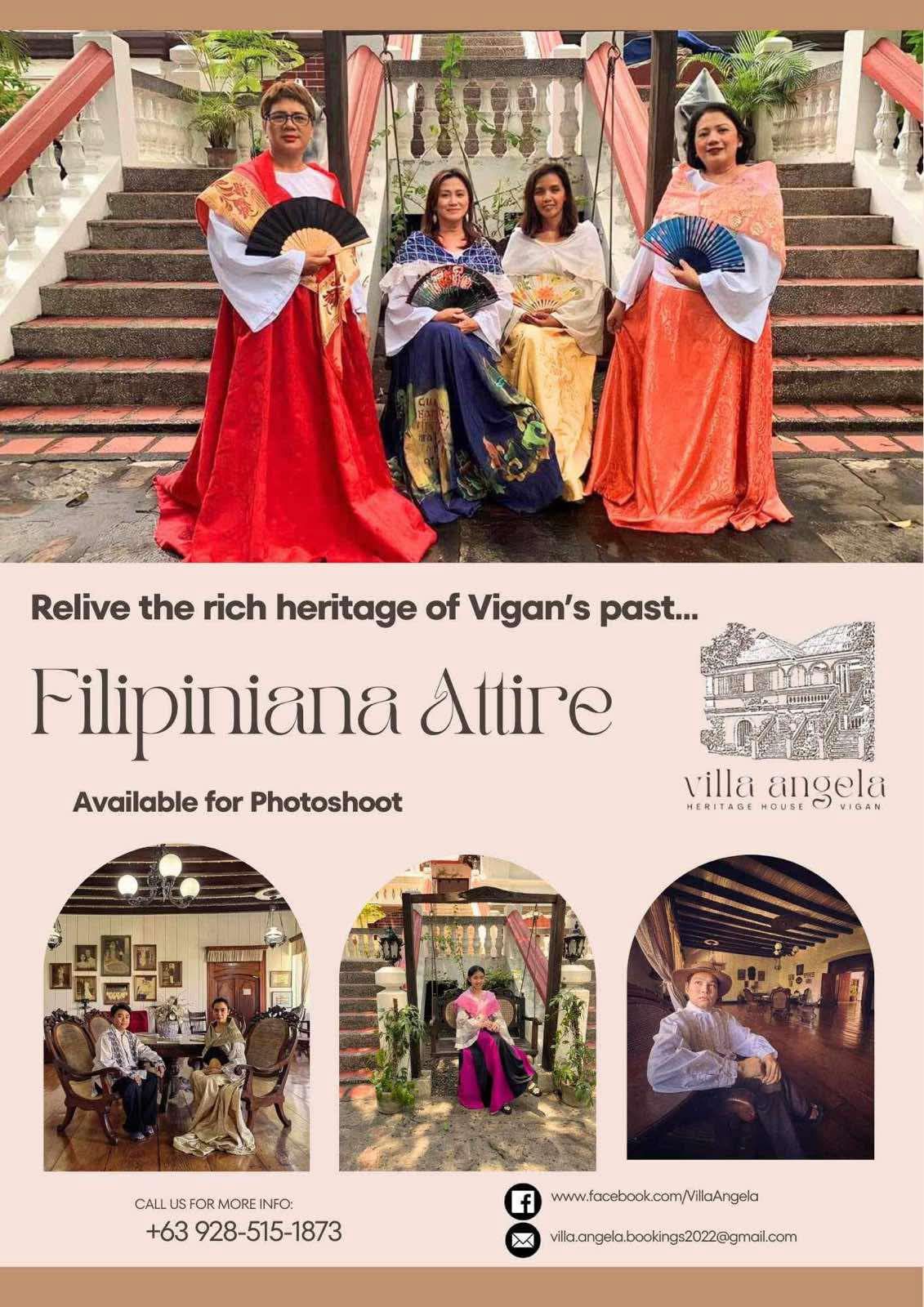
Step two blocks east of Calle Crisologo’s cobbled foot traffic and the pace of Vigan shifts immediately. Along Quirino Boulevard, behind heavy wooden gates and a leafy garden compound, Villa Angela offers a different way to experience a nineteenth-century Bigueño ancestral house. While institutions like Padre Burgos House and Crisologo Museum preserve Vigan’s past as formal galleries, Villa Angela remains a lived-in home—one where travelers can still climb the polished hardwood stairs, sit in wide-armed butaka chairs beside translucent capiz windows, and wake up under a century-old timber roof.
Practical information
- Address
- #26 Quirino Boulevard, Barangay VI, Vigan City, Ilocos Sur
- Visiting & Stays
- Overnight stays operate year-round (check-in 2:00 PM · check-out 12:00 PM).
- Room Rates
- Rooms for 2–3 guests cost ₱2,500–₱5,000. A dormitory costs ₱8,000 and sleeps 10 in five bunk beds.
- House Tours
- House tours cost ₱50. Walk in from 10:00 AM to 6:00 PM or make an appointment.
- Phone
- (077) 722-2914 · +63 928 515 1873
- Built / Restored
- Built 1873 · Restored 1986–1988
- Best time to visit
- Morning for soft light across the courtyard, or late afternoon before strolling over to Calle Crisologo.
- Accessibility
- Cuarto Grande is a ground-floor room described by the owner as senior- and PWD-friendly, with the tiny bunk-bed room Cuartito adjoining it. Two dormitories are also on the ground floor. The four upstairs heritage bedrooms and main sala are reached by a hardwood staircase. Confirm access and bathroom arrangements for your needs when booking.
- Parking
- Free private on-site parking inside the compound gate.
- Freshness
- Owner-provided visitor information and house details updated November 24, 2026. Confirm rates and tour fees when booking.
Nineteenth-century roots and adaptive reuse
Built in 1873 for Maria Villanueva and Agapito Bonifacio Florendo— a former gobernadorcillo, or colonial municipal head— the residence reflects the prosperity of Vigan’s nineteenth-century merchant and landowning families. The house later passed down to Angela Florendo Villanueva, taking the name it still carries today.
Angela was the granddaughter of Esteban Villanueva (1797–1878), an Ilocano merchant and landowner in Vigan. He’s best remembered for the fourteen paintings of the Basi Revolt attributed to him, now on display at the Old Carcel Museum. The family’s story connects Villa Angela to Vigan’s nineteenth-century trade and local government, and it continues in the paintings you can see at the museum today.
Villa Angela also holds a family story of romance. Angela married Pastor Verzosa, whose house once stood on the adjoining lot near the area that now serves as the main entrance. As the family tells it, the two neighbors fell in love, turning what might have stayed an ordinary boundary between houses into a story they sum up simply as “Love thy neighbor.”
By the late twentieth century, many ancestral homes in Vigan faced slow deterioration as maintenance costs mounted. Between 1986 and 1988, the fourth generation of the family, the parents of today’s fifth-generation owners, undertook a restoration. Rather than converting the property into a static museum or stripping its interiors for modern hotel suites, they kept the original floor plan and family heirlooms intact— an early model of the adaptive reuse later codified in Vigan’s UNESCO conservation guidelines.
“Unlike museum houses where you view rooms from behind a cord, Villa Angela lets you eat at the family’s long wooden dining tables and sleep inside rooms that still hold their original nineteenth-century proportions.”
Inside the bahay na bato
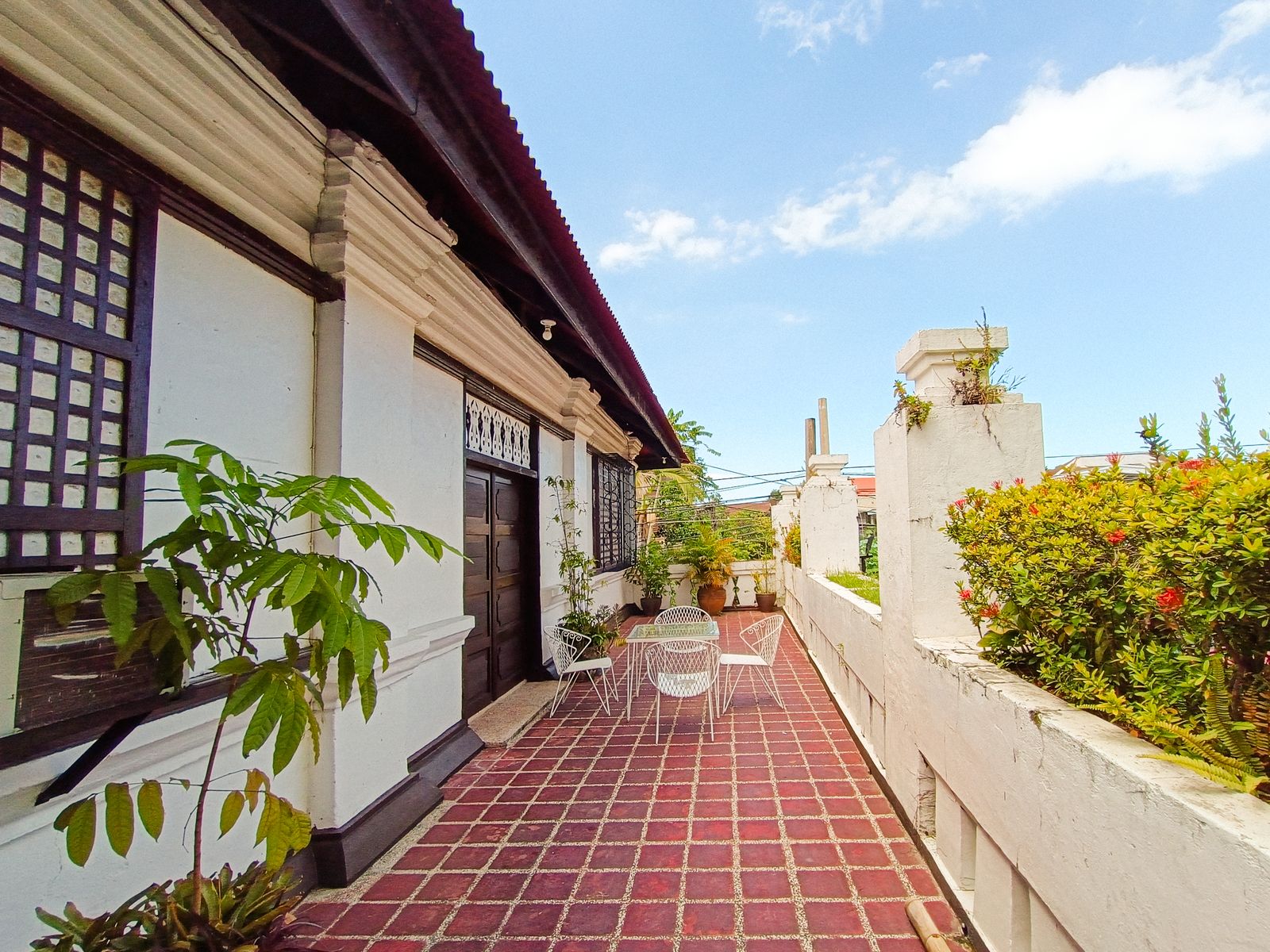
Villa Angela follows the classic Northern Luzon bahay na bato blueprint engineered for tropical heat and frequent earthquakes. Thick brick-and-lime masonry anchors the ground level— originally designed for parking horse-drawn carriages and for storing farm products— while a lighter, flexible timber frame supports the upper living quarters. This construction allows the structure to sway rather than crack during tremors.
The courtyard and garden
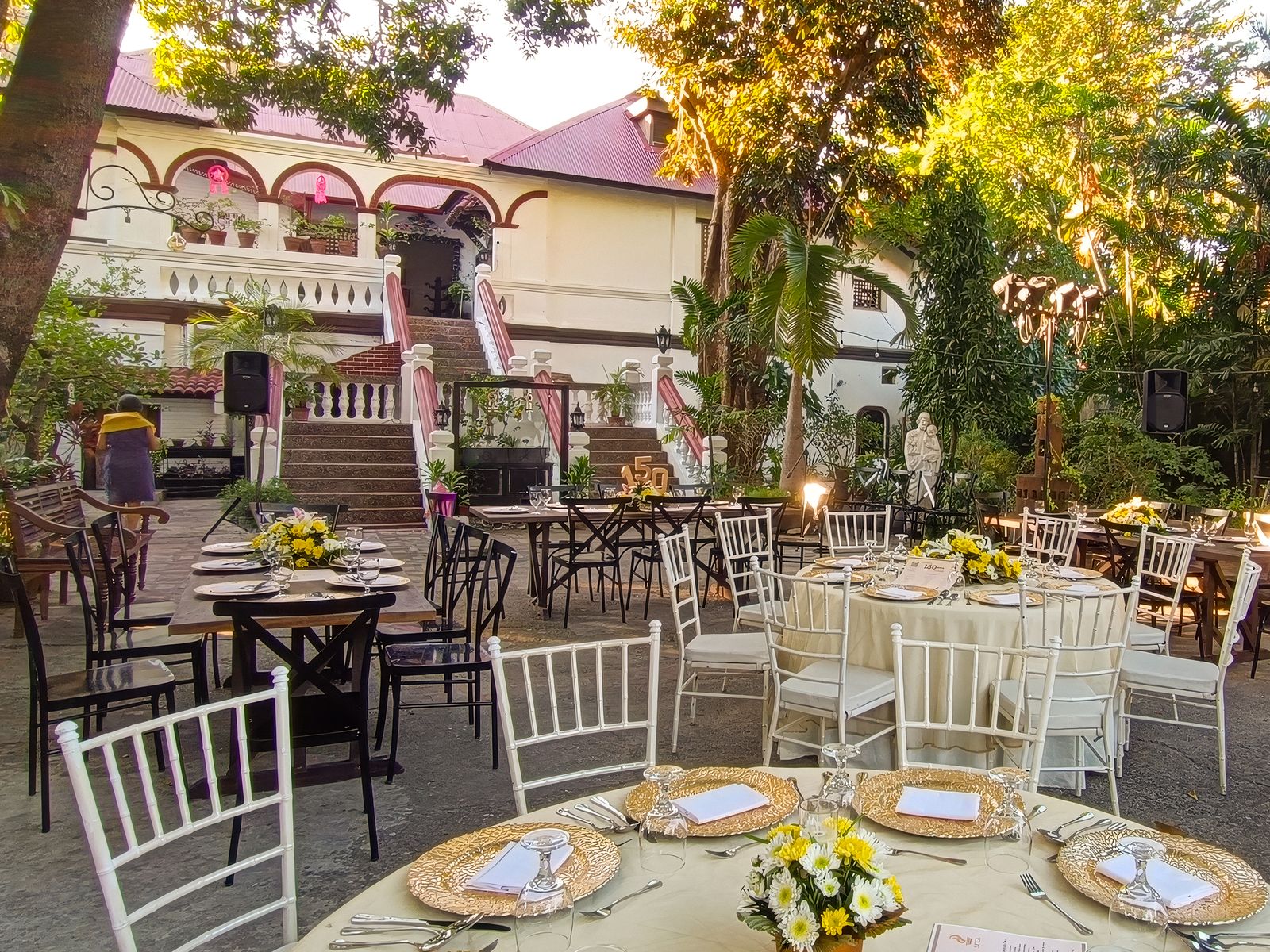
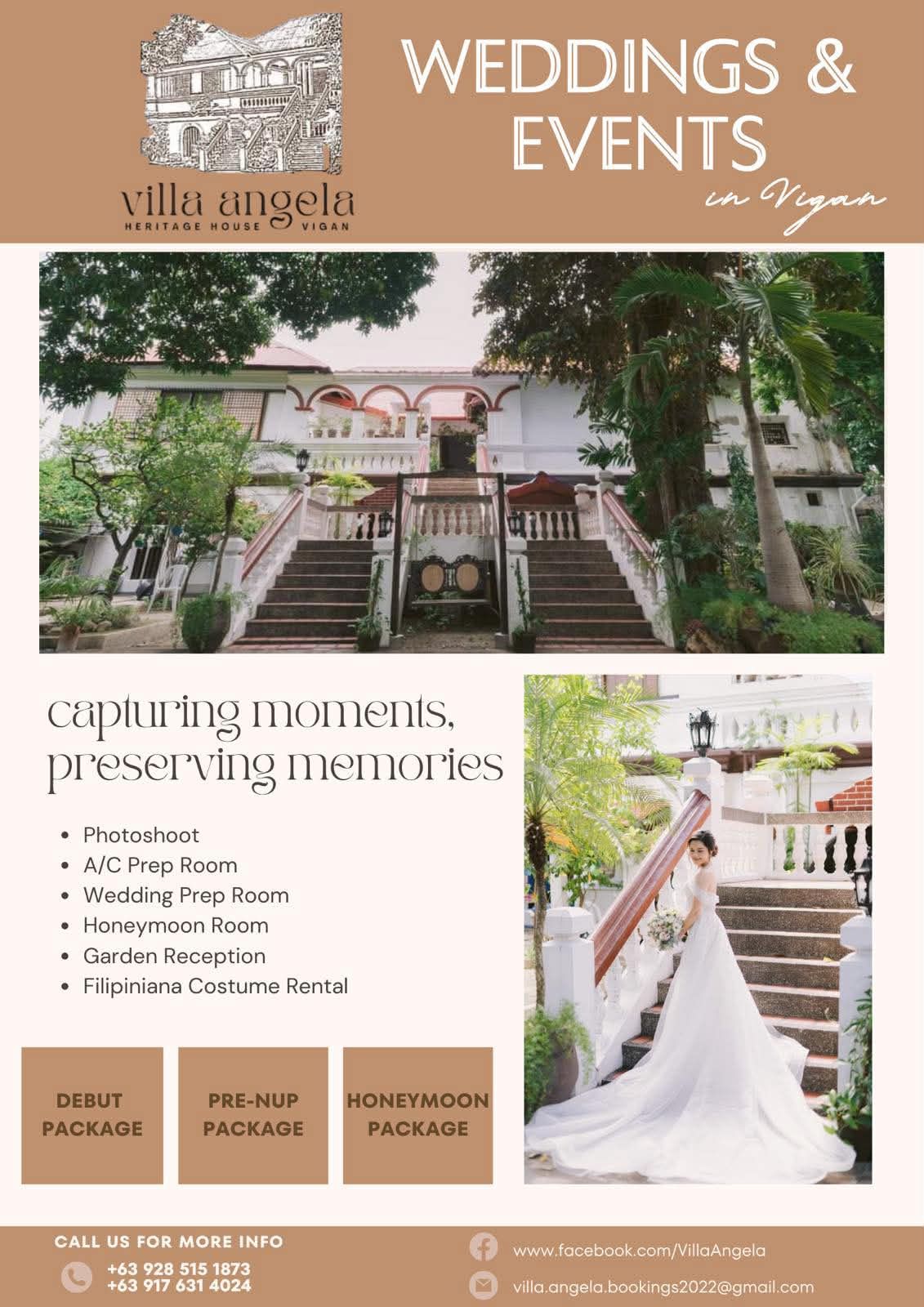
Entering through the main gate opens onto a broad garden path and landscaped courtyard rather than straight into a street-front lobby. The courtyard holds a restored Laoag-style calesa, approximately 50 years old, and the open area is also used for breakfast and intimate gatherings.
From the courtyard, a split exterior staircase— a modern addition to the original structure— leads up to the dining area.
The grand sala and dining room
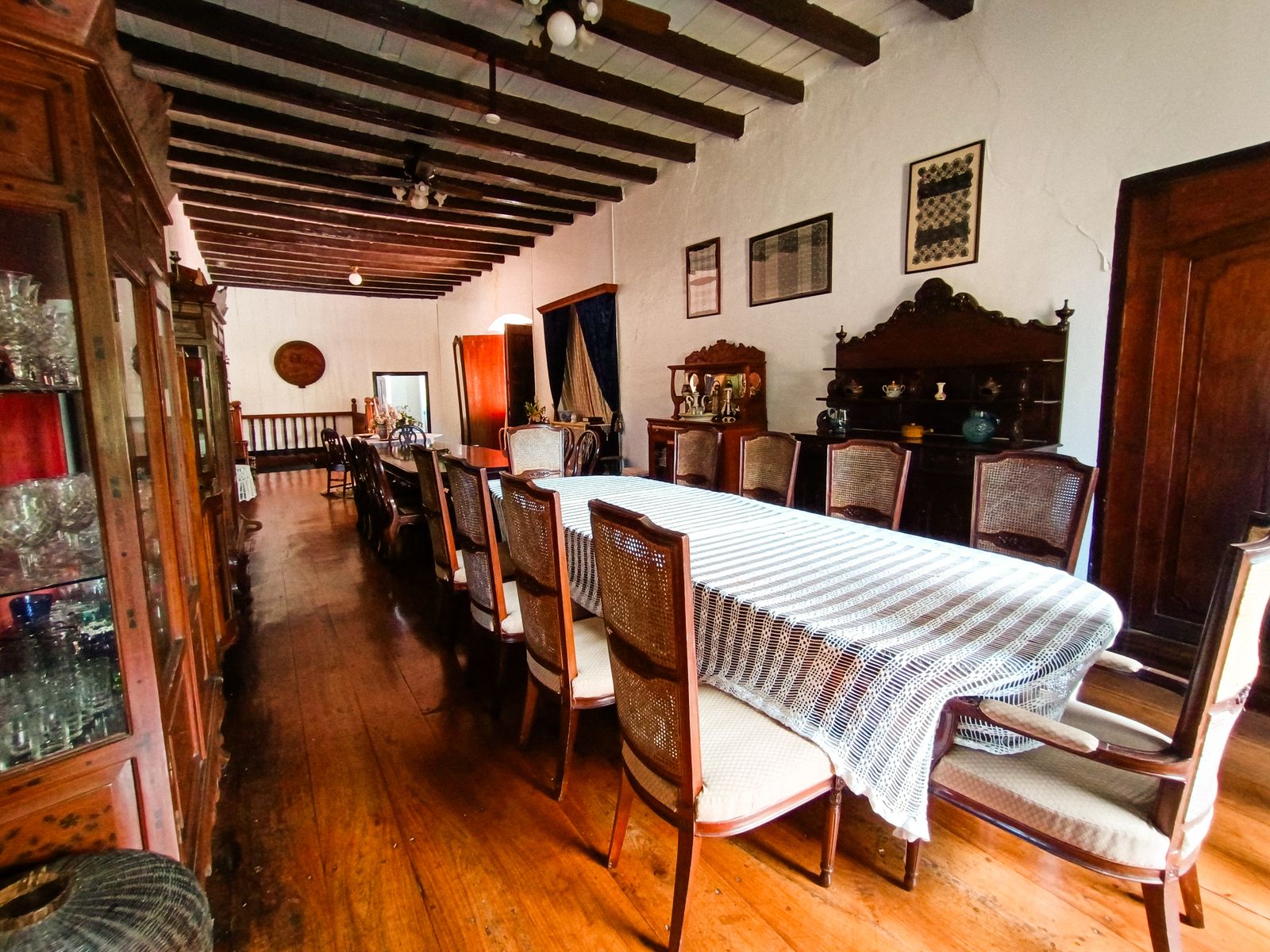
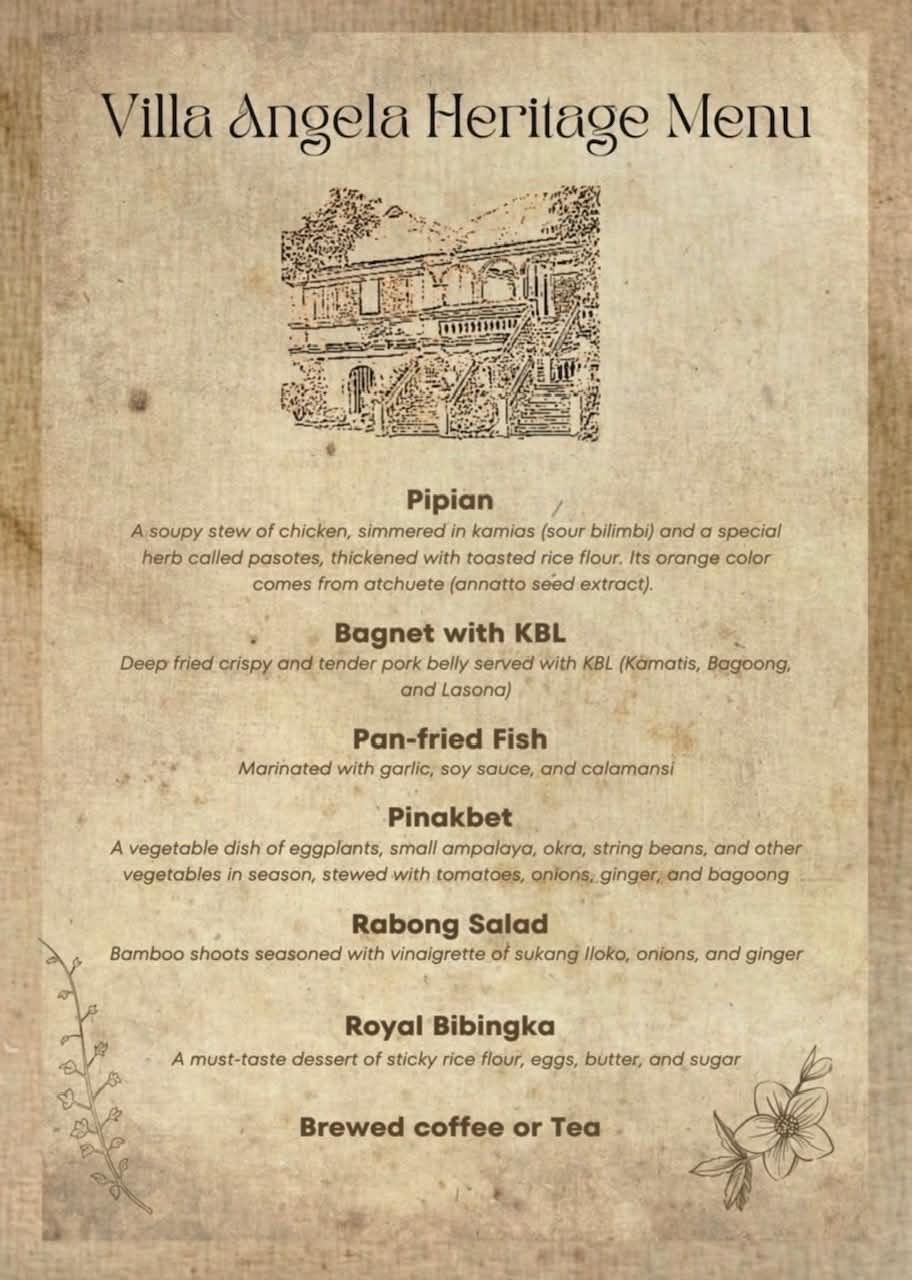
In the dining room, breakfast is served at long wooden tables: Vigan longganisa, beef tapa or daing na bangus, with eggs, rice, fruit and brewed coffee. By reservation, Villa Angela also serves Ilocano Heritage Cuisine, a meal of pipian, bagnet, pinakbet, fish in season, and a seasonal vegetable salad such as bamboo shoots or katuday-sitaw.
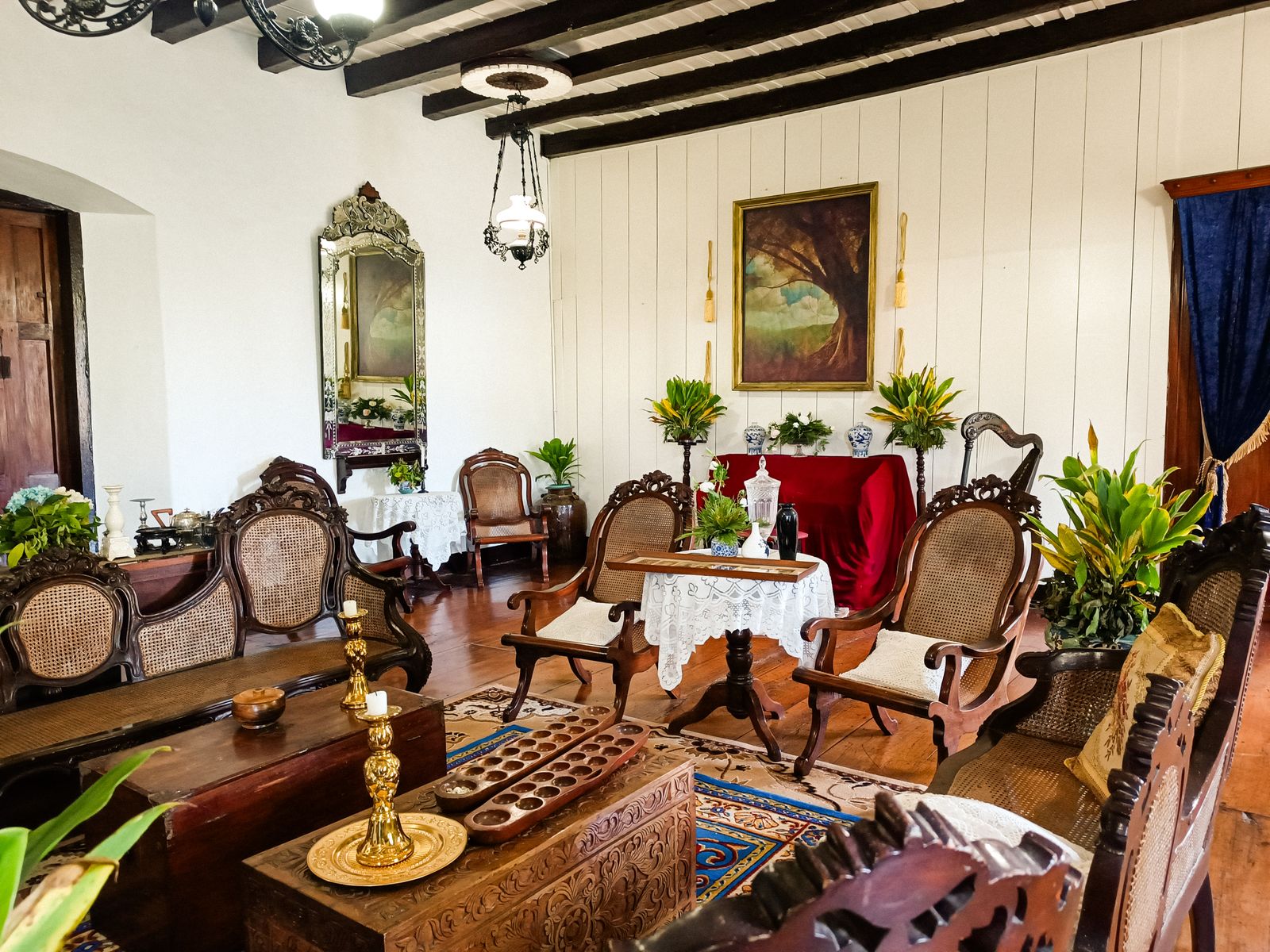
Beyond the dining room is the sala (main living room), with sliding capiz-shell window panels. Black-and-white photographs of the owners’ ancestors and families, antique sideboards, and deep-seated butaka planter’s chairs anchor the space.
The bedrooms
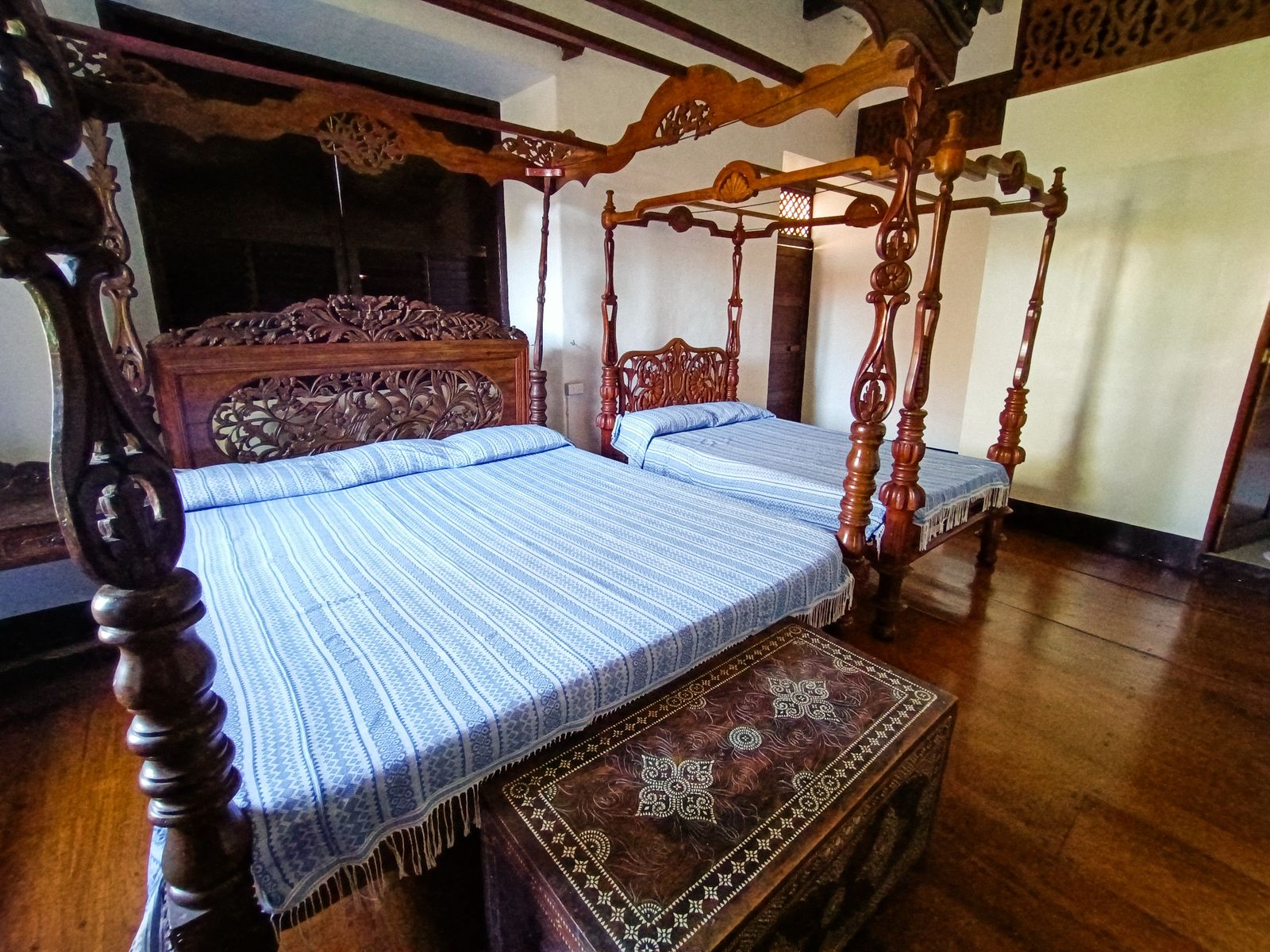
Four named heritage bedrooms occupy the upper story—Cuarto de Angela (formerly Cuarto del Señor, the master suite), Cuarto Pequeño (the guest room), Cuarto de las Hijas (the daughters’ room), and Cuarto de los Hijos (the sons’ room). Each retains high timber ceilings, four-poster canopy beds, and carved wooden chests (baul), paired with discreetly integrated air-conditioning and private baths.
On the ground floor, two newer rooms sit alongside the two dormitories, Dormitoryo A and Dormitoryo B. Cuarto Grande is senior- and PWD-friendly, with an adjoining tiny bunk-bed room called Cuartito. If you have specific access needs, ask about the room and bathroom layout when booking.
On screen and in living memory
Because its interiors have escaped heavy modernization, Villa Angela has repeatedly doubled as a period set for Philippine and international cinema. In 1989, director Oliver Stone filmed scenes here for Born on the Fourth of July, with lead actor Tom Cruise staying in the room now called Cuarto de Angela during production. Decades later, the entrance, sala, dining room, and master bedroom appeared in Marilou Diaz-Abaya’s 1998 historical epic José Rizal and the television drama Maria Clara at Ibarra, standing in for the domestic world of nineteenth-century ilustrados.
If you’re visiting to see the architecture and film locations, house tours welcome walk-ins between 10:00 AM and 6:00 PM, or you can arrange a visit by appointment. The entrance fee is ₱50.
Getting there
Villa Angela sits at #26 Quirino Boulevard on the eastern edge of Vigan’s historic Mestizo District, roughly 200 meters from the southern end of Calle Crisologo.
On foot: From Calle Crisologo, take Liberation Boulevard to Quirino Boulevard, then follow Quirino Boulevard to Villa Angela’s gated entrance. Silang Street is a quieter daytime alternative with less traffic, but its lack of street lights makes it unsuitable for walking at night.
By tricycle or calesa: Any motorized tricycle or horse-drawn calesa waiting near Plaza Burgos or St. Paul Cathedral knows Villa Angela by name; the ride takes under five minutes. Within the town center, regular tricycle fare is ₱30 for one passenger by day (6 AM–6 PM). See City Information’s tricycle fare guide.
By private car: Unlike pedestrian-only Calle Crisologo, Quirino Boulevard is open to vehicle traffic, and Villa Angela provides gated parking on-site.
A closer look
Select a photo to view its caption and credit.
Related stories

HERITAGE HOUSES
Padre José Burgos Museum

HERITAGE HOUSES